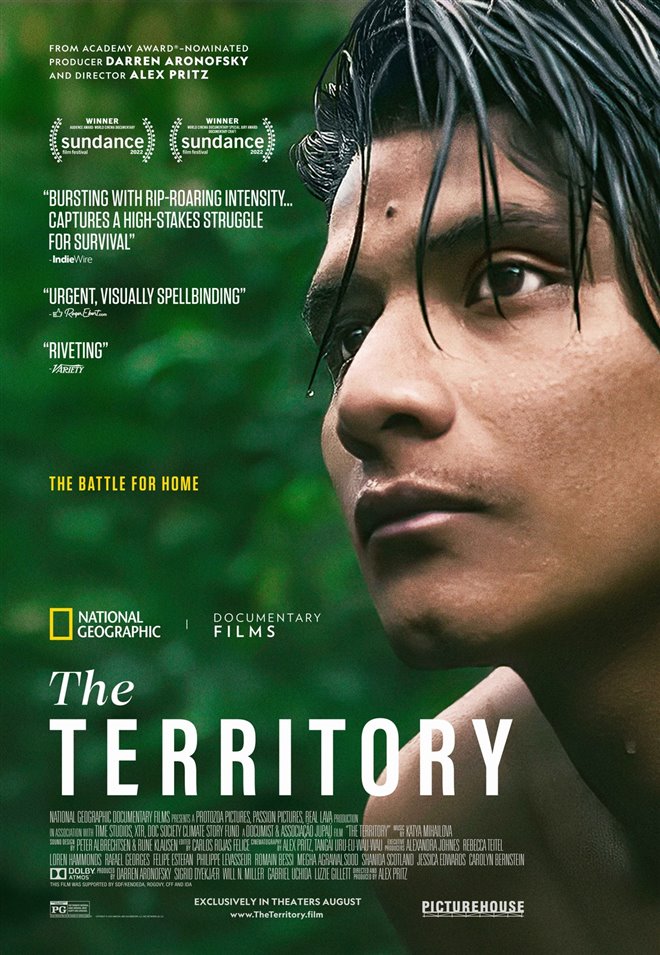
As Brazil’s presidential campaign kicks off this week, “The Territory” — a new film created in collaboration with the Uru-ea-wau-wau people of Brazil — documents the urgency and beauty of Indigenous land defenders’ fight to resist settler encroachment in the Amazon.
Looming large over “The Territory,” directed by Alex Pritz and opening in theaters today, is Brazil’s far-right president, Jair Bolsonaro, whose election in 2019 emboldened illegal loggers and farmers in their ambitions to exploit Indigenous territory. Since coming to power, Bolsonaro has undermined the agencies tasked with protecting Indigenous land and cut back on environmental protections of the Amazon in favor of commercial interests.
“This is how Brazil was created, and many other countries too,” says one settler interviewed in the film, who wistfully invokes God, country and competition to justify encroachment. “People are coming to claim their land. And if you don’t claim it, someone else will.”
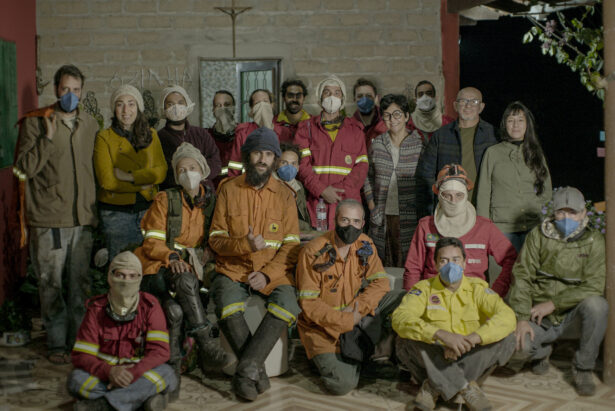
While the film includes footage of loggers, illegal settlers and farmers seeking to exploit protected land in the Amazon, its heart lies firmly in the Uru-ea-wau-wau people, who live in the Jamari village in the Brazilian state of Rondônia. A special focus is given to the group’s charismatic young leader, Bitaté, and environmental activist Neidinha Bandeira, who has been working with the Uru-ea-wau-wau for decades to protect their land.
When COVID-19 spread to Brazil during the documentary’s production, Bitaté, who is also a writer and photographer, banned outsiders from the territory, including the filmmakers. He and other villagers, however, offered to shoot the documentary footage themselves. The Uru-ea-wau-wau soon gained local media traction for videos they shared of their campaigns and patrols to defend their land.
“Send us the shot list — we’ve got it from here,” he retorts to one producer attempting to send a film crew into the territory.
From then on, the film pulses with the resistance and humor of the young Uru-ea-wau-wau members who join Bitaté’s forest defense patrol, which defends the territory against encroachers. At one point, a young patroller points at his friend holding the camera as they trudge through the forest and laughs, “I can’t believe you’re still filming.”
Yet, it’s clear that the villagers’ self-documentation cuts deeper than a clever storytelling tactic. Throughout the film, visibility is a constant struggle. One farmer, in arguing against the Indigenous claims to the land, says that he’d never seen an Indigenous person in the territory, which is roughly three times the size of Delaware and home to fewer than 200 Uru-ea-wau-wau — the result of decades of disease and displacement following the area’s contact with settlers in 1981.
When Bandeira and a group of Uru-ea-wau-wau attempt to report encroachment to the authorities tasked with protecting Indigenous land, they’re told that nothing can be done without video evidence. Such a requirement is extremely dangerous, considering Brazil is the world’s third-deadliest country for land defenders. In 2021, at least 27 Brazilian human rights and environmental activists were killed, including 19 land defenders, often with impunity.
Sign Up for our Newsletter
We’ll send you a weekly email with the latest articles.
All this shows why documentation itself is so crucial for the activists’ struggle to protect their land and culture, and in turn, the Earth. The Amazon, home to the world’s largest rainforest, plays a critical role in mitigating climate change, but its ability to do so — and its breathtaking biodiversity — are at major risk from deforestation.
Towards the end of the film, Bitaté’s voice crescendos as he speaks to other land defenders: “We have the best weapons available today, and we’re reclaiming the struggle of our elders.”
“We’re experiencing the same things they did, but they didn’t have any of this,” he says, gesturing to a set of camera equipment on the forest floor. “It was only their word and no one believed them.”