It’s been a long six weeks since Donald Trump was sworn into office amid a Nazi salute and a machine-gun barrage of 89 executive orders. We’ve been struggling for our lives, our country and our world ever since.
From boycotts to mass noncompliance to street demonstrations, the response to the Trump administration’s policies has consisted of an impressive range of nonviolent tactics.
More than just outraged protests, people are thwarting raids, refusing to obey unjust orders, standing up to bully politics and taking risks to do the right thing. The resistance is diverse, multi-stranded and feisty — and some of it is working. It has forced Trump to reverse course or push the brakes on numerous issues, including his original plan for 25 percent tariffs, funding freeze, federal worker buyout deal, firing USDA and CFPB workers, and more.
And while there have been a deluge of unjust policies coming out of the administration, the hundreds of thousands of people taking action are showing that resistance is not futile. In fact, it may be crucial. If your friends are sinking in defeatism and wondering if there’s any point in protesting, here’s a detailed look at the astonishing amount of resistance happening — and why it makes a difference if they join in.
First steps of resistance
On Inauguration Day, a fugue of stifling fear, defeatism and dread permeated the nation. But one brave minister — Rev. Mariann Budde, the first female Bishop of Washington, D.C. in the Episcopal Church — broke through that fear at the Inaugural Prayer Service by issuing a direct plea of compassion for immigrants, refugees and LGBTQ+ communities.
Rev. Budde’s open defiance — straight to Trump’s face, as he sat in the front row with his billionaire-backers directly behind him — unleashed the floodgates of popular courage. While Trump went on to sign 89 executive orders against DEIA policies, climate science, trans rights and more, people started posting alarmed comments on social media.
When it came to on-the-ground actions, however, a certain reluctance to get onto the streets seemed to pervade. People’s March rallies were held in 200 locations around the country, including 100,000 people in D.C., but they only turned out a fraction of their record-breaking 2017 counterparts. What’s more, when the first 50501 protests were announced — calling for 50 protests in 50 states on Feb. 5 — many activists on social media issued warnings not to attend, fearing round-ups, violence from Trump supporters and the kind of chaos that could provoke martial law.
Fortunately, thousands of protesters in cities across 47 states took to the streets anyway, winning an important early victory against fear.
Another set of early campaigns that shifted people from worry into action were the mischievous — and fierce — efforts to flood snitch lines (the hotlines and emails set up by the federal government to receive reports of violations of Trump’s executive orders). These relatively safe actions offered a cross between expressing outrage and the satisfaction of overloading systems that targeted migrants, queer and trans individuals and DEIA policies. The hiring site for Elon Musk’s Department of Government Efficiency, or DOGE, became another popular target. Each time someone submitted a crank response — like the script to “The Bee Movie” or a message by Scrooge McDuck — the humor and defiance further emboldened resistance.
Thwarting ICE raids
In the first week of Trump’s second presidency, ICE raids started sweeping the nation, trying to round up and deport millions of undocumented immigrants. Migrant communities had been preparing for this onslaught for months. Drawing on decades of resistance strategies, some businesses prepared routes of escape out back doors or private areas that ICE could not enter by law. Field workers in California used stay-at-home strikes to evade agents with up to 75-85 percent of the workforce not showing up.
In school districts like Los Angeles, teachers refused to let agents enter the grounds. Sanctuary cities like Chicago flatly denied any cooperation with ICE. Sanctuary churches defended their historic right to provide shelter to the oppressed. Meanwhile, Day Without Immigrants — a coordinated day of action against unfair immigration policies and deportations — held strikes and work closures in 120 cities across 40 states. Thousands blocked a major freeway in Los Angeles protesting deportations. Similar protests were held in San Diego, Dallas, Houston and Olympia. Meanwhile, Los Angeles students walked out of class for five days straight to protest ICE raids. Student walkouts also occurred in Bakersfield, Sacramento and Redwood City.
Opposition to mass deportations also spanned beyond U.S. borders, as Colombia, Mexico, Brazil and Honduras all coordinated resistance efforts. Pope Francis wrote a sweeping letter to U.S. bishops denouncing Trump’s mass deportation plans and Vice President JD Vance’s use of Catholic theology to justify the crackdown. Even the IRS got involved, refusing to hand over the personal data of 700,000 individuals, as Homeland Security tried to find the addresses of undocumented immigrants. Know Your Rights trainings erupted, training thousands of people in how to stop agents at the door. This was so effective that Tom Homan, Trump’s so-called border czar, complained that the legal trainings were “making it very difficult” to deport people.
The immigration raids were a chilling sign that Trump 2.0 fully intends to follow through on some of its cruel promises. The resistance to them is sending a clear message: Just because he wants to do something doesn’t mean we’ll let him. The continued opposition to ICE was — and still is — one of the boldest, most widespread noncooperation campaigns seen in the United States in a long time.
But this remarkable resistance is just one strand of the extraordinary response that erupted against the policies coming out of the Oval Office.
Sign Up for our Newsletter
We’ll send you a weekly email with the latest articles.
Sounding the alarm on DOGE and Musk
One of the most harmful and hated executive orders issued by Trump on day one was the creation of DOGE. Headed by the unelected tech billionaire leader, Elon Musk, this murky, secretive quasi-department has been rampaging through federal agencies, illegally demanding information and data access, firing federal workers, slashing budgets, freezing aid and sending out belligerent orders through the Office of Personnel Management. DOGE and Musk have become symbolic of the heartlessness, corruption, lies and frequent incompetency of the Trump administration.
As DOGE attacked agencies, corresponding protests and refusals to comply erupted. Acts of creative protest have occurred everywhere — from the Super Bowl’s hecklers and halftime show that made Trump leave early to Vermont’s thousand-person protest, which sent Vance scurrying home without skiing. People hung upside down flags outside the State Department and at National Parks, including from the top of Yosemite’s El Capitan. The hacktivist collective Anonymous broke into TV screens at the U.S. Office of Housing and Urban Development office in D.C. and put up an AI video of Trump licking Musk’s feet. People visited Trump Tower in New York City to take selfies of themselves lifting the middle finger.
Major protests have been happening multiple times per week, organized under various banners, including 50501, Tesla Takedown, People’s Marches, No Kings On Presidents Day, Save Our Services, Stand Up For Science and National Parks Protests. These are turning out hundreds to thousands of people at dozens to hundreds of locations across the United States. (Check out the recently-launched Resist List, which is using social media to collect and share these stories, many of which aren’t making it into the mainstream news.)
Meanwhile, in D.C., unions rallied at the Department of Labor and more than 1,000 people protested at the U.S. Treasury. Hundreds, including Democratic lawmakers joined the blockade and demonstration outside the shuttered USAID offices. Inside the buildings, numerous officials threw up roadblocks to DOGE’s efforts to seize control. The USDA Inspector General refused to resign and was kicked out of the building. Treasury officials refused to hand over data access as long as they could, then sounded the alarm that prompted a federal lawsuit to halt the takeover. When the U.S. Digital Service was subsumed into DOGE, 21 tech workers resigned in protest, signing a statement warning that this rampage wasn’t about efficiency, it was about destruction.
These actions rarely halted DOGE for long, but they made known what was happening and catalyzed the federal courts to issue injunctions and fast track related lawsuits. Actions by judges have become the most robust line of institutional defense, blocking (at least temporarily) the federal funding freeze, alterations of Treasury data, attacks on birthright citizenship, orders to move trans women prisoners to men’s wards, the ban on gender affirming care, cuts to National Institutes of Health research funding and Trump-Musk’s buyout deal deadline for federal workers. Citing the First Amendment, a federal judge also put a preliminary injunction on parts of Trump’s anti-DEIA executive order. In addition, the Trump administration was ordered to release $2 billion in suspended USAID funds for work already completed. Many other cases are still pending.
Even as Trump and Musk violate some aspects of certain rulings, the injunctions build a clear track record of lawlessness that undermines the administration’s credibility and sets up the groundwork for legal consequences down the road. It provides evidence that this administration is not normal and must be resisted — and ended.
It’s also worth noting that achieving these injunctions for any one of these issues prior to this year would have been a significant victory for our movements. These are not normal times. Day after day, regular Americans are doing the impossible, scarcely even noticing the magnitude of what popular dissent has tackled and accomplished already.
Trump is not invincible. Resistance has also forced Trump to rescind his heavy-handed memo freezing federal funds, back off his original tariffs plan and settle for minor concessions during a 30-day pause. Trump had to backtrack on slashing jobs at the National Park Service and the Consumer Finance Protection Bureau, USDA bird flu staff and public power workers. He also reinstated some of the CDC scientists, nuclear safety workers and EPA workers, as well as 6,000 USDA workers. In addition, he was forced to restart legal aid for migrant children held in detention centers and funding for a 9/11 World Trade Center attacks survivors program.
Do not obey in advance
What’s making the protests powerful is pairing them with acts of noncooperation and noncompliance — some of the most effective tools in nonviolent struggle. While protests can rally the people, sound the alarm and galvanize supporters to take action, they are rarely strong enough on their own to pressure decision makers into reversing course. On the other hand, refusing to comply, disobeying unjust orders, boycotts, strikes, and walkouts have both immediate and long-term impacts that raise the costs of maintaining the objectionable policy. We’re seeing a significant uptick in the use of these tactics, especially among federal workers.
On day one, Elon Musk tried to get federal workers to voluntarily quit by offering them a buyout offer, but it backfired. Workers were insulted and outraged by Musk’s threat. Activists, unions, and legislators alike urged workers not to take this potentially illegal offer. On Reddit, federal workers reacted with statements like, “I’ll be honest, before that email went out, I was looking for any way to get out of this fresh hell. But now I am fired up to make these goons as frustrated as possible, RTO be damned. Hold the Line!”
This led to a stay and defy strategy in which workers chose not to quit, but rather resist from the inside until they were fired. Numerous groups circulated resistance guides that showed people how they could refuse cooperation and disobey unjust laws or policies. “Do not obey in advance” became a widely quoted strategy drawn from authoritarianism expert Timothy Snyder’s book “On Tyranny.” From governors upholding trans inclusion to schools maintaining DEI initiatives, there’s a rising trend to reject voluntary compliance and start with defiance — thus forcing the administration to expend time, money and effort to enforce their policies.
One of the most dramatic examples of this occurred when Elon Musk ordered all 2.4 million federal workers to send an email listing “5 Things You Did This Week” to the Office of Personnel Management or risk being fired. While the White House Press Secretary claimed that around one million federal workers complied, this figure was unverified and likely also included protest messages. Even if taken at face value, it’s likely that 60 percent of the 2.4 million non-military federal employees flat-out refused, making it potentially one of the largest acts of mass noncompliance in U.S. history.
This sense of direct power is appealing — and not just to federal workers. Boycotts and economic resistance have found widespread popularity among the people.
One of the most successful campaigns of economic resistance so far has been Tesla Takedown. After Musk flashed what looked like a Nazi salute at Trump’s inauguration, the internet rebranded his vehicles as #swasticars. Tesla Takedown built on this burning dislike of Musk and channeled it into a robust, coordinated effort to tank Tesla stock and sales. With divestment efforts and protests at Tesla showrooms, the campaign has been mobilizing thousands of people in locations across the U.S. and abroad to crumble Musk’s primary source of wealth. Their efforts are having an impact. Tesla stock plummeted 28 percent in February 2025 and sales have dropped 8-12 percent in the U.S., 45 percent in Europe, 70 percent in Australia, and 49 percent in China. Musk also lost a $400 million armored car deal with the U.S. federal government after massive outcry against favoritism. The campaign sends an important message to all the billionaires: Hands off or it’ll cost you.
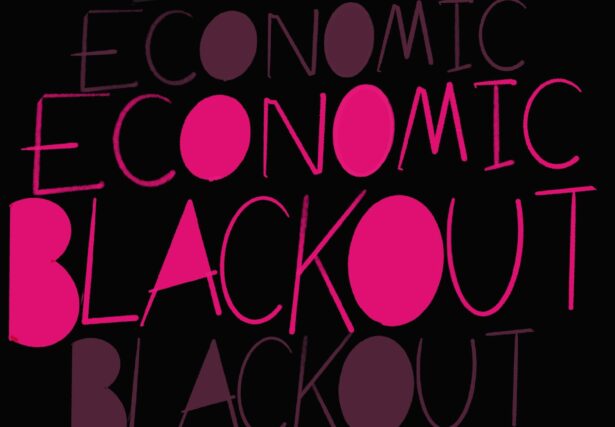
Other economic resistance campaigns are similarly taking aim at megacorporations, particularly the ones that have reversed DEI policies or aligned with the Trump administration. In January and February, more than 25 percent of all U.S. citizens dropped one or more favored brands over political issues, with the trend leaning more toward supporting DEI, social justice and progressive values. After Target dropped its DEI policies, Black Lives Matter issued calls to boycott the company. Now a broader campaign, the 40-day Target Fast aims to show “Black spending power in real time.” Target is already struggling, losing $12.4 billion in market value by the end of February 2025. The company also took a hit in web traffic sales on the Feb. 28 National Economic Blackout, along with Walmart. A rotating list of corporate boycotts is taking aim at Target, Walmart, McDonalds, Lowe’s and Amazon. #LatinoFreeze aims to get Latinos to stop spending as much as possible until attacks on immigration, DEI and other issues end. People are being actively encouraged to shop at stores like Costco and Aldi’s, which have made public declarations that they will uphold DEI policies.
Noting the popularity and interest in these types of actions, Boycott Central has launched an online tracker on the many campaigns, their effectiveness and how people can get involved. The trend toward canceling services that don’t align with one’s values has also hit Google, which saw users switch to other search engines and map services after it changed the Gulf of Mexico to the Gulf of America following Trump’s order. Calls to boycott all Musk products have led to an “X-odus” from his social media platform, with so many users switching to Bluesky that the new social media site has swelled to over 30 million users.
Speaking of social media, the multi-platform account Alt National Park Service — which started on Twitter in 2017 when Trump banned protest on official parks social pages — has been documenting the administrative coup in detail and mobilizing resistance. Over the past six weeks, its network of federal workers has swelled from 10,000 to over 160,000 and expanded into a coalition of 40 #AltGov entities, including Alt CDC (they/them), Alt FAA, Alt FDA, Alt FEMA, Alt Library Of Congress, and Rogue NASA.
Together, they organize resistance within federal agencies, report on what’s happening and also publicize fact-based information currently banned within their organizations (like climate science, public health updates and gender-affirming care). They have also worked with Resistance Rangers and other groups to organize hundreds of protests at National Parks to stop layoffs and budget cuts, using tactics like sand-writing on beaches, inverted flags for distress, front gates rallies and more.
All of this — from street protests to the surge in calls to legislators to direct noncooperation from federal workers — has kickstarted politicians into more courageous stances. A growing number of schools and districts have refused to back down on transgender policies, reaffirming their commitment to some of their most vulnerable students. Alaska’s legislature rejected Trump’s name change for Denali. Governors have made bold stands in opposition, becoming an important bulwark of defense against Trump policies. Maine’s governor stood up for trans women in sports, Michigan expanded anti-hate laws to include attacks on LGBTQ+ persons. Delaware refused to participate in migrant round-ups. Massachusetts upheld DEI policies. These stands by governors are worth keeping an eye on, as they’re important lines of defense, and politicians are taking risks to maintain them. With federal funding on the line, it’s important to shore up the governors’ convictions and hold steady.
Democratic U.S. congressmembers are notably lagging behind their state and local counterparts, though they have attended protests at federal agencies, spoken out in the media and held an all-night filibuster to try to stop a cabinet nomination. During Trump’s joint address to Congress, Rep. Al Green disrupted the speech until thrown out; others held signs or walked out in protest. But the overall lackluster response is one reason why traditionally left-leaning electoral politics and legislative action groups like Indivisible and MoveOn.org have been putting pressure on politicians both left and right, using tools like 5Calls to flood phone lines and overload congressional calling systems. Constituents have also packed contentious town hall meetings across the nation, leading conservatives to advise against open meetings — a flagrant attack on democracy. With Indivisible’s new toolkit for the congressional recess, they’re aiming to bolster Democratic action and drive a wedge between conservatives and Trump.
At the same time, international outrage over tariffs and imperialism has goaded Canadians to boo the U.S. national anthem, cancel their vacations in the U.S., boycott U.S. businesses in favor of Canadian products, tear up a $100 million Starlink contract, propose a 100 percent tariff on Tesla vehicles, threaten a 25 percent electricity tariff and prompt 263,000 citizens to sign a petition to have Musk’s citizenship revoked. In Denmark, thousands of people signed a satirical petition to buy California, protesting Trump’s idea to turn Greenland into “red, white and blue land.” South Africa suspended U.S. businesses after the administration made racist sanctions in retaliation over South Africa’s land reparations efforts. Protests broke out in Panama over threats to take over the canal. Trump’s approaches on Gaza and Ukraine have garnered widespread condemnation from world leaders, and the Gulf of Mexico renaming has angered people across the globe.

Support Us
Waging Nonviolence depends on reader support. Make a donation today!
Donate
Building on successes and scaling up
All of this action — from protests to disobedience, national and abroad — is but a taste of what is coming next. During the congressional recess from March 15-23, Indivisible is putting the pressure on politicians, both left and right, to halt federal budget cuts and DOGE’s abuses. There’s growing engagement with campaigns for tax resistance. A long list of boycotts is targeting a rotating set of corporations over anti-DEI policies, immigrant raids and other issues. The call for a general strike has been repeatedly issued and close to 300,000 people have signed a “strike card” indicating their readiness to join in.
Although prolific, many of the actions we’ve seen so far haven’t yet scaled up to a size required to achieve their goals. Instead of a couple hundred people protesting federal agency closures, there needs to be thousands of people blockading the doors for days — or however long it takes to force Trump and Musk to back off. Beyond a one-day shopping strike, there needs to be sustained boycotts involving millions of people on billionaires’ most vulnerable enterprises. Recruitment, expansion and reaching into ever-widening circles needs to be a concerted effort by everyone. Coalition building and coordinated campaigns are key.
In the next weeks and months, we are likely to see scattered and reactionary acts of noncompliance shift to coordinated campaigns of noncooperation. We’ll need that level of training and preparation. In the next round, the costs and risks to each side of the struggle will be raised. Trump is already falsely claiming that the Tesla boycott is illegal. His administration is already threatening and freezing millions of dollars of federal funding to states that stand up against his policies. In the face of this, activists need to be more strategic and prepared to weather repression and make it backfire. Up until now, rapid response actions play an important role, but the next phase requires sustained campaigns and careful strategy.
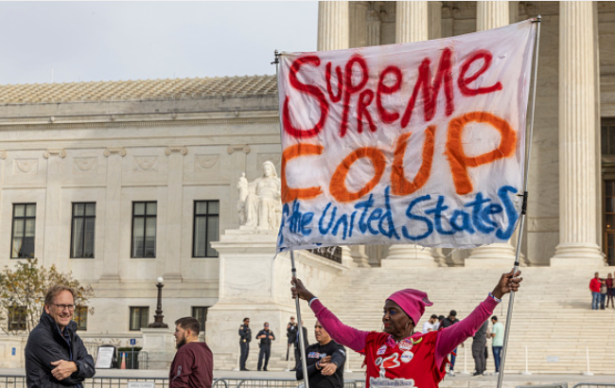
And what is the end goal? Trump has pulled an administrative coup, maliciously dismantled our public services, threatened national security, tanked the stock market, blown up international relationships, ignored the rule of law, engaged in self-beneficial corruption, and violated human and civil rights. If we don’t want to spend four years fighting one devastating policy after another, we need to take a look at the long list of abuses and make a strong case to our fellow citizens that an unprecedented political crisis like this requires an unprecedented response. (Unprecedented in the United States, anyway — since numerous countries worldwide have seen movements rise up to force autocratic leaders out of power, including Serbia, Philippines, Chile, Pakistan, Bangladesh, Liberia, Indonesia, and most recently South Korea.)
At the same time, we must ask: Is overturning Trump’s abusive policies one after another enough? Or do the many strands of resistance have a shared vision for the future of this country that can be articulated and won?
Emerging from stifling fear into widespread protest in a few short weeks, resisters have already achieved important steps. They’ve mobilized tens of thousands repeatedly. They’ve put significant economic pressure on Trump and Musk on multiple fronts. They’ve rolled back and halted a long list of the administration’s policies. In the next six weeks, or six months, the resistance can build on these successes and dare to achieve the impossible. Trump may be attacking everyone, but remember: He’s surrounded on all sides.



I’m concerned about the violence associated with the Tesla protests…property destruction, intimidation of drivers, shootings…of EV drivers.
Thank you for this heartening summary of good news.
I know you are right that we need to scale up our resistance – & have trying to do so.
Gratefully,
an octogenarian in Cummington, MA
Lucy Fandel
This is one of the best, most comprehensive accounts of resistance I’ve read in a long while. Rivera has nailed it. I recommend watching “A Force More Powerful” to reinforce Rivera’s message that non-cooperation is one of the most powerful weapons we have at hand.
Reading this gives me hope that we will weather this storm and come out of it a kinder, saner, and more truly democratic society!
Publicise the non violent protests that are going on in the USA. The rest of the world needs to hear about the resistance to Trump in the USA.
When Adolf Eichmann tried to defend his actions implementing the Nazi Holocaust by citing Kant’s insistence that one must obey the law, Hannah Arendt scornfully applied context: for Kant, as for all people, who have reason and agency, that only applies to lawful laws. “No one,” she reminded us, “has the right to obey.”
Obedience to tyrannical laws, rules, orders, cannot ever provide moral justification. We would do well to remember that.
But the consequences in an authoritarian system of disobedience and non-compliance can be costly in the extreme. Not all are placed in their private lives to resist absolutely. But we can all refuse to assent. We can all resist to the fullest extent we can. And now is a time when all our actions of resistance count – and actions taken together are amplified beyond measure.
Power to the People. It’s time to overturn incompetent, corrupt law makers and Scotus judges with air tight legislation that gives citizen led tribunals the power to make the necessary changes.
Dear Rivera. Thank you! Your piece is so important for recognizing that, though empire wants us to believe we have no power, we actually do, through the many examples you gave. Your writing was uplifting and useful in preparing us for the next noncooperative actions.
Thank you again,
Tom Benevento
So many thanks, Riviera Sun. I have forwarded your message to 120 friends, group email lists built up over the years. You are spreading hope and courage!
A great litany of meaningful and productive actions taken, with encouragement to do more, and how to do it!!! Great job.
This article brought me so many levels of encouragement. Thank you for writing it!
I also want to add a few movements to this list. First, Shutdown315 calls for an ongoing boycott and nonviolent resistance starting from March 15 until demands are met. Here’s their site: https://shutdown315.org/ and this article gives a great overview: https://theshutdown315movement.substack.com/p/what-is-the-shutdown315-movement. Many in the movement began their economic resistance prior to 3/15, and will continue semi permanently.
And, there’s an event that occurred the day after this article was published: a Veterans rally in Washington to protest the Republican Administration. The rally gathered over 3000 protestors, but this wasn’t highlighted by the main stream media. Here’s an article: https://www.stripes.com/veterans/2025-03-14/veterans-rally-national-mall-17143611.html
Overturning Trump is just the beginning. Vance and Michael Johnson are just as dangerous is not more so because they are zealots.( Rubio, 4th in line of succession, is less of a problem.) Trump is not a zealot. He is just aiming for all the power and money he can steal. Vance and Johnson believe in the righteousness of their cause, which is far more deadly to democracy. And there is a large group of supporters with vast sums of money at their fingertips ready to use it on their own behalf.
So far courts are holding for the most part. The telling action will be what the Supreme Court chooses when these court challenges to Trump reach it. We don’t know what happens then and if it holds for democracy will Trump and company abide. I believe he will not abide by rulings that go against him. What then and how do we proceed to save our nation then? It will be a long haul and we need strategies that bind us together, not destroy our cohesiveness as a nation.
Kudos to Rivera Sun for her masterful summary and encouragement; however, there are still many millions of voters who think what Trump has done is OK. We are a long way from winning for democracy. Keep the ideas coming. Together can keep democracy alive.
Thanks for writing this. I was unaware of the scale of the resistance already. The problem I see is that it needs to be much better coordinated and have a NAME and an overall set of goals. I get 30 separate requests for money every day. Which ones do I give my $10 to?
This should be more than a resistance. It should be FOR THE PEOPLE..for free heathcare, freedom of speech, a free public education, a baseline income that provides enough for housing n food. A clean, sustainable and healthy environment to live in, and security for ALL people to live their lives as they choose. There is more..but I will stop there.
THEN..we must work TOGETHER, community by community to achieve this. Resistance is insufficient! Thanks for listening!
Thank you for this! i have been looking for ANYTHING positive to report at our annual county Democrats meeting. I have taken notes and will use much of this at our meeting.
You give me HOPE!
Susan Presson
Wonderful article, so hopeful and inspiring! Thank you very much!
How do we hire people who have the organizational skills that will be required to move to the next level of sustained engagement? I have run into one organizer who is working on his own dime, but he is the only one I have encountered among the 300 other people like me who are active in a variety of groups/settings. If we are to mount a longer race, say 10 K, couldn’t we ask folks to ante up with that small investment?
The greater success protests achieve, the closer we come to a false flag event. Trump is a narcissistic personality. The rejection of his plans and methods will bring about increasing dysfunction. I believe he is planning such a event even now, just as G. Bush and Rumsfeld did, believing it will bring the country behind him. It will be the reason for marshall law, that will not go away, and put thousands behind bars. It has started already. The alarm must be broadcast. Warn the country that this could happen. Make the public so aware of the danger that if he follows thru , we look to him as the planner. Show how he is following Hitlers power grab.
Yes government needs to be rained in. Propose ways to do this. Lets not forget why we face this crises. And more then anything, unite behind a single message, so the signs and banners create solidarity. This is not a struggle for LGBT, woman, black, environment, etc,, it is a fight to preserve our republic, a chance to correct what we should have decades ago. If we fail, America will become a fascist state, there will no longer be free elections, etc…
Muchas Gracias for this! I have forwarded the article to friends & family.
We must sustain this action!
— Kay
Hello,
I quit social media several years ago. I’ve looked on line for protests in my area , but have been unsuccessful in finding anything. The information I get is about events that has already happened. Any recommendations?
Regards and thank you,
Diana Maize, (ddmaize@gmail.com)
Aurora, CO
I had the same problem at first. Here are groups I joined on Facebook:
Indivisible
50601
Knowledge and Action
(your local chapters)