Teachers hold signs during the March 2019 teachers strike, one of a wave of strikes over pay, privatization and repression.
Feature
Iran’s teachers movement perseveres against all odds
After the brutal January 2026 crackdown, teachers unions in Iran are not backing down on their demands for fair wages, free education and free expression.
Teachers hold signs during the March 2019 teachers strike, one of a wave of strikes over pay, privatization and repression.
Sunlight filtered through the trees separating the headquarters of the Plan and Budget Organization in Tehran as 300 teachers gathered outside to protest on Sept. 6. Their demands were simple: salaries that keep pace with inflation, fair pay scales and improved health and welfare services.
They knew they were taking an enormous risk.
For years, educators across Iran have taken to the streets to demand fair wages, better working conditions, the release of detained teachers, the constitutionally guaranteed rights to free education for all children and to peaceful assembly and association. For years, they have faced arrests, enforced disappearances, prosecutions on national security charges, dismissals, imprisonment and solitary confinement.
Teachers and teachers’ union activists played a prominent role in the January 2026 uprising, when people across the country called for freedom and an end to the Islamic Republic system of government. In response, they were heavily targeted. By July, at least 60 had been arrested, prosecuted or imprisoned. At least 14 have been killed. Still, against all odds, Iranian teachers have kept their movement alive.
Sign Up for our Newsletter
We’ll send you a weekly email with the latest articles.
The Iranian teachers’ movement is not organized through a single union. Local and provincial teachers’ associations operate across the country, while an umbrella network called the Coordinating Council of Iranian Teachers’ Trade Associations, or CCITTA, links many of them. The structure allows teachers to organize locally while coordinating actions across the country.
Some of these actions, like protests and public statements, are impossible to miss. Others are less confrontational and more relational: debating movement priorities, supporting imprisoned colleagues and their families, building solidarity with other social movements, or simply getting together to hike or read or watch a film. Together, they knit together a movement that has proven resilient against virtually every form of repression, from internet shutdowns to detentions and killings, while continuing to press its demands.
‘A continuation of my responsibility as a teacher’
Mohammad Habibi became a teacher in 2003. For him, it was never just a job; it felt like a social responsibility. But he soon realized that quality education for students could not be fully achieved without protecting teachers’ rights. So he joined the Iranian Teachers’ Trade Association and later took on several roles within the CCITTA. He is currently its spokesperson.
“My trade union activism wasn’t separate from teaching,” he said. “I saw it as a continuation of my responsibility as a teacher. Teachers have a duty that goes beyond teaching textbooks. They must defend the right to education, student dignity, educational justice and freedom of thought.”
Like Habibi, the nine teachers interviewed for this story described demands that encompass both their own rights and those of their students. They want salaries and pensions that reflect the real cost of living, job security, meaningful participation in education policy, freedom of expression and association, and the release of their imprisoned colleagues.
But they’re also calling for free, high-quality and equitable public education for all children, regardless of ethnicity or gender, while opposing the privatization and commercialization of education.
For Esmaeil Abdi, the former general secretary of the Tehran Teachers’ Trade Association, who spent nearly nine years in prison for his activism, the fight against privatization is inseparable from the fight for equality. “If education becomes a commodity whose quality depends on a family’s economic ability, social inequality is reproduced from one generation to the next,” he said.
Teachers also advocate for every child’s right to receive education in their mother tongue alongside Persian, arguing that Iran’s linguistic and cultural diversity should be reflected in its schools.
Over the years, the movement has won concessions on some of these demands, like pension increases, the implementation of the Teacher Ranking Law (specifying pay tiers) and corresponding salary increases, and a voice in the management of their retirement fund. However, even when policies change, implementation may be incomplete.
“But the significance of this experience lies not only in the material results of these demands,” said Eskandar “Soran” Lotfi, a Kurdish teachers’ union activist and former CCITTA spokesperson. “It also shows that sustained and organized protests by teachers have succeeded in bringing issues that the government initially refused to accept into the sphere of public policymaking and decision-making.”
Abdi shared a similar view: “Despite repression, the teachers’ movement has succeeded in keeping issues such as free public education, teachers’ rights and educational inequality at the center of public debate.”
While maintaining its organizational independence, the movement has built solidarity with workers, students and women’s rights activists. This has happened despite what Laeya Mohammadi, a teacher activist using a pseudonym for fear of reprisal, describes as the “government’s attempts to divide teachers from other movements, including by claiming teachers hold a higher social status than [other groups], like workers.”
Much as they would later take part in the January 2026 protests, teachers participated in the 2022 Woman, Life, Freedom uprising, in which hundreds of thousands protested the repressive government after the morality police killed 22-year-old Mahsa Amini. Four years later, that struggle still shapes the aspirations of teachers like Habibi, who hopes for a future in which female teachers and students are no longer compelled to obey the country’s veiling law and instead have full autonomy over choices as personal as what they wear.
Teachers’ broader social commitments have also surfaced when their students are at risk. Beginning in late 2022, girls across Iran began reporting illnesses after suspected poisonings at schools, with cases eventually spreading across many cities and provinces. As the incidents continued amid conflicting official explanations and growing concern over students’ safety, the CCITTA called nationwide protests in March 2023. Teachers and parents demonstrated across the country. In some locations, security forces teargassed and arrested protesters.
Shadi Taban, a teacher who spoke under a pseudonym, was among those who participated. For her, the issue reflected a principle reaching well beyond teachers’ own working conditions.
“Our red line is the students,” she said.
That red line was crossed during the January 2026 uprisings when the government killed more than 200 schoolchildren. Teachers took it upon themselves to protest their students’ deaths and honor their memories through the “Empty Desks” campaign. Despite widespread internet shutdowns and the difficulty of accessing information, Iranian teachers were able to collect and share the names, photographs and stories of around 240 children who had lost their lives.
Abdi believes that this record-building could one day help establish truth, accountability and redress for the state-committed abuses. “We see this as an important part of a future process of transitional justice,” he said.
After the U.S. military struck a school in Minab in February 2026, killing 150 people, including 120 children, teachers launched another documentation campaign. Titled “Abandoned Backpacks,” it symbolized the children who never returned to school.
But the significance of the campaigns transcends symbolism. “For us, these were also efforts aimed at seeking justice, preserving collective memory and defending children’s right to life and education,” Lotfi said.
Social organizing and consensus-building
One of the movement’s most fundamental structural challenges is that independent trade unions lack legal recognition in Iran. According to Lotfi, this creates obstacles before organizing even begins. Teachers cannot openly and formally recruit members or build a stable financial structure through membership dues to support research, education and organizing. Meetings and assemblies often occur only in private spaces.
The movement is therefore forced into a permanent contradiction: Much of its organizational work must happen informally, even as its demands are voiced publicly.
When those demands do become public, their spread encounters another barrier.
Pirouz Nami, who established the Teachers’ Trade Association of Khuzestan in 2012, said state-affiliated media often suppress teachers’ actual demands while portraying their activism as the product of foreign manipulation or hostile forces. “Within Iran, if any newspaper attempts to report the truth, it faces closure or prosecution,” Mohammadi explained. International coverage, Nami added, can create a different problem: sporadic attention that captures individual protests or arrests but misses the movement’s longer-term structures, relationships and organizing work.
In the face of such expansive challenges, teachers have developed an equally expansive repertoire of strategies. But those strategies remain peaceful, despite the repression and violence they are met with.
“One cannot seek freedom, justice and human dignity through methods that violate those very values,” said Habibi, who has himself been arrested and beaten for protesting.
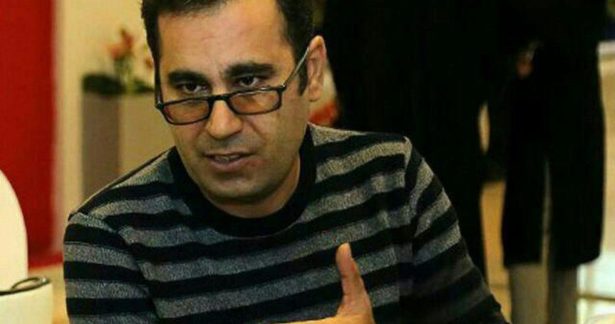
“Teachers have a duty that goes beyond teaching textbooks,” says Mohammad Habibi, teacher and Coordinating Council of Iranian Teachers’ Trade Associations spokesperson. (Education International)
Teachers organize strikes, demonstrations, sit-ins and letter-writing campaigns; issue joint statements; document rights violations; and use social media to raise public awareness. One teacher, who requested anonymity for safety reasons, recalled more theatrical actions he had participated in. In one, teachers collectively burned payslips; in another, they built a coffin for the education system and carried it through the streets in a mock funeral procession.
The decision to take action at all is one that’s shaped collectively before anyone takes to the streets.
Several teachers described decision-making within the CCITTA as a democratic process built around discussion, consensus and majority voting. Lotfi said consensus is woven into organizing from the earliest stage. Before a demand becomes a slogan, teachers discuss, analyze and write about it. Workshops and longer discussion sessions may follow, with supporters and opponents debating the idea.
“This transforms a demand from a simple slogan into an issue that teachers … can collectively defend,” Lotfi said.
Opposition to the privatization and commodification of education, for example, was not always universally shared. But as Iran’s once all-public education system gradually shifted toward greater private-sector involvement, a small group of teacher activists began arguing that privatization was undermining the constitutional guarantee of free public education. They discussed the consequences of this trend through written materials, meetings and debate. Over time, the idea gained broader support. Today, opposition to privatization, as well as advocacy for free, public and equitable education, have become some of the movement’s central priorities. In fact, according to Habibi, “It is because of teachers’ protests that the privatization of public education has proceeded much more slowly than successive governments would have liked.”
Alongside the demonstrations and strikes visible to the public and the state, teachers continually work to strengthen relationships within the movement. “Even activities that don’t seem directly related to our demands form a part of social organizing,” Lotfi said. Teachers meet online and in person. They organize hiking groups, walking groups, cultural programs and social gatherings. That work, Abdi said, helps build a movement that “doesn’t depend on one individual and preserves and reproduces its capacity to act, even under pressure.”
The trust created through those relationships can become crucial when repression strikes.
Solidarity with detained teachers
In May 2022, Lotfi was arrested when returning to his hometown, Marivan, ahead of a planned Teachers’ Day protest there.
“My tenant had informed my family beforehand about what was happening,” he recalled. “The security forces had surrounded my home. But I went back anyway because I had spent years working to create joint action, and didn’t want to miss that moment. I was arrested almost immediately after entering the city.”
State television later portrayed him negatively, including allegations that he had ties to “hostile countries,” which he says are unfounded. Authorities pointed to a friendly meeting between Lotfi and two French teacher trade unionists as evidence of those supposed connections.
His detention activated the networks he had spent years building.
Dozens of teachers demonstrated outside education offices and other government institutions. Teachers circulated statements and written appeals demanding his release. When Lotfi began a hunger strike to protest his detention and pressure to confess to ties with the French citizens, dozens of teachers began solidarity hunger strikes of their own. He was finally released on bail in August 2022, but was rearrested in October, during the Woman, Life, Freedom protests.
The wave of support he received was not unique to him.
Several teachers described a similar response whenever a colleague is detained or imprisoned: Associations issue public statements, raise awareness through social media and news outlets, and organize gatherings outside education offices and courthouses to pressure authorities for their colleagues’ release. Teachers also provide financial and emotional assistance to detainees’ families and try to secure legal support. The movement does not act alone. Habibi said volunteer lawyers, journalists and civil society activists have repeatedly stood alongside teachers, despite the consequences that solidarity can carry.
At the same time, teachers aligned with state authorities participate in what Lotfi described as mechanisms of control and repression. “They might spread rumors about activists, like portraying them as affiliated with foreign governments,” he said. The result can be fear and mistrust, discouraging even sympathetic teachers from publicly supporting detained colleagues.
For detained teachers, repression spills into the lives of their loved ones, who are left to absorb its emotional and material costs.
A teacher who requested anonymity because he is out on bail pending trial, described his wife being arrested alongside him this past spring, amid a broader crackdown on teachers’ union activists.
“Both my wife and I were beaten,” he said. “They blindfolded and handcuffed me and put me in a vehicle.”
During the two months he spent in detention, he said, a judicial officer threatened to reopen what he called “Glass Room No. 100.” The teacher described it as a place where protesters were raped with glass bottles — a form of sexual torture Amnesty International has independently documented against other detainees in Iran.
Like the other teachers interviewed, Nami endured years of threatening phone calls, surveillance at work and in the classroom, pay cuts, arrests, torture, solitary confinement and ultimately job dismissal. Watching his family endure the consequences alongside him, he said, doubled the weight. During Nami’s detentions, his wife had to manage the household and care for their eldest son, who has a severe physical disability, entirely on her own, while also living with rheumatism and diabetes.
Mohammadi testified about her detention experience to the women’s committee of the National Council of Resistance of Iran. She told them that when the Ministry of Intelligence summoned her, she went without informing her family. Security agents nevertheless tracked her children through her phone, causing them severe distress. After her arrest, authorities threatened her family against reporting her imprisonment to the media.
“But on a social level, going to prison under this regime no longer carries a social stigma,” she said. “On the contrary, people wear it as a badge of honor, proud to have stood up against the state.”
Building strength under wartime conditions
Challenges intensify during internet shutdowns and periods of war, like Iran is experiencing now. Habibi said teachers struggle to communicate, share information and coordinate activities; even maintaining contact with the families of imprisoned colleagues becomes difficult.
The danger extends to communication devices themselves. Lotfi said authorities sometimes seize activists’ phones and computers during arrests and searches and later use information stored on them in judicial proceedings, making secure communication a constant concern.
Even under these conditions, public action has not disappeared entirely.
Support Us
Waging Nonviolence depends on reader support. Make a donation today!
The Sept. 6 protest was one of the movement’s most recent public demonstrations, unfolding amid a broader wave of protests across the country that included actions by railway workers, nurses, unemployed youth and retirees over grievances like unpaid wages and the mishandling of pension funds.
But wartime conditions, intense repression and the imprisonment of many active organizers have forced teachers to retreat from frequent street demonstrations.
“We are trying to preserve our relationships and collective spirit through lower-risk activities happening across the country, such as group walks, hiking trips, film screenings, book discussions, and educational and cultural gatherings,” Habibi said.
One such lower-risk activity is a screening of “When We Fight” (a documentary about the 2019 Los Angeles teachers’ strike), planned for World Teachers’ Day on Oct. 5, possibly followed by a virtual conversation between Iranian teachers and American educators featured in the film about organizing strategies and shared experiences.
The CCITTA continues to provide financial support to imprisoned teachers, who currently number 15 by Habibi’s count, although resources have been strained by the uptick in arrests since January 2026 and payments have become smaller. The fund cannot take international donations, due to the government’s sensitivity to connections outside the country, so it is financed by voluntary donations from teachers, who risk having their bank accounts frozen in retaliation. “Still, each time this happens, a new account is created, and teachers begin making donations again,” Habibi said.
The CCITTA is also continuing its Empty Desks project. And as schools reopen, teachers, including Taban, are campaigning for the reinstatement of colleagues who were dismissed for their protest activity. In late September, teachers, parents and civil society activists launched a petition demanding the reinstatement of all dismissed teachers, rallying in particular around Kurdish teacher-activists Majid Karimi and Ghias Nemati. The two had briefly returned to their classrooms after a higher administrative body overturned earlier decisions barring them from service, only for education authorities to impose new penalties that again removed them from teaching.
“Although our methods might change because of the circumstances, our commitment to defending teachers’ rights, public education and civil society remains unchanged,” Habibi said.
Thank you for your interest in republishing this story. You are free to republish it as long as you follow these four requirements:
Credit Waging Nonviolence and link to the original. We prefer with a note at the top of the article. For example: This article was originally published on Waging Nonviolence.
Don’t sell our material or edit it, unless editing to reflect relative changes in time, location and editorial style.
Use photos or images only if you are certain they are in the creative commons or have received permission from us. To do so, email: contact@wagingnonviolence.org.
Include our Matomo tracking pixel by copy-and-pasting this HTML code into the article:
Copy and paste the following into your page to republish:
After the brutal January 2026 crackdown, teachers unions in Iran are not backing down on their demands for fair wages, free education and free expression.
After the collapse of state infrastructure and services amid war in Sudan, mutual aid networks stepped up to fill the gaps in health care, food and emergency services.
The climate movement needs the kind of leverage that comes from shutting down the economy — and it can only get there through deep organizing with workers.
Peace and justice organizations, as well as universities, publish their own independent content on Waging Nonviolence. This Community section offers just a sample of their latest stories. Visit their individual pages to see more.
Get Waging Nonviolence delivered to your inbox
Sign up for our weekly newsletter to get the latest in people-powered news and analysis.
Donate
Waging Nonviolence is a nonprofit organization and all donations are tax deductible.
To donate by check, cryptocurrency or other method, see our Ways to Give page.