Harry Belafonte
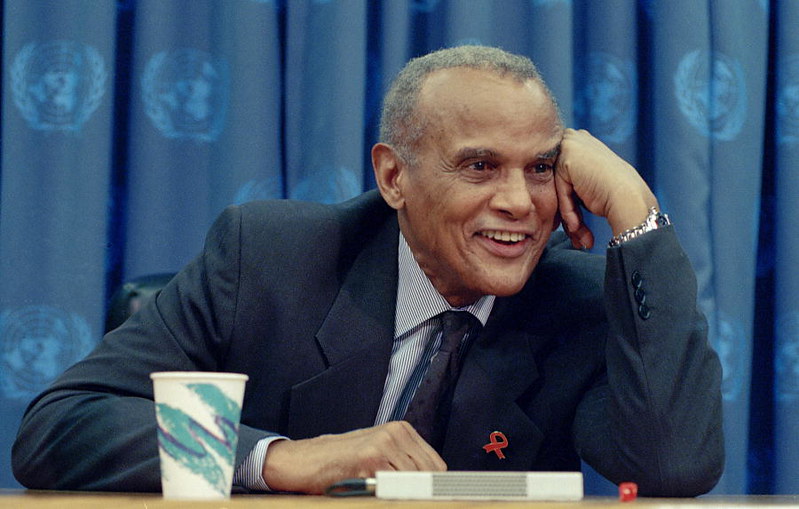
It was an extraordinary meeting of kindred spirits — the aspiring young Black actor Harry Belafonte, just 24, and the 26-year-old minister by the name of Martin Luther King, Jr., who had just given a sermon to the congregation of the Abyssinian Baptist Church in Harlem. After the service, the two young men met in the basement of the church to share their views over a cup of coffee. Their conversation lasted over four hours, while King listened carefully to the aspirations of the young actor and Belafonte paid rapt attention to the urgent plans that motivated the minister who sought to expose the deep roots of racism. The year was 1961.
That conversation initiated a lifelong friendship that would propel Belafonte into the heart of the Civil Rights movement and ensure lifelong support for the cause and the family of Martin Luther King Jr.
Born in 1937 in the Lying-In Hospital in Harlem, Harald George Bellanfanti, Jr. was the son of Jamaican parents. At the age of five, he was sent to live with one of his grandmothers in Jamaica but returned to New York City at age 13. He went on to attend George Washington High School, then dropped out to join the U.S. Navy.
Following his service, he returned to New York City where he and a young actor named Sidney Poitier were inspired by productions they saw at the American Negro Theater. Belafonte began taking acting classes at the Dramatic Workshop of the New School while singing in clubs to help pay tuition.

Strikingly handsome, with a husky voice that could soothe, rouse, and inspire, he eventually developed his own repertoire, drawing on a canon of traditional folk music and Caribbean rhythms to create a signature form of calypso that soon drew the attention of music producers. His first single was “Matilda,” released in 1953 — which became a sing-along favorite — and in 1956 he released his debut LP, “Calypso.” The meteoric success of that album, which sold more than a million copies the first year, placed Belafonte in the forefront of American singers. His acting career continued, including roles alongside Sidney Poitier in the films “Buck and the Preacher” and “Uptown Saturday Night,” and in nearly a dozen other movies.
Influencing his aspirations as an actor and singer, Belafonte’s role model was Paul Robeson, the extraordinarily talented actor, singer, and activist who incurred the wrath of the FBI at the height of the Cold War for belonging to the Council on African Affairs, labeled as a Communist organization during the McCarthy era. Like Robeson, Belafonte risked offending his nearly all-white audiences by participating in the demonstrations led by his friend Dr. King. From the years 1954 to 1961, Belafonte refused to perform in cities throughout the South.
Belafonte used his personal resources as well as his headline presence to support Civil Rights demonstrations, as well as to provide a level of financial security for King and his family. An expert fundraiser, Belafonte joined Sidney Poitier in organizing a command performance on behalf of the Student Nonviolent Coordinating Committee, or SNCC. He supplemented King’s meager minister’s salary, assisted the family with health insurance, and opened his New York home to King and his supporters. It was Belafonte who posted bail to get King out of the Birmingham jail in 1963 and raised some $50,000 for the release of other civil rights supporters. He supported voter registration drives and helped to organize the 1963 March on Washington.
After King’s death, Belafonte remained active in the peace and Civil Rights movements. He helped organize and performed in the Live Aid concert in 1985 and traveled the world as a UNICEF Good Will Ambassador.
His death on April 25, 2023 at the age of 96 prompted an outpouring of commentary about an actor and singer who went beyond show business, leveraging his talents and fame to spark political action. Film critic Wesley Morris, writing The New York Times, lauded his powerful ability to connect with people. “He understood how to how to reach, teach, and challenge them,” wrote Morris, “how to keep them honest, how to dedicate his fame to a politics of accountability, more tenaciously than any star of the civil rights era or in its wake.”
Tom Cornell
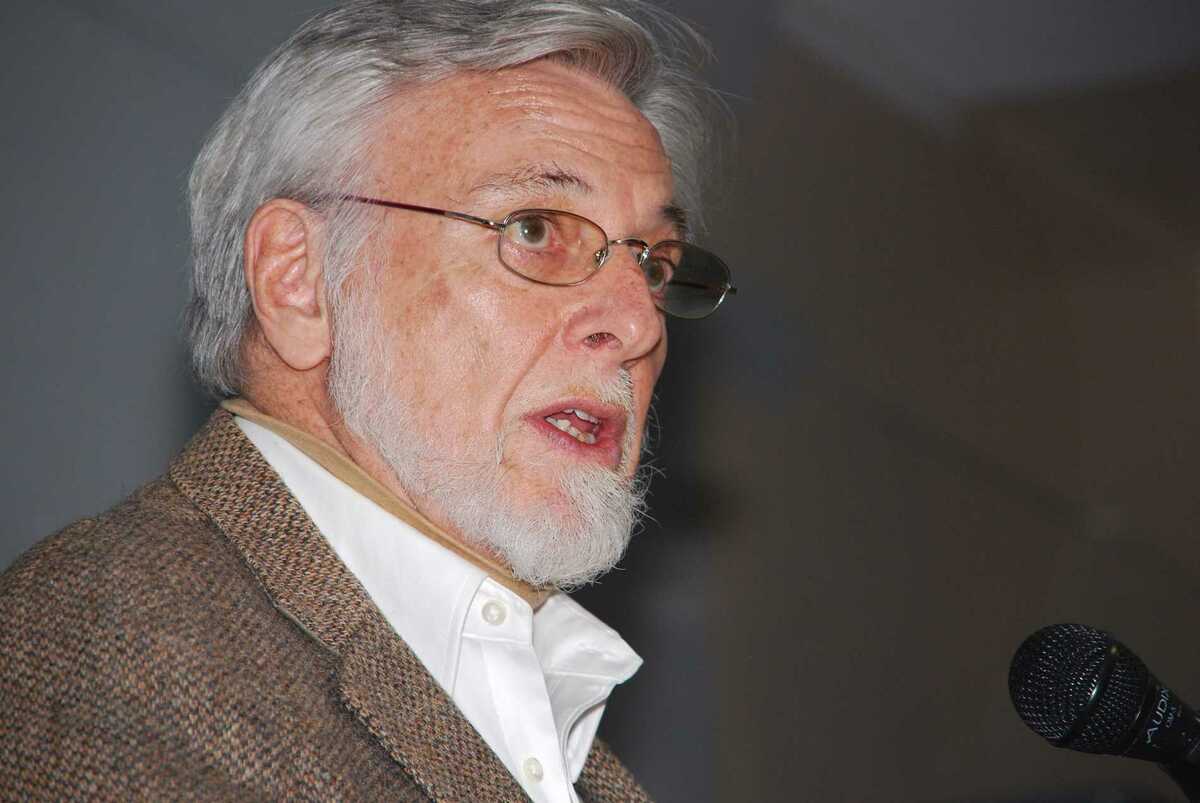
When Tom Cornell declared himself a conscientious objector in 1956, he was doubtful that his pacifist stance would even be acknowledged by the Catholic Church. It took four years before Selective Service granted him that status. As he would recall in an interview decades later, “It really was an open question: Can a Catholic be a conscientious objector? And most people assumed the answer was no. That was for Quakers, Mennonites and Jehovah’s Witnesses.”
Tom would go on to become a committed leader in support of conscientious objectors, an outspoken protester against the Vietnam War, and an advocate of social causes in support of human rights.
Tom’s declaration was inspired by a Catholic peace activist he had discovered three years earlier. In 1953, as a college student, he read Dorothy Day’s autobiography “The Long Loneliness,” the self-portrait of a woman with a religious commitment to nonviolence, workers’ rights, pacifism and resistance to coercive authority; he sought the writer out. His first actual meeting with Day occurred at a New York Catholic Worker house. The Catholic Worker’s mission, as Tom described it, was to follow the Sermon on the Mount — to create a “cooperative social order…that would have no place for economic exploitation or war, for racial, gender or religious discrimination…and a nonviolent approach to legitimate defense and conflict resolution.” The movement also published a newspaper. By 1962 Tom had become its managing editor.
One year later, he and 250 other peace activists in New York City broke the silence about the U.S. involvement in Vietnam with a sidewalk protest outside the apartment of the U.N. observer from Vietnam. Following this protest, he and Jim Forest, a colleague at The Catholic Worker, co-founded the Catholic Peace Fellowship, which became an affiliate of FOR. They were among the first to burn their draft cards, an action that led to a six-month term in federal prison.
In 1965, Tom Cornell was made program director for FOR, a post he would hold for the next 14 years. In that role he was particularly appreciated for his generosity toward young people (as one follower put it) “helping them uncover their own gifts and talents, encouraging them in their vocations, passing the torch on to a new generation.”
Throughout his life Tom blended activism with respect for the liturgical and sacramental life of the Catholic church. As noted by Robert Ellsberg, editor-in-chief and publisher of Orbis Books, Tom “loved to preach, and many of his sermons focused on the peace message of the Gospels, the works of mercy, and the teaching that our very salvation depends on our response to Christ in the poor.” In 1988 he was ordained as a deacon in the Archdiocese of Hartford.
Tom married Monica Ribar, the daughter of Catholic Worker activists, in 1964. They raised two children in “the green house” on the Peter Maurin Farm in Marlborough, New York. In an adjacent “white house” on the property, the family created a sanctuary for the homeless and for those with mental or physical challenges. It was there he spent his final years until his death on August 1, 2022.
Sister Patricia Daly
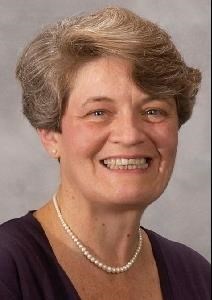
Throughout her life, Sister Pat challenged America’s leading corporations to recognize climate change and its impact on vulnerable communities. Born in Queens, New York, in 1956, she graduated from Sacred Heart University, in Fairfield, Connecticut, and entered the Dominican order at age 20. While still a novice, she attended a shareholders meeting at J.P. Stevens Company, where textile workers had been threatened with reprisals when they attempted to unionize. There, she encountered a network of shareholders from the Interfaith Center on Corporate Responsibility who had similar interests — protecting the environment and advocating on behalf of people who suffered most from the effects of industrial pollution. She later become a board member.
After serving as a high school and college teacher, Sister Pat went on to become executive director of the Tri-State Coalition for Responsible Investment (now Investor Advocates for Social Justice), an association of 40 religious orders in New York, New Jersey and Connecticut operating under the Interfaith Center’s umbrella. She ably filled that role for 23 years.
Religious orders with pension funds had rights, as shareholders, to voice their opinions at annual meetings. In 1998 Sister Pat challenged General Electric to reverse the environmental damage caused by the release of cancer-causing PCB’s into the Hudson River. When she compared GE’s attitude of indifference to the notorious cover-ups of the tobacco industry, GE’s chairman Jack Welch exploded. “That’s an outrageous comparison. You owe it to God to be on the side of truth.” Sister Pat replied, “I am on the side of truth.”
Though confrontational when necessary, Sister Pat was renowned for her powers of quiet persuasion. She helped convince William Clay Ford, Jr., executive chairman of Ford Motor, that his company should withdraw from the coalition of manufacturers and oil and mining companies that blocked regulation of gas emissions. (He later admitted that she helped convince him that corporations should do more to “align their policies with their action.”) Tom Fanning, chief executive of the utility giant Southern Company, said he met regularly with her as she “made her case for justice in a quiet, constructive manner…. She came from a position of love and sold it well.”
The efforts of the Tri-State Coalition and the Interfaith Center brought about a collaborative partnership with the investment firm Morgan Stanley. On June 18, 2018, representatives of 16 congregations of Dominican sisters visited the Morgan Stanley headquarters in Times Square to make an initial investment of $76.6 million from Catholic pensions to the newly created Climate Solutions Fund. It was the culmination of many years of work for Sister Pat, who had long sought to create a fund that would address climate change and also support at-risk communities that needed access to clean water, clean energy, and sustainable work.
Sister Pat died on Dec. 9, 2022. At her funeral mass at St. Aloysius Church in Caldwell, New Jersey, the eulogy was given by a priest who knew Sister Pat from her work at the Interfaith Center. “She amazed people,” he said, “that she could raise up that passion for social justice, for the downtrodden, for the poor, and do it in a way that would melt the hearts of some of the most hardened CEO’s.”
Donna Felter
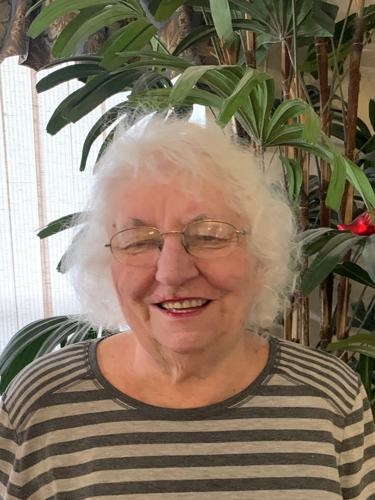
Donna Faye Cummings-Felter was known simply as Donna Felter for the 30 years she served the Fellowship of Reconciliation as business manager and presiding spirit of Shadowcliff, FOR’s long-time home. Donna was the one who knew where everything was, how everything was done or could be done, how all the different pieces of what was, in those days, a very complex operation could be made to fit and function. Though her opinions sometimes differed from ours, her loyalty to FOR was steadfast and deep. She was simply indispensable, both practically and emotionally. It took us many years to recover from the loss of her sharp, kindly, and always professional office presence. FOR staff who knew her well will always remember her fondly.
Born May 20, 1940, Donna grew up in Nyack, New York, where she married Alan E. Felter in 1959; they raised two daughters, Jill and Alison, in West Nyack, where the family resided for over forty years. After leaving Nyack they moved to Tamiment, Pennsylvania, where Donna and Allen had built a vacation home in 1987. Later they begin to winter in Florida, finally retiring altogether to Lady Lake, where Donna was known for her liveliness, hospitality, and family stories. Predeceased by her husband and an infant granddaughter, Donna is survived by both daughters and their husbands, one granddaughter, and a wide circle of extended family and friends. She passed away peacefully, surrounded by loved ones, in The Villages, Florida, on May 12, 2023.
Ngo Vinh Long

To millions of Americans, the undeclared war in Vietnam was seen as a way to wrest a country in southeast Asia from the tyranny and terrors of Communist rule. That was not only a grotesque rationalization, it was also a lie. Few understood that better than Ngo Vinh Long.
Raised in the Mekong Delta, Long was a brilliant student who, in his youth, was a follower of the U.S.-supported Ngo Dinh Diem. Hired at the age of 16 to make military maps of Vietnam, he realized he was witnessing a disastrous attempt to support a corrupt regime that could not survive without the support of American forces.
Long became an outspoken critic of the Diem regime, dangerously opposing a government that imprisoned, tortured, and guillotined its opponents. A friend of Long’s who worked for the CIA warned him “to get the hell out of here, because if you don’t, one of these days you’ll be arrested.” Long applied for admission to Harvard, was accepted, but Vietnamese officials denied him a passport and visa. Fleeing from the police, he found refuge in the home of a U.S. general whose wife called the U.S. embassy to arrange a visa.
As Long would later recall, within seven hours he had a passport, visa, and one-way ticket to Boston. Upon his arrival in the U.S., when he first spoke to reporters, he issued a prophetic warning that “the United States would invade Vietnam very soon…and the Vietnamese were not going to give in.”
What he learned at Harvard reinforced his first-hand observations. Beginning his freshman year, he frequently traveled with antiwar activists Howard Zinn and Noam Chomsky to participate in teach-ins on college campuses, and he helped organize Harvard’s headlined antiwar demonstration in Washington, D.C.
Long represented the Vietnamese Resource Center that challenged the views of pro-war Vietnamese refugees. In a confrontation at Southern Illinois University, he faced off with Vietnamese students who regarded American involvement as their country’s salvation. They were particularly inflamed by his view that the U.S. government “has become one of the most repressive in the world because of the crimes it is committing in Vietnam.”
As he openly condemned U.S. policy, Long held a position dangerously at odds with many expatriate Vietnamese. In 1981, after a lecture at Harvard, the contempt of Vietnamese war supporters was expressed in a protest that culminated in an attempted assassination. Long narrowly escaped death when protesters hurled flaming bottles with gas-soaked rags — Molotov cocktails — that luckily failed to detonate. Following that episode, repeated death threats compelled Long to change his residence eight times.
Undeterred, he continued to express his views through teaching and lecturing. But in an interview with the Vietnam historian Christian G. Appey, Long admitted that the harsh criticism was painful.
In 1985, Long assumed his first full-time academic position as a professor of history at the University of Maine. At the time of his death on Oct. 12, 2022, at a hospital in Bangor, Maine, he was still working as an active and engaged leader of Vietnam Studies at the University of Maine.
Staughton Lynd
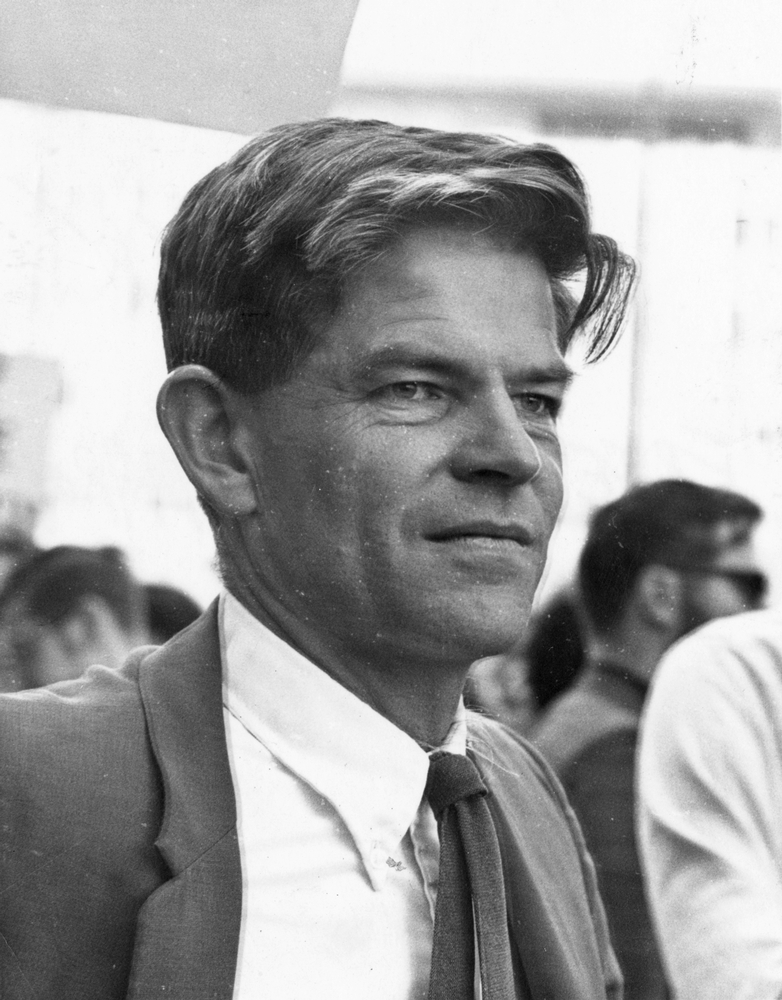
From the age of 16, when he said he “wanted a way to change the world,” until the day of his death on Nov. 17, 2022, Staughton Lynd, driven by the need to follow his conscience, was an outspoken advocate of nonviolence. In his 75th year, reflecting on his long life as an historian and activist, Lynd told an interviewer, “I am with Tom Paine, who wrote [in ‘The Rights of Man’], ‘I am a citizen of the world, and my country is all mankind.’ Those are easy words to say,” he reflected, “and very, very, very hard words to live up to.”
Born in 1939, Lynd grew up in New York City before going to Harvard, where he studied urban planning. He was drafted into the Army in 1953 as the U.S. was gearing up for the Korean conflict. Recognized as a conscientious objector, he was at first granted alternate service. But a year later, Lynd was given a dishonorable discharge when Army officers discovered that he had participated in the John Reed Club and two Trotskyite organizations in college. Along with other CO’s in similar situations, he fought the decision, eventually winning a reversal from the U.S. Supreme Court.
Staughton and his wife Alice Niles joined Quaker communities in Georgia and New Jersey before returning to New York, where they worked for tenants’ rights while Lynd pursued a Ph.D. in history at Yale. His first academic post was at Spelman College in Atlanta, where he became active in the Student Nonviolent Coordinating Committee, working closely with Bob Moses throughout the Freedom Summer. Lynd was appointed to coordinate the educational component of the 41 Freedom Schools that enrolled 2,165 students in 20 communities throughout the South.
In 1964, three young civil rights workers were lynched by the Ku Klux Klan on their way to establish a new Freedom School. At the memorial service for the murdered students, Lynd heard Bob Moses speak of the atrocities being committed by Americans in Vietnam. Subsequently, Lynd and Moses, along with David Dellinger, became leaders in the earliest acts of overt demonstration against the war in Vietnam.
Though Lynd took the post of history professor at Yale, his public confrontations on the issue of Vietnam would cut short his academic career. From his perspective as historian as well as an activist, he was a scathing critic of the U.S. involvement in Vietnam. Lynd joined historian Herbert Aptheker and SDS founder Tom Hayden on a trip to Hanoi, hoping that a meeting with North Vietnamese leaders might set the stage for negotiations. Instead, Lynd was branded a Communist and his passport was revoked. Yale’s president, Kingman Brewster, yielding to alumni pressure, refused to grant tenure to Lynd.
In 1968, Staughton and Alice Lynd moved to Chicago. In the years that followed, Lynd became increasingly involved in labor movements and prison reform. As Lynd would reflect in a 2014 interview, “I’ve never done anything with a gun, I’ve never held one, and I wouldn’t know what to do with it if I held it in my hand. But there are other ways to fight and to resist, and with every nerve of my body, I believe in saying ‘No more…enough!’”
Jim Murphy

Jim Murphy, a Vietnam veteran active in many social movements for justice, peace and human rights, died on June 29, 2023 following several years of living with cancer.
A beloved longtime high school teacher and dean who mentored hundreds of students with diverse emotional needs at New York City’s West Side Alternative H.S., Jim was also a dedicated member of the Fellowship of Reconciliation. He traveled on FOR’s first civilian diplomacy delegation to Iran in December 2005, and soon thereafter founded the International Veterans FOR chapter, focused on bringing together military veterans from multiple nations for the common cause of ending war and militarism.
Together with his beloved spouse Susan Mondzak, Jim helped organize the Hudson Valley FOR chapter in the 2000s and early 2010s, co-hosting concerts and gatherings at the Fellowship’s then- headquarters in Nyack, New York. “Jim was a champion of human rights, dignity, and resisting the military empire. We are heartbroken at the news of his death, as he was a friend and inspiration to so many of us,” said FOR’s Ethan Vesely-Flad. “He will live forever in our memory and his work will continue to guide us.” Tributes to Jim are pouring in through his Facebook page.
Roslyn Pope
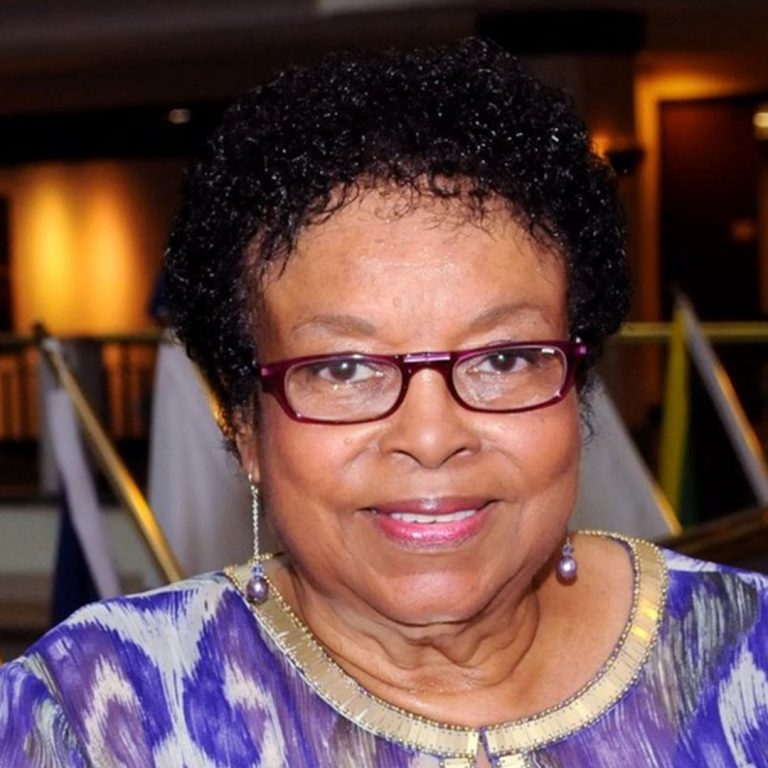
It was a visit to Paris that made Roslyn Pope realize the people of America needed a new agenda.
Born in 1938 in Atlanta, Roslyn had attended Spelman College, where she was offered a Merrill Scholarship to spend a year abroad studying piano and French. She returned from France with a renewed awareness of the social and political injustices imposed on her, based solely on the color of her skin. As she would later recall, “I consider that year as the removal of the shackles and my budding realization that the way I had lived the past 20 years had been based on a theory that I was less than human.”
In 1960, the year Pope returned to Spelman, students from six colleges comprising the Atlanta University Center were planning a wave of sit-in protests. What was needed was a manifesto to explain their purpose and express the urgency of the need for desegregation. With the collaboration of Julian Bond, Lonnie King and Joseph Pierce, Pope drafted, in longhand, “An Appeal for Human Rights.”
Her words blazed. “The students who instigate and participate in these sit-down protests are dissatisfied, not only with the existing conditions, but with the snail-like speed at which they are being ameliorated. Every normal being wants to walk the earth with dignity and abhors any and all proscriptions placed upon him because of race or color. In essence, this is the meaning of the sit-down protests that are sweeping this nation today.”
The Appeal exposed long-standing policies of economic oppression, revealed the deep-seated racial divides in education and documented — with supporting statistics — conditions imposed by white supremacists who strangled attempts at social mobility. “It is unfortunate that even today some people should hold to the erroneous idea of racial superiority despite the fact that the world is fast moving toward an integrated humanity,” Pope wrote. To those who would argue for gradual reforms and a moderated approach, she fired back with an urgent message: “The time has come for the people of Atlanta and Georgia to take a good look at what is really happening in this country, and to stop believing those who tell us that everything is fine and equal, and that the Negro is happily satisfied.”
On March 9, 1960, the Appeal was published in three Atlanta newspapers, including The Constitution, and subsequently in The New York Times, The Nation and The Harvard Crimson. For the city of Atlanta, largely considered “progressive” in civil rights, it was a controversial but incontrovertible statement about the realities of segregation.
In the years following its publication, students were galvanized into sit-in protests targeting downtown department stores, Atlanta police stations, public buildings, and interstate bus and train terminals.
Pope remained active in the movement until her graduation from Spelman in 1960 with a degree in music. After moving to Ft. Lauderdale, she was married, launched a teaching career, and in later years earned a doctorate degree in humanities from Syracuse University.
Dr. Pope died on Jan. 19, 2022, in Arlington, Texas, at the age of 84.
Robert Randall
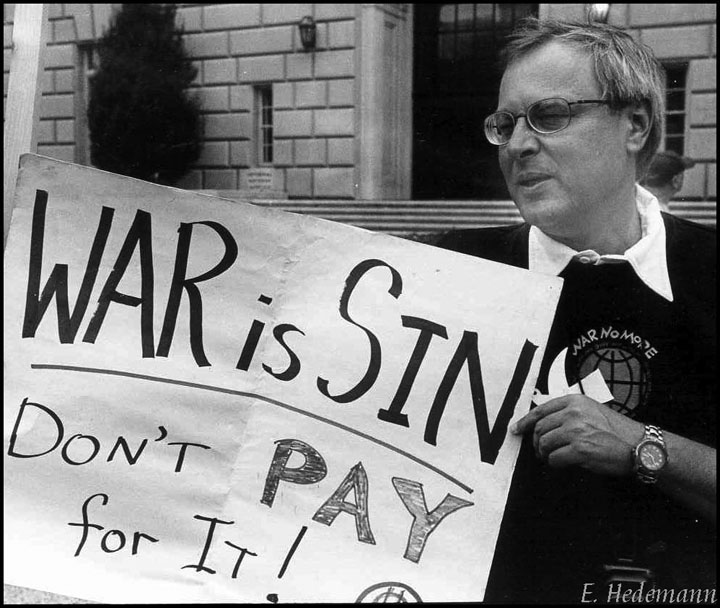
On April 10, 2006, Robert G. Randall wrote to the Internal Service Center in Atlanta, “Once again this year I am unable to pay any federal income tax which you might deem ‘due’ from me. As I have stated to you in years past, I am a Christian. It would be a mortal violation of my faith in God to pay for war or the preparation for war.”
Randall’s letter held true to the promise he had made to himself in 1960, at age 18, when he first resolved to resist war by refusing to pay taxes for military spending. And it was a promise he held sacred until the end of his life on Dec. 15, 2022.
During the 1960s, America began committing hundreds of thousands of troops and billions of dollars to the Vietnam war. As Randall later reflected, “In those days a young person approaching the age of 18 simply had to think about whether or not to kill.” Going one step further, he decided that he could not lend financial support to military forces that perpetuated the killing. From the beginning, Randall knew he would suffer the consequences of his actions. As he acknowledged in his 2006 letter to the IRS, “You wrongly believe your military might to be the source of salvation and you will persecute those of us who refuse to pay homage to false gods of metal.”
His wife Linda became a partner in this decision, and they joined forces with like-minded tax resisters by joining the Atlanta Tax Conversion Fund for Peace and Human Needs and the National War Tax Resistance Coordinating Committee, or NWTRCC, an affiliate of FOR. Their position resulted in the loss of jobs and, on Nov. 19, 1984, seizure of their house by the IRS for nonpayment of taxes.
Living in Brunswick, Georgia, Randall was in proximity to the military installation at St. Mary’s Naval Submarine Base, Kings Bay — the East Coast home of a fleet of Trident submarines, each armed with 24 ballistic missiles carrying thermonuclear warheads. In 2018 he joined in support of the seven members of Kings Bay Plowshares who cut a hole in the security fence at the naval base, posted protests against omnicide, and pounded a display of Tomahawk missiles into the shape of plowshares. During the next four years, with Randall engaged in supporting their defense, the Plowshares Seven faced three counts of felony and a misdemeanor charge.
In 2014, eight years before his death, Randall published “An Ethic for the 21st Century,” summing up the principles of peace in the plainest terms possible. It begins:
“Let us all agree on this one simple thing:
It is not OK to kill people.
It is not OK to kill people because you don’t like them.
It is not OK to kill people because they don’t like you.
It is not OK to kill people because they are different from you.
It is not OK to kill people because of what they believe.
Or because of what they don’t believe.”
Ruth Stern

For Ruth and Lee Stern, peace work was central to their life together. While many FOR members experienced the warm embrace of Ruth’s company, or thrilled to the strains of her lovely singing voice, it’s likely that many did not realize the full extent of her extraordinary life journey.
Ruth Adele Hoeniger Stern was born in Frankfurt, Germany, in 1925. Her mother was Lutheran (Jewish ancestry) and her father was Jewish. Her father was a well-known and highly respected lawyer, revered for his wisdom and honesty. When the Nazis rose to power, he was no longer allowed to practice law and his offices were destroyed during “Kristallnacht” in 1938. Ruth’s mother turned their home into a boarding house in order to try to make ends meet and began planning how to get her two children out of Germany. Through a close friend she was somehow able to make contact with Quakers in Holland and later in England. Ruth’s brother, David, was sent to Eerde in Holland where he attended a Quaker boarding school, and Ruth was sent to England in 1939.
As a young teenager alone in England, Ruth had to register as an “Enemy Alien” and carry a pass with her at all times. Any changes in address had to be reported to the local police. Eventually, she managed to secure a job at The Sunfield Children’s Home near Birmingham, a residence for children with special needs run by the Rudolf Steiner movement. It was a very warm and supportive place where Ruth thrived. She loved the children, was able to gain some self-confidence, and became a valued member of that community.
Meanwhile, Ruth’s father had been ransomed out of a concentration camp by Quakers and was able to get safely to the United States. He wrote to Ruth and encouraged her to join him. In 1948, Ruth traveled, again alone, arriving in New York via Ellis Island, where she was at last reunited with her father. Ruth’s mother never made it out of Germany and perished in the Auschwitz Concentration Camp in German-occupied Poland.
Ruth travelled with her father from New York to Cleveland, Ohio. Her father was so grateful to the Quakers for saving his life and the lives of his children that he attended the Quaker Meeting, where his daughter Ruth met Lee Stern. Ruth and Lee were married in 1951 at Ahimsa Farm, a Gandhian-style community dedicated to peace and nonviolence, in Aurora, Ohio. They began married life at Pendle Hill, a Quaker community in Wallingford, Pennsylvania, later moved to a community in Canada, and finally settled with their two children in Nyack where the national center of FOR at Shadowcliff became the focus of their shared work.
After they retired, in 1988, to the Friends Retirement Community in Sandy Spring, Maryland, Lee continued to teach Alternatives to Violence (a program he helped to found) in the Maryland prisons. Ruth sang in the choir, volunteered tirelessly in the nursing home, and worked for Sandy Spring Friends School for many years. Ruth remained at Sandy Spring after Lee’s death in 1992. She died on Oct. 31, 2022.
Shatzi Weisberger
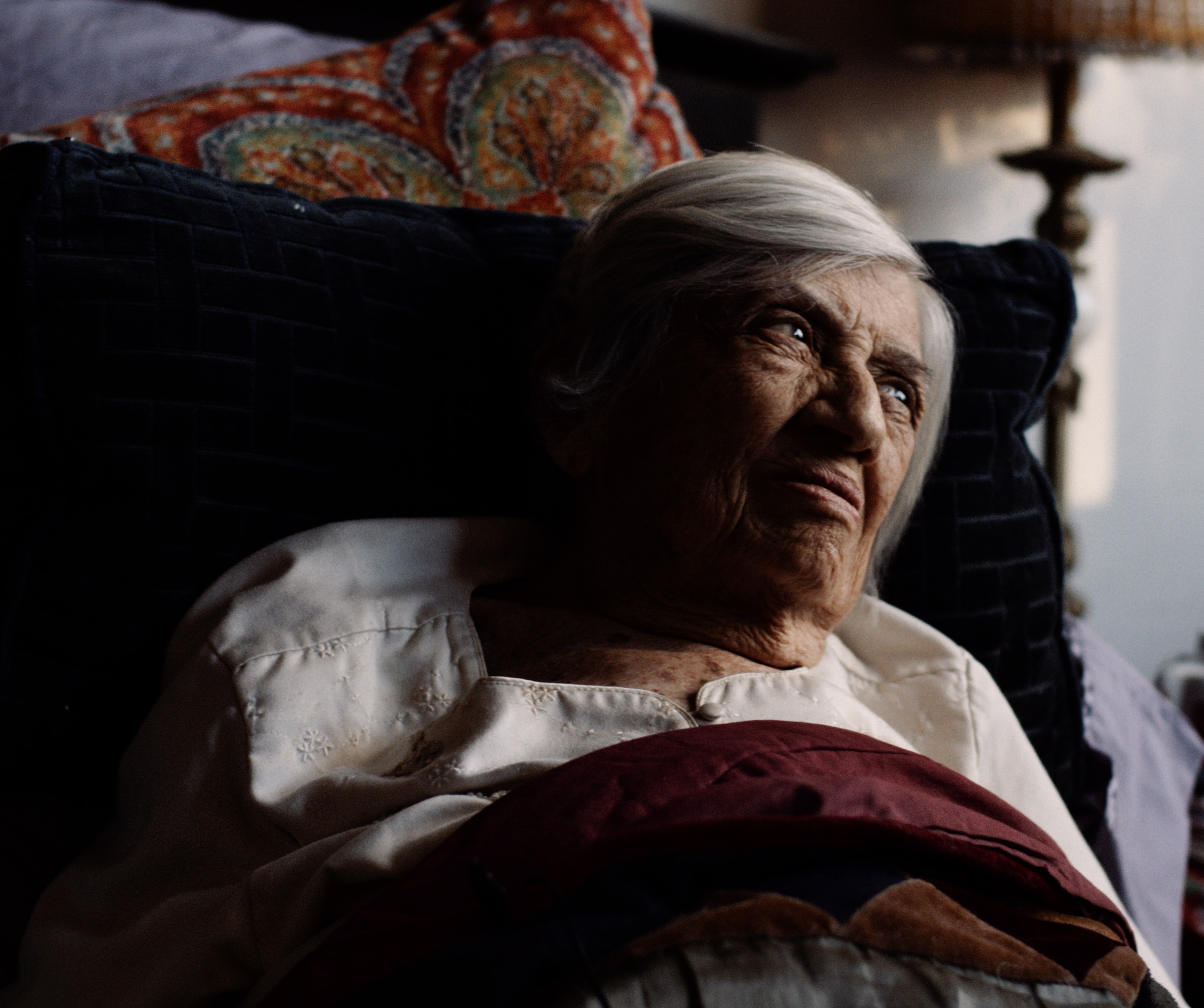
A news photograph taken in May 2021 features a 90-year-old woman seated in her walker at a rally for Palestinian rights. She is holding a poster that says “This 90 Year Old Jew Says Zionism is a Supremacist ideology.”
For Shatzi Weisberger, it was just one in hundreds of the demonstrations of her lifetime. And like all the demonstrations she attended, it was more than show. For a thoughtful woman fiercely loyal to principles of democracy and freedom, demonstrations were the visible manifestation of her most deeply held beliefs. She was strongly influenced by her grandfather, Samuel Gompers, founder of the American Federation of Labor.
Born in 1928, Shatzi was married in 1951 and adopted two children. The marriage lasted 18 years before Shatzi realized that she was most comfortable as part of the lesbian community. After the divorce, her relationships grew to new dimensions as she embraced what she would describe as “a deeply loving queer chosen family.”
Nursing would become her lifelong profession, always combined with the pursuit of social justice. During the 1980s, she joined the AIDS Coalition to Unleash Power, or ACT-UP.
While living on Long Island, she brought to light and fought against the now-notorious redline practices that discriminated against families of color. Strongly influenced by the work of Betty Friedan, she became a strong supporter of the lesbian political and social communities. A cofounder of Radical Jewish Lesbians Organizing and Dykes Opposed to Nuclear Technology, or DONT, she participated in “lie-ins,” simulating deaths that would be the result of nuclear attack. As she would later recall, “I remember crying because I felt that I was in the right place at the right time doing the right thing with the right people.”
Drawing attention to the obscene rate of incarceration in America — particularly targeting minority communities—Shatzi took to the streets of New York to distribute the publication No More Cages, an indictment of police and judicial practices and a core statement of the prison abolition movement. She could combine street theater with caustic humor, as she did when she organized “Bubbie’s Brigade.” Joined by three outrageously dressed lesbian supporters, she handed out challah while holding a sign that read “Jewish Dykes standing with Palestinian Queers.”
Despite the in-your-face humor, Shatzi’s support of Palestinian rights was one of the most conflicted of her choices in a long career of outspokenness. In her early years she was an ardent supporter of Zionism. With typical diligence, she decided she had to educate herself. As she would explain in an interview with Elaine Stein, staff organizer for Jewish Voice for Peace, “It just opened my eyes. I had no idea, and it was shocking…. It just broke my heart that the Jewish people who were always in the forefront of civil rights now were the oppressors.”
Shatzi died on Dec. 1, 2022. With typical grace and flair, she left her family, friends, and community with plans for her own “FUN-eral,” complete with instructions to decorate her biodegradable coffin and herald her passing with socially relevant songs sung by the Brooklyn Women’s Chorus.
Delores Williams
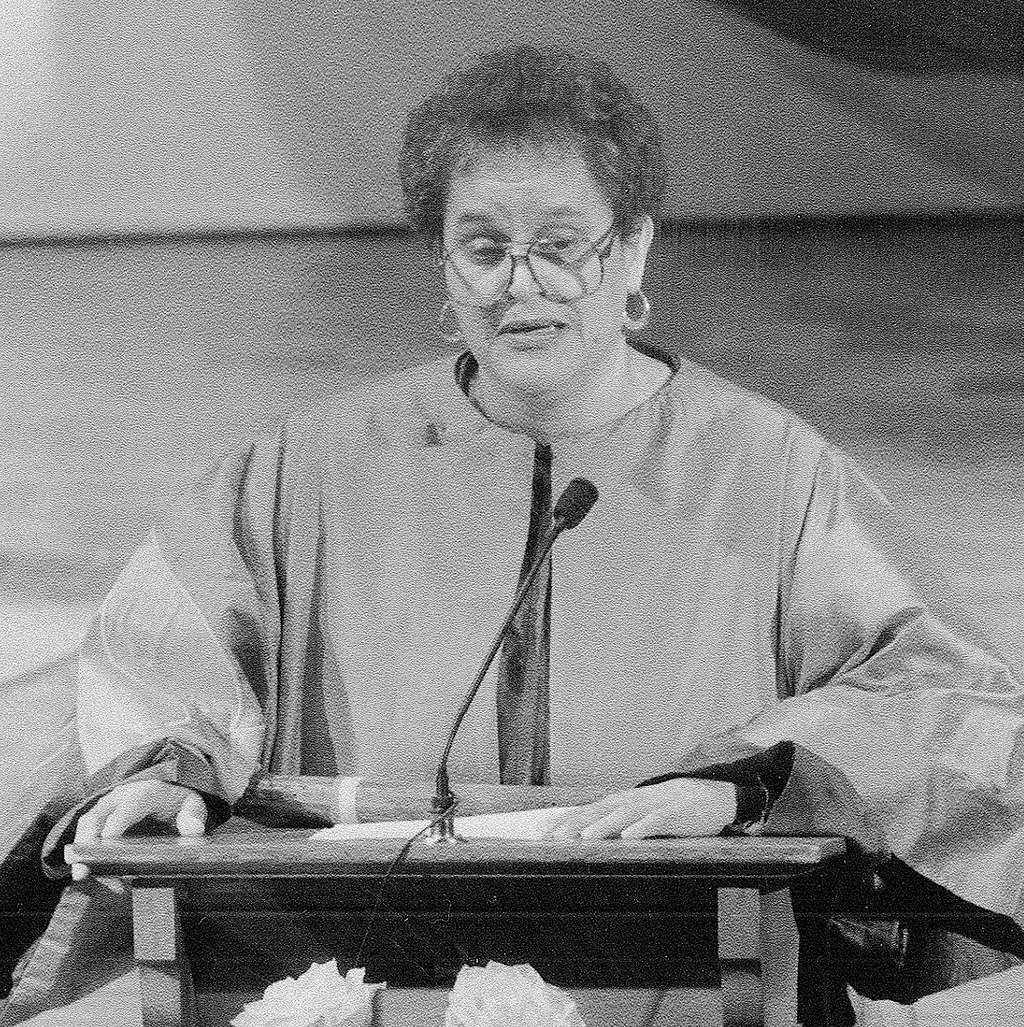
In a 2002 speech at Harvard Divinity School, Delores S. Williams described the way she had viewed Union Theological Seminary before becoming a student there in 1977. As a Black woman raised in the Deep South who had joined in civil rights demonstrations in the 1960s, Williams said she “saw it as an inane institution unable to face the hard task of justice-seeking.” That view would soon be changed by her meeting with the theologian Beverly Harrison at Union.
From Harrison, Delores Williams learned what it was like to view herself and her life with a feminist lens. “I was looking at the world and my life through male-colored glasses…It “helped me rise up from years and years of sacrifice.” But Williams realized that “feminism,” as a movement, was formulated from the perspective of white women, and did not quite fit her. Nor did the liberation theology that she deemed “hopelessly male….I learned it is not easy to know oneself.” Instead, she asked the question, “What was I to do with the religion of my mother, my mother’s mother, and my mother’s mother’s mother who was a slave?”
The words that spoke to her most powerfully did not come from a theologian but from the author of “The Color Purple,” Alice Walker. What Walker identified as most relevant to Black women was not feminism, but a spiritual, political, historical, and social condition of “womanism.” In Walker’s terms, womanists were not to be confused with “womanish” manners, traditions, or sacrifices. Womanists were “Responsible. In charge. Serious.” A womanist “appreciates and prefers women’s culture, women’s emotional flexibility (values tears as natural counterbalance of laughter), and women’s strength” and, at the same time, “was committed to survival and wholeness of entire people, male and female.” Womanists came from a tradition of respect and love for “the colored race…just like a flower garden with every color flower represented.”
Here, in Walker’s words, Delores Williams found what she would call, in a 1987 article in Christianity and Crisis, “significant clues for the work of womanist theologians.”
For Williams, that work became all-consuming, exacting an extraordinary degree of dedication. Born in 1937, Williams had grown up in Kentucky as a Seventh-Day Adventist and married a Presbyterian theologian. He died suddenly of a heart attack in 1987 as Williams was in the midst of writing her doctoral dissertation. Originally titled “A Study of the Analogous Relation between African-American Women’s Experience and Hagar’s Experience,” it was published as a book in 1993, retitled “Sisters in the Wilderness,” and quickly earned recognition as a visionary work. In the words of her editor at Orbis Books, Robert Ellsberg, “Sisters in the Wilderness” was “a foundational work in womanist theology.”
The death of Delores Williams, on Nov. 17, 2022, brought an outpouring of accolades from friends, students, and academics. Rev. Dr. Gay L. Byron, a professor at Howard University who was formerly a student of Dr. Williams, praised her brilliance and vision as a professor and the warmth and hospitality of her home. “And in worship spaces,” he added, “she offered her poetic way with words and showed me that the best sermon is the one we bear witness to with our lives.”
Rabia Terri Harris contributed the memorial for Donna Felter.