Subscribe to Nonviolence Now Podcast on Apple Podcasts, Spotify and YouTube.
Join us for a compelling discussion that touches on coping with activist stress, preventing burnout, and healing trauma. In this joint (and season finale) episode of The Nonviolence Now podcast with the SuperHumanizer podcast, we unfold the challenges of navigating activism in both online and offline spaces with Hani Chaabo and Katherine G. Bogen. They share their personal experiences as activists and professionals, while also offering practical coping mechanisms and well-being remedies to help individuals heal and overcome the pressures of the online war.
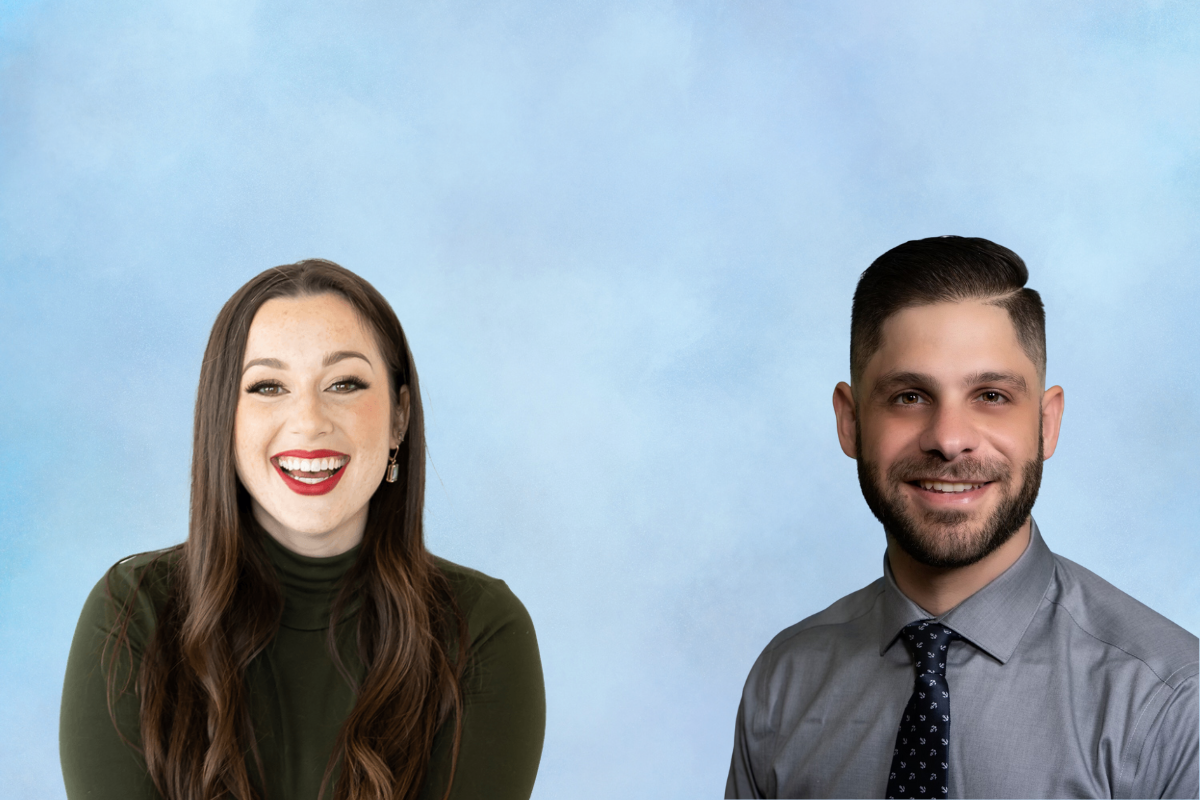
Hani Chaabo is a family, integrative, psychiatric and substance use medicine specialist, who runs a clinic that emphasizes mental health and lifestyle change. And Katherine G. Bogen is a Jewish doctoral student in psychology, specializing in trauma and human sexuality. She is also an Israel-Palestine scholar whose viral explainer videos on Instagram and TikTok have reached millions worldwide. Together, they co-host the SuperHumanizer Podcast and bring very personal and vulnerable perspectives to this conversation about resilience, mental health, and the intersection of activism and well-being.
—
Intro, Layal: Hello everyone and welcome to the Nonviolence Now Podcast, brought to you by Pace e Bene, where we explore the principles of nonviolence, where it all started, and how it shows up in today’s digital world.
Layal: Hello everyone, it’s Layal here with you today and I’m both super excited yet disheartened that this is our very last episode of our first season. Today’s topic is about online advocacy and coping with stress, and we have on our platform the cohosts of the SuperHumanizer podcast Dr. Hani Chaabo and Katherine Bogen. Welcome, guys! Thank you so much for being here with us today. I’m sure that this is going to be an enriching conversation because a lot of things are going on around the world. If we’re not living human rights violations, we are seeing them online. Life is getting stressful and tough and I’m very happy and humbled that you’ve taken the time to come on Pace e Bene’s platform and to share with us your experience through the SuperHumanizer podcast, your online platforms on Instagram and TikTok, and, equally, through your professions.
Joining us today is Dr. Hani Chaabo, a board certified family and integrative medicine physician who’s transforming how we approach stress, wellness, and resilience. From leading mindfulness-based clinics to supporting marginalized communities like Middle Eastern refugees and LGBTQ groups, Dr. Chaabo’s group embodies empathy and healing. As the medical director of wellbeing at Ridgecrest Regional Hospital and a nationally-recognized advocate for physician joy, he combines holistic care with commitment to systemic change.
Our second guest is Katie Bogen, a clinical psychology PhD student and activist whose research and storytelling empowers survivors of interpersonal violence. With experience organizing feminist conferences, advising national political campaigns, and connecting with millions through social media, Katie’s bridges personal advocacy and systemic action. Guided by principles of anti-racism, anti-colonialism, and empathy, she’s committed to fostering justice and community care.
Together, Hani and Katie are the cohosts of the SuperHumanizer podcast, a podcast that journeys into humanity’s most polarizing challenges, guided by the belief that empathy and understanding can bridge the widest divides. On today’s episode, they’ll share how mindfulness, storytelling, and advocacy can intersect in the digital age to help us cope with stress, heal from trauma, and spark meaningful change based on their personal experiences.
We’re gonna start off with a simple question: How did you two meet?
 Hani: Wow, that was what I call a universe occurrence. It’s one of those gifts that just came into my life. Katie is a soul sister that came into my life. Just like you, Layal, I found her on social media. In the beginning of all of this, so many of us found Katie because of her beautiful eloquence and her ability to speak to these really difficult topics and to weave her ancestry and our ancestry and speak to all of our hearts. So she drew me in, and when I first thought of the podcast, she was one of the first three people that I asked to come on. And that just changed my life completely and the podcast. But that’s how I found Katie, and then I interviewed her, episode number three, still our most watched episode till now. And within that conversation, I learned so much about zionism and judaism and the history of the Middle East, even though I myself am a descendant of Palestinians and I’m Lebanese. Katie taught me so much that I didn’t know in that episode and I think people picked up on that so much. And I’m a spiritual person—at some point I was looking for a cohost, I thought I shouldn’t be doing this on my own, and my cohost should probably be a Jewish person, and it instantly came to me that Katie should be the cohost. And when I asked her it was an instant yes.
Katie: Yeah, absolutely, we did I think one or two interviews together, or I came on as a guest interviewer for one of the episodes and it worked so well it was like, well what if we just keep doing this? And I, same, I’ve gotten to learn from Hani over the months now and it’s blossomed into a stunning friendship. I’m very grateful to have met him.
Layal: Let’s talk about nonviolence, because what you guys are doing is genuinely the baseline definition of what nonviolence is. How do you maintain your mental wellbeing although we have these obstacles, let me call them obstacles—being an activist consumes you, consumes a lot of you, takes a lot of your time, it’s part of who you are, it’s part of your identity. And so you have to at some point leverage that by taking, what, two- three other jobs in parallel while as well doing your activism work. So how has this been affecting you, honestly speaking, on a personal level, mentally, and what are some alternatives that you had to take?
Hani: I don’t know where to start, Katie.
Katie: One of us is going first!
Hani: I am still struggling with this question. Because I am “the stress doc,” right, on Instagram, and I run an “integrative stress reduction clinic.” However, I’ve been finding it really difficult to find balance and normalcy again in my life. Those two words, I’ve been trying to find them again for the last year. I still haven’t found them. So to be very honest from the beginning, I am struggling with my mental health. I think what keeps me from tipping over the edge, which I found a new definition of mental health is managing my sanity so it doesn’t flip into burnout or insanity or rage beyond compassion. So how do I remain grounded is for me now the bigger question. How do I remain grounded vs. how do I remain sane?
And one it’s about the basics. Like I’m very good at making sure I slept. So I’ve noticed that, so I wear this thing called an Oura ring on my hand and it tells me how I’ve slept. And in the last year it gives you a resilience score. And in the last year my resilience score has been like limited or fair the whole year, like I watched it go down after October 7 and just stay there. I’ve never been good or above average or excellent for a whole year and no matter how hard I try to like sleep and get my health back, I watch my resilience kind of teeter between like fair and limited, like still not at that. But I tell myself basics, I have to make sure I’ve slept because I’ve noticed I sleep less than the recommended eight hours. For the last year I’ve been sleeping about five to seven. So I try my best to sleep.
I feed myself. I’m the type of person that will probably skip meals when I’m anxious or when I’m like in the zone or I’m creating posts or whatever I’ll just forget about eating. So again basics, eating. And then two things that I’ve really found refuge in these days are my community, like really connecting to my community, and being more—like I’m more of an introvert, so I’m not the person that’s gonna be on the phone everyday talking to people and connecting with my friends which has gotten me in trouble sometimes. But of course I have a huge community and I love my friends. But what I’ve tried to do now is actually be more extroverted, so call my friends, schedule calls in the weekends, be more intentional about talking about what I’m going through. And it’s been amazing that even some of my community online, like one of my most cherished allies online is a profile named Palestine Rising, I will not say the name because they want to remain anonymous, but that person is like, we have a bromance. He reminds me to keep playing my piano, which is another place of refuge that I forget about. He reminds me that we’re in it together, we get angry and we vent to each other. So connecting to my community, that’s of course my direct friends and also my extended community of allies and activists online.
And then the second thing that’s been bringing me a lot of refuge is my spirituality. I don’t think I’ve been as spiritual in my life as the last year. And I’m somebody who was raised a muslim but I grew up in a christian country, Lebanon, and of course I’ve learned so much about judaism and hinduism and I’m a yogi, so my language for spirituality is informed by all of those disciplines. And so I, in the last year, have found myself saying alhamdulillah a lot to try to find gratitude, which is also a very common practice, evidence-based, trying to find gratitude, but it’s baked within Islam, right, this alhamdulillah piece. This tikkun olam, like let’s heal the world, let’s be in community with each other, like focus on that. Don’t let the haters drag you down, focus on that.
And then the last piece of my spirituality has been looking up into the sky and asking for a sign every time I feel like I’m at the end of my rope, which happens every week. I’ll look up into the sky and I ask for a sign, and a sign comes, and I’ll share with you a feel-good story because I think our audience needs to hear this very short one. My bio is not up to date because I actually just took a job as chief clinical and wellness officer at a health center in northern California, which, for me, was like, where did this even come from? It’s probably the best thing that can happen for my career, especially for the work I’ve been doing for wellbeing in medicine. And if you asked me three months ago or even five weeks ago, are you going to be moving from your job? I would have said no. I wasn’t even looking for a job, I actually got headhunted on LinkedIn. And I the reason I was so attached to my job was one, it was an amazing job. But two, in my job, I’m so insulated from the intimidation. So I have people calling my job everyday, not just my local job but also my national job—I have two jobs. And so people are trying to get me fired from those two jobs all the time in the last year.
So I told myself, at least in these two jobs that I’m in, I’m insulated, I’m protected, I’m loved for who I am, I’m promoted and supported. And my views don’t represent those organizations, those organizations don’t take political views. So my views are my views. But I’m in a setting around people who aren’t going to attack me for what I believe in. And in my new job, on the way to get interviewed, I was telling my partner I was really worried cause I know that with my podcast I’m never gonna be hired in an academic institution, for example, right? Like I’m just too political for them. And as we were driving there, I was telling my partner, when do I tell them? When do I ask them the question is my podcast gonna be a problem? Because I don’t wanna move to another job and then three months later I’m being told you can’t do your podcast. I’m not gonna do that, right, I have to stand in my values, I have to express myself. And literally thirty minutes later I get an instant message of acceptance right there, you know.
And so to say that spirituality has helped me not just stay sane but also to continue to find opportunities and blessings and people to embrace me within that. For me that has been one of the things that kept me the most sane in all of this.
Layal: Thank you so much, Hani, for sharing and congrats on your new position. I think the primary lesson that everyone should take with them is you will belong where your values align and you should not be afraid to take the step and to stand for what you believe in and to fight for what you believe in nonviolently. I mean your voice matters, your voice has an impact. You were initially afraid of that job, that person telling you, “I’m a big fan of your podcast and I’m so happy that you’re with us and that you’re part of our team.” So that by default puts you in a place where you feel that these are people that not just understand you but appreciate you for being part of their team and that really made my day so thank you so much for sharing this with us. Katie, let’s talk about the intimidation and then if we can go on to a feel-good story as well.
Katie: Yeah, absolutely! So I’ve also experienced a lot of professional intimidation. I’ll give an example that I thought was benign and wound up being quite consequential. I went to a professional conference last fall. It was in November, so about a month after October 7, and there was a ceasefire rally that was gonna be right around the corner from the conference hotel. And so, sort of on a whim, I went out and bought all of this poster-making material and markers and posted up in the hotel lobby, and I was like, “I’m going to this ceasefire rally, five minute walk from the conference hotel. Anyone come down and make posters if they want them for tomorrow.” And the front desk of the hotel told me, “You can’t do this in the lobby.” And I was like, “Okay.” So I went up to the second floor of the hotel outside the conference expo and posted on like the group messaging board for this conference, “Making protest posters outside the expo if anyone wants to make them for tomorrow.”
And someone who was in leadership in the organization reported me to hotel security. So they had me go and like talk to security and wait and speak to hotel management. Luckily I didn’t have to go alone. There were three different muslim women who were making protest posters with me. And as soon as hotel security came up, they were like, “You’re not taking her by herself,” and they accompanied me and they kept me emotionally safe and tended and were so lovely. And the next day we went to the ceasefire rally together with the posters that we made.
But out of that has come a few different things. One being academics reaching out to my bosses and calling me antisemitic, which is absurd. Like, I’m a jewish woman and criticism of Israel is never, it’s not antisemitic, it’s not inherently antisemitic. So that’s been a problem. And then this organization put together a new caucus, I guess, for jewish people and I’m concerned that this caucus is meant to advocate for Israel and not for jewish people. So the conference coming up, I’m deciding whether and how to take action. But also, the APA, the American Psychological Association, is revising some of its language around antisemitism. And so in the last year with SuperHumanizer, with my platform online, a lot of my colleagues have gotten to know my perspective on this. I lead a Jews for Intersectional Justice Caucus for the Association for Women in Psychology, we had a direct action hour for Palestine at the conference last year, I’m doing that again. So some of my colleagues nominated me to be part of this committee to update the APA language about antisemitism. I don’t know if I’ll be selected, I’m still under consideration. But that is new language in the charter of the American Psychological Association that could potentially state that criticism of Israel and sort of the actions of the state are not considered antisemitic language by the APA. And if I get to be part of that process, that would be enormous.
And so from some of this professional intimidation has come raising awareness from my colleagues of knowing where I stand and what my perspective is and then these professional opportunities to change psychology from the inside. And that, I really hope is effective.
As for mental health management, I agree with Hani, it’s been a difficult year. But I think one of the things that people found off putting about me quite early on was my capacity for balance. I think folks really wanted November, December, January for everyone to be in a state of grief and shock and horror. And while I felt those things, I also, because of my background in psych, was telling people: this can’t be all we are. We can’t be policing each other into misery. We can’t be telling each other that you must be enraged or depressed in order to care about this. Because all we’re doing now is really policing one another into burnout and trying to shepherd one another into burnout, and that’s not how this movement will sustain itself.
And so I found a few things really helpful. One being prioritizing generativity. So when I’m not a public-facing activist and a therapist and a scholar, I’m a creative. I write books, I play piano and sign, I have theater auditions coming up in January. I try to get very involved in a creative process because it keeps me feeling like a person.
I’m a very pleasure-oriented person. I want to feel good in my body, whether that’s doing yoga or having a nice meal or buying myself some spicy toys or flirting with a cutie at a coffee shop. Anything that sort of makes me feel good, great. I’m not gonna shun that because other people are numb. And in fact, the more I’ve talked about this online, like I’m a sexuality researcher, I work in sexual function scholarship for trauma survivors. Like my population of focus are folks with clinically significant PTSD who are struggling with their sexual functioning. And here we have an entire traumatized population really having a hard time with sexual functioning and so I preach embodiment online and talk about getting into the body. And I’ve had so many people in my DMs like, “Over the past year I haven’t been able to have sex with my husband,” or “I haven’t had an orgasm in six months, like I feel so alienated from myself.” And obviously I can’t be someone’s therapist online, but I can validate that for them, I can provide advice as a citizen, not as a clinician or as a training therapist. And that has been really soothing to me, sort of living the work of embodiment and showing other people that that is okay, in fact. It doesn’t make you a disgusting, gross, evil, whatever person to want to enjoy your body for the very brief amount of time that you have it. So that’s been really helpful.
And then the myth busting piece of this solidarity has been enormous for me, where some of the mythology that caused me the most pain when I was growing up was that everybody hated jewish people, that jews were gonna be alone forever, that the muslim and Arab world would kill me if they could, that and and… I was like inundated with this mythology of being hated. And then I incorporated myself and was welcomed into the movement for a liberated Palestine, and never have I felt safer in my judaism. Never have I had a larger community of people who have had my back, a more diverse, inclusive, and passionate community of people who have my back. I have an entire community and network now that I would not have had otherwise because that mythology works to keep young jewish people scared, to keep them isolated, to keep them paranoid about what other people think of them. And so part of maintaining my mental health has been cataloging, what are all the myths, like what’s all the baloney I was taught as a kid about how alone I am in the world? And how have those myths been absolutely shattered by my work with Hani, by people I’ve met over the last year? And so that I have found very soothing.
Layal: It’s crazy, just when people think they’re trying to push you out of something, there you are getting indulged in something bigger and greater and more exceptional. Word of truth, no matter how people are gonna try to shut it down, it’s just gonna end up rising way higher than even you may have initially thought it would. Kudos to you. How are you managing all of that? Even with the personal interests you have, everything you enjoy doing it to the world, you enjoy giving, it applies to both of you. But what are you really doing for yourself? You said you go out, you’re enrolled now in theater rehearsals. Hani mentioned the piano. But for your own self, for Katie, when Katie doesn’t want to read scripts, doesn’t want to look at books, doesn’t want to write, doesn’t want to read, Katie just wants to sit in solitary, alone, and have just a breath, catch a breath, because I think at some point we all need that.
Katie: I think if I sit and I do nothing, there is a sense of like creeping ennui where I will get a little sad or a little wistful about the state of the world. But I don’t run away from it. Like I’m not trying to stay busy so that I can feel nothing. I love when the sadness hits or when the real heavy emotions hit because that is also a reminder that I’m human, that what is happening in the world is not acceptable, is not normal, is not okay with me, and that I’m going to have a visceral reaction to the cruelty and brutality of injustice. And that we should, it should affect our bodies when other people suffer to that degree. And so often I’ll make myself some tea and wrap myself in a cozy blanket and have like a good cathartic cry. I love to cry on the floor of my shower. I’ll turn the water as hot as I can stand and I’ll sit on the shower floor and cry and it feels like I’m a toddler a little bit. And I’m like, okay, she’s three years old and maybe three-year-old Katie needs some TLC right now.
And when I’m not doing that, I do love to write. I think it doesn’t feel active necessarily because there’s a lot of angsty poetry and like deep feeling work that has come out of this that I never share with anyone that I know people would perceive as myopic or grotesque or self-indulgent or narcissistic or whatever, and it’s just about me. So journaling and writing poetry, those are the things that help.
Hani: Yeah and I would echo that I have learned to sit with a lot of grief these days, way more than I’ve ever sat with in my life before. When I’m by myself, there is that creeping ennui, you’re so right. Like I just feel either restless, like I have to do something, like I find myself grabbing my phone a lot in those moments, like that survival-based. I feel like, what happened now? What’s happening in Lebanon? What’s happening in Palestine? But then, I’ve found myself also very actively practicing, put it down. Put it down. Put it down. And the other day my horoscope said, just look at the sky today. And so I anchored to that. I was like, okay, today I’m going to put it down and I’m going to look at the sky today. And so I made it very intentional that I would just take that moment of pause.
And yes, a good cry, I mean the amount of times I’ve sat and then imploded out of myself imagining all the possible scenarios of what a Trump presidency is gonna mean for us. And then in the same moment like just letting myself feel that grief of, yeah, we lost. Democracy lost. Okay. Let me sit with that. Because I’ve noticed that in the last year, sitting with that grief has not just helped me cope with it. It’s also helped me be a better doctor and show up better for those that are in grief in my clinic and also show up for those that are in grief in my community.
And before, I was showing up for people who are in grief for Palestine and Lebanon and people that had a connection to that. But now because of the grief I’ve experienced in the last year, now I’m showing up for the grief that my American friends are experiencing of the loss of a Trump presidency, what that means as a loss for them, their grief. Now I’m showing up better for that. So, yeah, it’s, it’s been interesting to sit by myself. But I think at the root of all this mental health stuff is how do we take this really awful moment and make us better humans in some way and show up better in this time.
And I’m really grateful that at least within that paradigm of mental health, I’m able to still mine those moments of growth from this devastating grief and and this time we’re in.
Layal: Thank you both of you for sharing. I think it’s really important to let the world remember and know that you two are superhuman beings, but before the super, you are human too.
Let’s move on from here to your personal experiences on the podcast. How has it been or how does it feel getting these exceptional people on and talking about these subjects and deconstructing these difficult subjects in a very realistic humanistic way once the episode is out, once it’s done?
Katie: It feels to me like such a privilege and an honor every time and an homage to the utility of curiosity, of if we continue to approach conversations about things that are controversial, things that are painful, things that evoke the trauma well or the pain well within us. If we can approach those conversations with curiosity, not only do we never stop learning, but we grow in our humanity and our connection to other people. And we’ve had guests on the pod—you finish the episode, and it’s like, I feel like more of a person having had that conversation. I feel more deeply rooted in my personhood than I did before talking to this other human being.
And I really think that’s a part of the superhumanizer project is, like, rooting to the humanity and all of us. But it is surreal because we’ll have people on the pod, and I’m like, there’s no way I should get to talk to this person. Like this feels absurd every time. And yet the conversations continue to be stunning, and they show up as, like, vulnerable, authentic selves, which really facilitates a dialogue. So that’s been my experience of, like, holy moly. How do I even get to be here? And also, I feel more like a human being afterwards than before.
Layal: That’s amazing. Hani, is there anything you’d like to add on that?
Hani: Wow. I mean, that is such a beautiful reflection. I loved hearing you say that, Katie, because I think it’s the first time that I’ve ever heard anybody pose this question to you. Like, how is your experience on the pod? And just to hear that you’re able to feel that humanity at the end of each interview, which is also what I feel, and for me, what fuels my continued motivation to do this work, because it really is hard every day. The outcome of the podcast has been so wonderful. The other day, we made it into the twenty fifth top chart around the world. So now we’re in top charts in 25 countries, and those countries are English speaking, Spanish speaking, Arabic speaking, and the list continues. So the response has been so great, but the work is hard and feeling that humanity within each episode is what keeps us going.
What I love also most about what’s coming out from the podcast is how people are interacting with us online. The other day, we had a person who responded to a post about Trump that we posted, and she was responding to the content of Trump saying basically that trans rights are gonna be taken away. Basically, funding for trans surgeries are gonna go away, all that stuff. And I posted it as a video that’s breaking news because I thought it was new. I thought that he actually said this anew, but turns out that the video was from February, so to me, it was even more mind blowing that something so old, none of us saw it, and now he’s president. And now it’s shocking all of us, these things.
But the person responded to that video and to our podcast, because it’s on our podcast, saying that she felt called to make her voice heard within her community for the first time. She is a real estate agent. She’s a white woman. She lives in suburban America, and we know, like, suburban white women were some of the people that voted for Trump, right? But she felt so called to make her voice heard that she ended up making these beautiful Instagram stories with statistics from the Trevor Project and about suicidality for LGBTQ kids and why this policy is gonna end up in actually hurting lives. And then I learned something new. Even though I’m an LGBTQ person, I learned something new through that superhumanizer that took our work, took something she felt from within our work, and then furthered that for more humanity in the world. And I think that encapsulates so much of what superhumanizer does.
And I will add one last thing, is that when Katie and I joined forces on this podcast, when I would interview people by myself, it was definitely a very beautiful, magical experience. But at the end of interviews with Katie, we always get this feedback that I never knew that I was gonna come on this interview and feel like I was in a therapeutic setting. And that’s I feel like that’s the magic of bringing Katie on and having this collaboration is that people come into our pod to experience some form of healing conversation. We do that together, whoever comes on, and and I love that our audience also feel that with us.
Katie: Yeah. I totally agree. And something I’ll add too about the comments on our social media is I think oftentimes when you have these podcasts that get really popular really quickly, there’s a hierarchy that emerges even online of like the podcaster is the expert or the podcaster is the authority. And then the audience is just the audience. Like, there’s a hegemony that emerges really, frighteningly quickly and organically.
And I think that hasn’t happened with SuperHumanizer or at least not that I can see. Like, our listeners will come into our comments and say, I have to correct you on this actually, or, like, this doesn’t sit well with me, or can we talk a little bit more about this? And we’re constantly trying to engage. Yes, yes, yes, yes, yes. Because, obviously, no podcaster is a perfect human. Like, we are gonna flub things. We’re gonna misrepresent sometimes. We’re gonna apologize and try to correct. Like, it’s a really iterative process. And so knowing that we have this community that’s also very accountability-oriented, where if they are ruffled or bothered by something that we’ve said, they feel comfortable telling us, and we feel comfortable responding, I think has kept us all at this, like, superhumanizing level and hopefully prevented some of that icky, like, hierarchy stuff from plaguing the pod. So.
Layal: I want you to take a moment to think of who you feel like addressing and what would you like to tell them as a superhumanizer.
Katie: I have two things. One, I wanna give credit to my Jewish aunties who helped raise me. My dad was a single dad, and so I was raised by these three incredibly bad ass powerful Jewish academic women. And they used to interrupt me if I used filler words like “like” or “um.” They’d go “uh-uh,” and have me restart my sentences from the beginning. And they taught me to be articulate, and they taught me to form narrative and be able to share them in a manner that was compelling.
And I really think I would not be able to do the work that I’m doing right now if not for their intensive loving socialization. So shout out to my Jewish aunties. And a message that I wanna share to all of your listeners is pleasure is not your enemy. I know that shame can make pleasure feel like your enemy. I know that guilt can make pleasure feel adversarial.
When you experience pleasure, it reminds you, oh, this feeling is something other people deserve too. I have a tangible example of what I am fighting for. So allow yourself to experience pleasure so that you can project and imagine that onto other people, of these folks also deserve to exist in their bodies, feeling good, alive, happy, tended, etcetera. And that will give you motivation to stay in the fight. Those are my two.
Hani: Beautiful, Katie. It makes so much sense that your aunties trained you in this eloquence. Oh my god! Now I’ve understood. Because I have to work on filler words myself too.
On SuperHumanizer, we always end with a prayer, which I absolutely love because I am not a very religious person, but I am very spiritual. And I think a prayer can mean so many things to so many people, and it’s something that we can all connect on. So I’m not going to repeat the prayer we do on SuperHumanizer, but I’m going to repeat a prayer I heard from Abbas Alawieh, who actually leads the Uncommitted Movement. And when he first appeared to me on my social media, he was this beautiful, vulnerable man who was crying, and from his sharing, it was the beginning of what was happening after October 7, from his sharing, he shared a prayer from his grandmother. And what he was promoting was such a superhumanizing notion in that moment, in that prayer. And the prayer goes—from his grandmother, who is a Nakba survivor—“May we pray for the protection of all people so we may always be among the protected.” So I’m just gonna leave us with that one.
Layal: Thank you so much for sharing this. Katie, Hani, what are some key takeaways from today? If our listeners are drained, they really want to do something, they just feel helpless, but there’s still that little tiny will. I’d like to maybe give one, and I’d like to hear the rest from you. And this is something Hani and I have exchanged not so long ago. It’s the concept of doing something is always better than doing nothing.
No matter the contribution, no matter how small, and I’m not talking about a financial contribution. Of course, it can be financial. But if it’s just a repost, sometimes if it’s just an opening, a discussion, or a reflection with your friends, if it’s participating in a voluntary program, that is still something. And without you, you’re one person less in the community that is trying to make a difference, and that’s a bigger burden to those that are trying to make a difference. So something is always better than nothing.
Hani, if you were to come up with something more brilliant than what I just said—
Hani: Oh my goodness.
Layal: —and I haven’t stolen it from you because I did not get to hear it this time.
Hani: Well, you know what? Thank you so much for saying that. And I think that what you said is also an embodiment of who you are, Layal, because I don’t know if people know this about you or not, but all the humanitarian work that you’re doing is a huge inspiration. That’s how we found each other. And so doing something rather than nothing is what connected us.
And so I’m gonna piggyback on that and say that connect with people. Connect. Like, I know that so many of us are introverts or have social anxiety or don’t feel worthy of being part of this movement, or feel like this movement of human rights is just so much bigger than us. And so what can one person do? And here’s an example of three people that decided, let’s do something. And we found each other, and we’re doing a lot. And so what I would say is plug into the community. Join the community.
Come out of the shell. If your voice is still like a meek little scream, but on the inside you feel like you wanna roar, come roar with us. We’ll roar right with you, and we’ll empower you, and you’ll discover your roar in ways that you’ve never discovered before. And I think that, of course, there’s so much profound work we’re all doing, but the three of us are also everybody’s cheerleaders. Right?
Like, we are here to support you and empower you and cheer you on just like you’re doing for us. And if we don’t do that for each other, then the movement dies because the movement is so tragic and difficult. Any movement for human rights, but it’s us joining each other that empowers us to keep going.
Katie: And I think I’m gonna dovetail what each of y’all just said, which is whatever you put into this, you will receive tenfold. If you show up to community, you get a massive expansive community. If you put labor into a movement, the impact of that movement is immediately multiplied. Like, your effect on this is multiplicative. And to think that you’re not gonna get a sort of spiritual return from that, I think is silly. Like my life has gotten infinitely better from the people that I’ve met as part of this movement. And that’s not to say people aren’t still suffering. Of course they are. And that’s not to say this isn’t a little bit myopic of like, put in so that you can get out.
But also put in energy and effort and you will receive what you deserve, which is going to be a sense of love and care and commitment from this community and a sense of having a place. Like I think some of what injustice does to us is it gives us the sense of chronic displacement or alienation where we’re isolated and exhausted and we don’t get to be a part of anything. And imagine your life without that feeling, it’s a better life. Put in and you will get out of that tenfold.
Layal: Hani, we once talked about your involvement in Children Not Numbers. Can you please talk to us about it? How can people get involved?
Hani: Thank you for asking about that. It’s really, I think one of the most beautiful experiences I’ve had out of this is becoming a volunteer at Children Not Numbers. The people that put together Children Not Numbers, they’re two mothers who decided that we’re gonna put all our lives aside. They are working with governments around the world. They are so impactful at working with the different organizations on the ground. And the work itself is really gut wrenching.
So I’m on the well-being task force. I help them come up with policies and guidelines around well-being for their social workers and the doctors on the ground. I also provide mental health support directly to them. We do a well-being meeting every two weeks for our social workers, and so that’s where they bring in all their experiences, what’s happening over there. And often, we have doctors and health care experiences, what’s happening over there.
And often we have doctors and health care workers from Gaza joining us and sharing with us. So there’s these, like, beautiful healing grief circles, and sometimes it’s not healing at all. It’s just about us getting on these calls and crying with each other and just really, like, feeling the awfulness of what’s happening, like, when there is no evacuations happening, and we’re literally watching one child after another die after months and months of preparation and work and putting together these medical rosters and these cases so that we can advocate for them to get evacuated. It takes a whole international effort of multiple dimensions and multiple specialties to make these evacuations happen. And so when they’re halted and the children start dying, it’s all this effort that just feels like it goes to waste.
So we get on these calls, and we cry it out, and we talk about how we deal with grief. And so for me, that’s been some of the most impactful work of plugging into a lot of SuperHumanizers that are doing a lot of really important work. And the way that you could get more involved, you could definitely volunteer. Whatever you do, we need volunteers of all different professions. Contact us and try and join the team.
And then, of course, I mean, donations. Right? Like, your actual donations are gonna go a long way. For example, there’s one child that we evacuated who was an infant who was having a developing liver condition where their toxins of their liver was building up, so they were turning yellow. And in any country that has basic services right now, that’s something that’s dealt with very easily when a child develops it. But if it’s not dealt with, the child dies, and they end up having a very, like, expanded abdomen because fluid is filling within their abdomen because of the liver failure. And so this child’s super yellow, and she was evacuated, and it cost $300,000 for her to get the treatments that she needed, and we were able to pay for that fully from beginning to end because of the generous donations of people around the world.
So your donations are definitely going a long way, not just in terms of medical care, but also in terms of tents and aid and food. So, yeah, you can be involved directly or by donations or just sharing posts from Children Not Numbers and raising awareness.
Layal: Thank you so much, Hani, for shedding the light on that. Katie, is there any association or organization you’re also part of and you’d like to shed light on for our audience to potentially be able to take part in and volunteer or contribute to?
Katie: I wanna share a resource that a lot of folks don’t know about that I think are particularly important when people are seeking evidence-based therapy. I work in a training clinic. I’m a fifth year doctoral student in clinical psychology, and there are training clinics at most of the clinical psych doctoral programs across the United States, where you will be seen by a therapist who is often being peer supervised by other trainees, who is supervised by a licensed psychologist, who are being trained in like gold standard evidence-based practices. And so if you yourself are seeking mental health treatment and you’re not sure where to go, or the therapists in your area are prohibitively expensive, like $180 to $320 per session, and you want to pay a much more reasonable cost, like $5 to $60 a session, look up your local clinical psychology training program and see if they have a training clinic.
I have found it so stunning to be a part of that training, and it breaks my heart that so few people know about it. So that’s just a little shout out to clinical psych training programs and anyone who is looking for therapy. If it’s too expensive for you to go to a PhD level psychologist, this is an alternative option.
Layal: What would you personally wish for the world, which is the last thing I’m gonna ask you to do?
Katie: Maybe this is because I’ve been watching The Good Place. One of the themes of this show is people being allowed the opportunity to be better today than they were yesterday. I don’t demand perfection from the world or myself or my allies and comrades in a struggle, but may you be more compassionate today than you were yesterday.
Layal: Amazing.
Hani: Beautiful. I read one time that compassion is not about feeling good in suffering. It’s about recognizing suffering. And my wish for the world is that we are able to look at suffering and see suffering and remove all the layers that stop us from seeing that suffering, all the stories that eliminate suffering as actually happening. My hope is that we can just look at that suffering, whoever’s going through it, and recognize it for what it is, pain and suffering, not these stories that we build around it.
Layal: I’m gonna wrap up with what the two of you said by saying that I personally wish for peace, not in the oblivious claim of peace, but in the inner peace for people to find peace within themselves. Because once people manage to truly and deeply find peace within themselves, forgive themselves for the past, forgive those around them, and imagine this replicates around the world, I don’t think there would be any more problems or troubles or chaos around us. So—
Hani: Suffering. Yeah.
Layal: I hope that our dreams and our aspirations reflect on every action we take on the ground, every action we take online. Think of the possibilities that will help us move forward as a community and not just individually while also taking care of our mental well-being individually or even as a community.
Thank you so much, Katie and Hani, for joining us today. Once again, you’re amazing. Stay sane. Stay safe. Peace to you all, and have a great week.
Thank you for joining us on the Nonviolence Now podcast. We hope today’s episode left you feeling inspired. If it did, don’t keep it to yourself. Share it with your friends and community. Together, let’s spread the word about the power of nonviolent action.
Outro, Layal: Thank you for joining us on the Nonviolence Now Podcast. We hope today’s episode left you feeling inspired. If it did, don’t keep it to yourself—share it with your friends and community. Together, let’s spread the word about the power of nonviolent action.