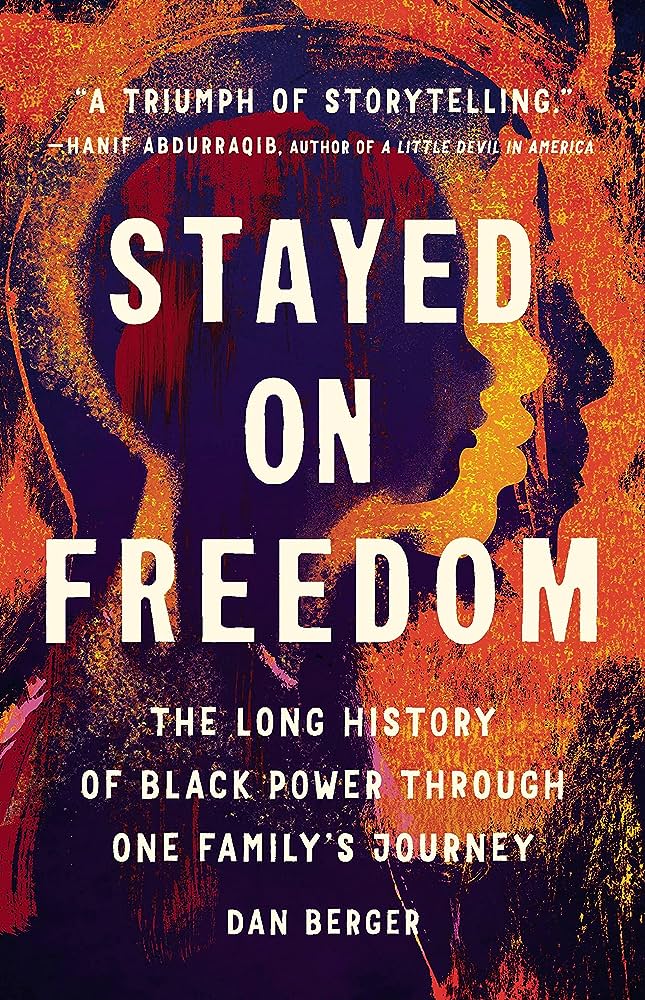
“Stayed on Freedom” is an important new work from a leading contemporary historian. “Stayed on Freedom” is also, however, much more than that. The family in question is an extraordinary one, whose individual and collective lives portrayed here have helped shaped significant African and African-American social justice, human rights, peace, and intellectual movements for more than half a century. Well beyond “Black Power” or even “good history,” the work of Zoharah Simmons, Michael Simmons, and Aishah Shahidah Simmons deserves greater acclaim and celebration, beyond even the spotlighting of this inspiring book.
The Simmons family are surely not the only behind-the-scenes activists who deserve greater attention from those of us connected to this work: professional peace historians, grassroots organizers, interfaith and spiritual activists, and all the builders of social change movements. But they are indicative of a special moment in U.S. history and connect us to unique phenomena in world affairs. Their collective stories, therefore, provide rich possibilities for the proponents of peace today.
It is no secret that this reviewer, particularly during my service as FOR-USA National Council co-chair, spent many hours with Sister Zoharah — gaining from her advice and working to bring her closer into FOR’s leadership circles. A disclosure might be useful here: author Dan Berger is also an old friend. But a final disclosure might be the real connective tie that binds personal, political and organizational histories: Zoharah, Michael and I have long shared a common mentor (albeit one given too little attention in this volume). Pan-African pacifist Bill Sutherland set a path towards radical Black internationalism which the Simmons family follows and fits into through word and deed and vision.
Berger adeptly charts the lives of Zoharah and Michael, from their early educations to their days with the Student Nonviolent Coordinating Committee, or SNCC. Working throughout the South, these SNCC organizers grew in their skills as well as their strategic perspectives. They both had a hand in the pivotal SNCC Atlanta Project, which initiated the suggestion that whites might consider working against racism in our own communities while empowering groups like SNCC and many others to experience unfettered Black leadership. This call, often portrayed as the time when “whites were kicked out of SNCC” and linked to Stokely Carmichael/Kwame Ture’s controversial legacies, is still a significant and complicated notion for 21st-century organizers trying to discern the line between identity, allyship, camaraderie, and Beloved Community-building.
The Simmons’s family insights regarding the fault lines of these decades of nuanced and sometimes divisive power politics are, for this reader, given too little space. The book does, however, carefully chronicle their various personal and political post-SNCC paths — in service to the Quaker-based American Friends Service Committee; in conversion to Islam; in travel to and expertise in East European politics at the height of the Cold War; and in Black feminisms. Indeed, the Simmons’s individual and collective experiences span a gamut well beyond what is understood as U.S.-based Black Power politics. Theirs is the story of deep-thinking radicals who never stopped exploring the complicated challenges before them, taking risks and making choices which are both inspiring and prophetic.
It is true, as advertised, that “Stayed on Freedom” can be seen as a “triumph of storytelling,” and Berger has become a key storyteller of the contemporary Black experience despite being a privileged white professor. But it is a must-read book for reasons other than that. Reading between the lines of these behind-the-scenes movement histories, one will uncover a wealth of insights regarding how we can and must be both deeply radical and nonviolent, must build resistance as well as reconciliation, and must forge unity across still-troubling divisions of race, gender, generation, sexual orientation, national borderlines and beyond. Get hooked by the great stories, but work towards what these histories insist we continue to do — together, today and tomorrow.