In China, citizenship on trial
The Year of the Horse opens with a wave of trials against people calling on their fellow Chinese to construct a new, engaged citizenry.
Last week, hundreds of millions of Chinese traveled home to be with their families to ring in the Year of the Horse. The two-week new years celebration is filled with fireworks and food, a tradition in China that many still cling to as the country grows increasingly urbanized and commercialized.
But this year, a group of activists were missed from their families’ festivities. The Chinese Communist Party scheduled the majority of trials for some 20 participants of the New Citizens’ Movement for the week preceding the new year celebrations, hoping that the overlap would diminish public awareness of the trials.
The New Citizens’ Movement is a multi-issue campaign for systemic change that has gained prominence in China over the last year. Comfortable working both inside and outside the system, the movement has used a range of tactics, from launching legal actions and filing freedom of information requests to staging demonstrations online and in the streets. Sparked by the publication of a 2012 article by the well-known human rights defender Xu Zhiyong, at its core the movement calls on everyday Chinese to participate more actively in civil society. And now these “new citizens” are facing a harsh crackdown.
A wave of trials
On April 21, 2013, Liu Ping, Wei Zhongping and Li Sihua were part of a demonstration in the city of Xinyu in Jiangxi province. The event was staged to protest the detention of other activists, and after the event they uploaded photos online of themselves holding posters declaring solidarity with the detained. Within a week, these three found themselves behind bars. Their charges: gathering a crowd to disturb public order. On Dec. 3, 2013, the Jiangxi Three, as they became known, would become the first group formally tried from the New Citizens’ Movement.
Despite their participation in the nascent movement, the three were far from new to civil resistance. Liu Ping had been forced from her job at a steel plant in 2009 when she began petitioning for worker’s rights. Wei Zhongping, like Liu Ping, began his activism on worker’s rights and has also campaigned for housing and land rights. Li Sihua has campaigned for China to ratify the International Covenant on Civil and Political Rights. All three also launched failed electoral bids as independent candidates in 2011.
Shortly after the Jiangxi Three went to trial, others associated with the New Citizens’ Movement followed suit. On January 24, Liu Yuandong stood trial for staging demonstrations against North Korean nuclear tests. Three days later, trials began against petitioner Li Wei and lawyer Ding Jiaxi, who had been detained after unfurling banners and giving anti-corruption speeches in a crowded shopping area. The two dismissed their lawyers in order to postpone their trials until after the new years festivities, a tactic used by New Citizens’ Movement participants seeking increased public attention of their cases.
Hopes for change
When Xi Jinping became the new president of China in March 2013, there was a general feeling that he would be more liberal than his predecessor, Hu Jintao. Before taking office, Xi Jinping inspired hope for reform by calling for a comprehensive crackdown on graft. Corruption, mainly related to illegal demolitions and evictions, as well as health and labor exploitation, is a serious issue in China. It is at the source, in one form or another, of the majority of demonstrations, online campaigns, legal challenges and the millions of petitions filed every year. However, the jubilation over Xi Jinping’s declared war on corruption soon receded with the parallel crackdown on civil society activists, many working to fight the very corruption the president had promised to root out.
But the crackdown just made the calls for reform stronger. In certain respects, Xi Jinping’s repressive policies against civil society participation fueled the rise of the New Citizens’ Movement as much as the work of the activists who have been or are awaiting trial for their involvement.
At the heart of the movement is Xu Zhiyong and his 2012 call to action. Well before the article was published, Xu Zhiyong had gained notoriety as an activist and a lawyer.
A graduate of Beijing University, where he completed his doctorate of law, Xu Zhiyong and his partner, Teng Biao, another high-profile human rights defender, organized a sophisticated campaign to abolish an abusive system of arbitrary detention known as Custody and Repatriation in 2003. A few years later Xu Zhiyong was at the forefront of campaigns against the even more arbitrary “black jail” system, a network of secret detention facilities to detain, often torture, and expel petitioners from urban centers. He also served as an independent candidate in his local Beijing district legislative body stating, “I have taken part in politics in pursuit of a better and more civilized nation.”
In 2009, he made headlines after defending families affected by melamine-poisoned milk powder. He became the embodiment of a new vision for China, even appearing on the cover of Chinese Esquire wearing a pinstriped shirt with French cuffs and carrying a black leather-bound legal pad. The theme’s issue: Chinese Dream. But even as Xu Zhiyong was celebrated on the cover, he was under detention on spurious charges of tax evasion for his nonprofit the Open Constitution Initiative. He was released, but the organization was shuttered.
Xu Zhiyong’s work extended beyond the courtroom. A woman named Liu Hua, who was driven to live in a tunnel in Beijing after her husband’s attempts to uncover local party corruption forced them from their village, recalled Xu Zhiyong’s support. “He used to come all the time, bringing us quilts that people had donated, and he even slept there for three nights so he could experience what it was like,” she told The Telegraph.
Despite this type of street activism, Xu Zhiyong is often depicted in media as a cool-headed proponent of moderate reform. However, Eva Pils, law professor at the Chinese University of Hong Kong, and Joshua Rosenzweig, a human rights researcher, argue that Xu Zhiyong’s vision for China is in fact a very radical one — particularly given the current one-party state.
To think of him as a moderate does a great disservice to Xu Zhiyong and the “force of popular resistance he and others have successfully coordinated,” the two wrote. In fact, they add, the only thing moderate about Xu Zhiyong, “is his unwavering advocacy of nonviolence.”
For his part, Xu Zhiyong was arrested in August after several months of house arrest. Following a summary trial in which the judge did not permit him to even finish his closing statement, he was sentenced to four years in prison for disturbing public order.
So, what’s new about the New Citizens’ Movement?
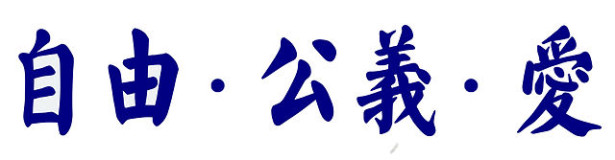
In the article that called the movement into being, Xu Zhiyong writes, “The goal of the New Citizens’ Movement is a free China ruled by democracy and law, a just and happy civil society with ‘freedom, righteousness, love’ as the new national spirit.”
At the core of the New Citizens’ Movement is the citizen — an independent political and social actor who is responsible only to the laws that have been commonly agreed upon. With this definition as the bedrock, the movement calls not only for protest but also for people to become more engaged in their everyday lives, through dinner conversations, political discussions and actions like community service. In the call to action, Xu Zhiyong enumerates a long list of ways to engage, which include: “Repost messages, file lawsuits, photograph everyday injustices, wear t-shirts with slogans, witness everyday events, participate or openly refuse to participate in elections, transcribe, hold gatherings or marches or demonstrations, do performance art, and use other methods in order to jointly promote citizens’ rights movements and citizens’ non-cooperation campaigns … Practice the New Citizen Spirit in action. Citizens’ power grows in the citizens’ movement.”
Granted, many of the activists who have faced trials or detentions related to their involvement in the New Citizens’ Movement were not radicalized by Xu Zhiyong’s article. They were mostly veteran activists who had been involved well before 2012. But his words provided a master framework for dissent, which served to galvanize both civil resistance and the ensuing political repression.
Next week, as the Chinese new year celebrations culminate in the lantern festival, as the last fireworks sparkle and the mountains of red paper are swept away, Ding Jiaxi, Li Wei and others will return to court for exercising their rights as citizens. As Human Rights Watch researcher Maya Wang observed, “The government is redrawing its red line about what is allowed, and clearly street action with a clear political theme is not allowed.”
But, despite the arrests and the trials, the energy of the New Citizens’ Movement will undoubtedly continue in the Year of the Horse.
By targeting tech infrastructure critical to ICE’s new surge of arrests, Vermont residents are showing what it looks like to go on the offensive.
Defending the upcoming election from authoritarian capture will require massive turnout, and we all have roles to play.
Across rural Southeast Africa, a small but loud grassroots movement has emerged to resist destructive Chinese mining companies — and they are winning.