This article is an excerpt of an essay originally published by The Arrow.
My parents had created a sanctuary, a place where I was free to be myself: reading, creating, laughing as loud as I wanted. Home was our tiny apartment in the Walt Whitman housing projects of Fort Greene, Brooklyn — an oasis from the outside world. I was loved. The end. I was over-loved. My mother and father wanted more than just what the public school across the street could offer. My father, who had not long returned from a trip to Africa when I was around three, could not bear the thought of sending his child to a regular “white man’s” school. So he conspired with my then 20-year-old brother to send me to a school founded and run by young Black Power militants who were conscious, hopeful, and full of fight and fire. This is one of the two great interventions my brother made in my life at a very young age.
The Uhuru Sasa Shule (Freedom Now School) was African-centered, and their mission of social justice education focused on making sure we loved our Black selves as descendants of the first people. My enrollment in a school that prided itself on its commitment to “nation building” meant that days were filled with learning about African kings and queens before the trans-Atlantic slave trade. While my classmates and I did indeed receive our math lessons using abacuses and manipulative rods, our social studies lessons consisted primarily of the historical plight of Black people in the Americas. We learned about how white supremacy impacted Black people from the moment we were stolen from our homeland. This has been and always will be ingrained in me.
I grew up watching not-so-old footage of Black people resisting, as well as being bitten by police dogs and hosed by cops. Protest comes in many forms. For some of us that have experienced the overwhelming emotional and physical trauma of raised voices, aching pains, and the threat of police brutality, returning to the streets may pose challenges both mentally and spiritually. In my case, I was very young when I first encountered the art of resistance through protests, marches and demonstrations in 1970s New York City. This introduction was not voluntary; it formed a mandatory part of my early childhood curriculum. While the school’s goal to create revolutionary babies may have been well-intentioned and seemed necessary, for many of us kids who actually experienced it, the environment was unpleasant and even traumatizing.
On the one hand, I’m sure I know more about the role of white supremacy in the oppression of Black people than I would have learned in a typical public school education in North America. On the other hand, this truth does not make any of these childhood experiences less difficult. Would I change any of them if I had the chance? Absolutely. I would erase the trauma of witnessing corporal punishment — when the teachers beat students with belts and electrical cords. I would change the economic conditions that forced us to be served “half rations” when the school didn’t have enough food to feed us for lunch. I would confront the patriarchal standards that shamed my mother for wearing a wig, frowned upon by male teachers for not being Black enough compared to “natural” hair styles.
I cope with the pain of these contradictions by reminding myself that I’d be a totally different person now if I hadn’t experienced much of what I did. I’m not sure I would even be a spiritualist if the harsh teachings during my youth had not impacted me so uniquely. This Black radical schooling — albeit flawed, misogynistic and overly focused on violent rhetoric — combined with my experiences in the Black church to birth my spiritual practice.
My home life, which couldn’t have been more different from my school life, included attending a Black Baptist church every weekend. Our pastor preached of a white Jesus who would save us poor Black folks from a life of servitude and oppression here on Earth, only to be rewarded one day in Heaven after we died. The lessons I learned at Sasa (the school’s nickname) and the lessons I learned at church always felt contradictory even in my child’s mind. While Sasa taught us that Black liberation could be achieved in the material world, the church told us to pray for salvation in the afterlife. While the school emphasized that Black people were active agents in their own liberation, the church pushed the concept of being “saved” by the outside entity of God and Jesus.
Still, church was a place that I enjoyed immensely once I was allowed to join the junior gospel choir.
The songs!
In church, I learned to harmonize freely and electively. I learned to play the tambourine. I savored the flavors of the most amazing Black food cooked with love from the hands of Black women with roots embedded in the South. In church, I was fascinated by watching adults “catch” the Holy Spirit. Black folks often called this “getting happy,” a phrase I loved saying. I never dared laugh at the dance, gyrations, and convulsions like most kids my age. Nor was I afraid. I was completely yet secretly enthralled!
The inner child within my child-self was keenly aware of the false narratives of the preacher on his pulpit. The church taught us early on that authoritative men were always right, especially members of the clergy.
I experienced childhood as living in two worlds: one of protests, lapas (skirts), and geles (headties) and the other filled with praising the Lord, donning white gloves, and attending first Sunday communion so that we could literally eat the body of Christ.
Ultimately, I learned to adapt to moving between these different places: the church, the school, and the projects where I grew up. Unaware of my gift at a tender age of four or five, I created Dada, an imaginary friend, to help my little brain cope with the duality of my life. Back then being a precocious child was difficult to navigate (and the glasses didn’t help), so Dada acted as both sister and protector.
Part of the Black Power curriculum at Sasa was lessons in Black spirituality. The school didn’t separate church and state, and our teachers were vocal about the existence of Black African Gods. We learned the language of our ancestors, poured libations for our ancestors and prayed over our food to give thanks to the Creator. We also adopted the celebration of Black holidays like Kwanzaa and Black Solidarity Day, rather than Christmas and Thanksgiving.
When we weren’t called by our newly assigned African names at Sasa, we were referred to as “dada,” which means “sister” in Kiswahili. I learned much later that Dada is a Yoruba Orisa who rules the head or brain and is believed to be Sango’s older sister, as well as the protector of unborn children. She is also known to live in the heads of all humans and is with you from the time you’re born until the day you die (much like a master teacher). After my initiation into the Lukumi tradition as an adult, I cried when I learned about her relevance and how connected I was to spirit at such a very young age. I created Dada to care for me, and she did an amazing job. She watched out for me. She protected me.
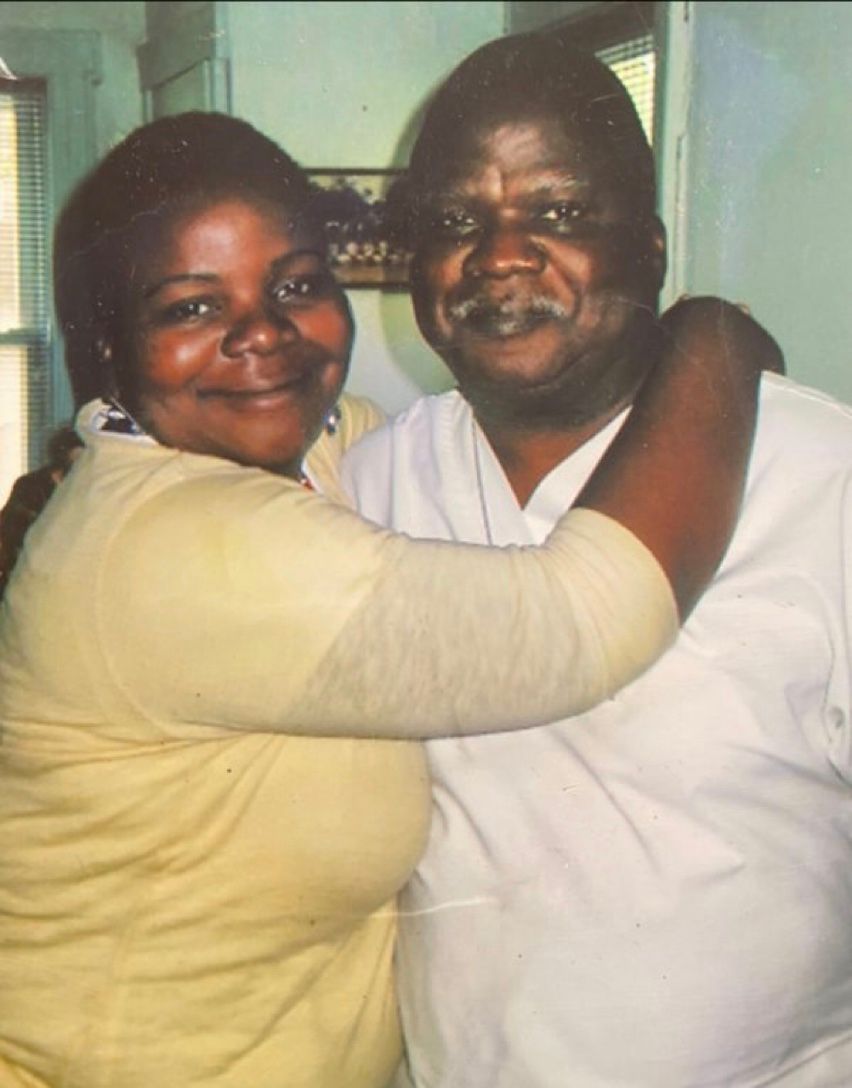
After my brother’s sudden death in 2008, I’ve often wondered about the role he played in bridging the connections between activism and spirituality in my life. The first pivotal moment occurred when he introduced my parents to Sasa, which he helped build with other former Black Panther comrades, Black student movement members, and Pan-African nationalists. The second came when he introduced me to the doctrine of Yoruba Lukumi tradition.
Sasa not only introduced me to the experiences of activism and knowledge of self, but it also introduced me to women who would one day be role models within a matriarchal community of scholars, healers and spiritualists. These women — my teachers as a child — would soon return to my life as elders and godparents to help form and mentor me. I strongly believe that nothing happens by chance or coincidence — only by the guiding path of God, spirit, Orisa, source and soul.
A large part of my journey as a Lukumi priest, spiritualist and Iya has led me to face myself, my ego, and thus my fears in order to strike the right balance between my radical social justice upbringing and my instinctual connection to spirit. It might not sit right with certain folks that I have chosen to fight the power through spiritual teachings and wisdom, but I believe there is no right or wrong way to struggle for freedom.
I’ve chosen to use my spiritual practice as my weapon of choice against white supremacy, oppression and police violence. There are many of us who were guided to fight for justice with the assistance of our Gods and guides, rather than signs and slogans. At the end of the day, not every front is seen. Some of us work in the background, with the shadows and with spirit. While some battles may be fought on the street, some are fought at the shrines, and all are essential to attaining freedom.