As a kid growing up in North India in the 1970s and 1980s, I was thrilled whenever both my parents went out. In their absence, my grandmother shared with me stories of her lifetime. I share one such true story here — the day my grandparents left our ancestral village for good.
Some background first. By the early 1800s, my ancestors had accumulated 42 jagirs (feudal land grants) — making them one of the largest landholders in Punjab. Batali in the Punjabi language means 42, and hence the family village was referred to from then on as Butala, now a small village situated about 15 miles west of present day Gujranwala, Pakistan. Our family name of “Botalia” or “Butalia” thus became common.
Then came Aug. 15, 1947 – the partition of Punjab. Despite Gandhi’s nonviolent philosophy, partition resulted in about 15 million people divided along religious identity lines crossing over to the other side, with about half a million killed in revenge killings as Sikhs and Hindus moved from Pakistan to India and Muslims moved from India to Pakistan. The carnage was equally horrific on both sides — as my grandmother said, it was “the day we lost our humanity.”
With the partition of India and Pakistan looming, some of the family (especially my dad and two of his brothers) had already moved from Butala village to Indian Punjab. By mid-1947, the local Muslims of our village had assured the family of safety, and so my Sikh grandparents decided to stay put at the family home with the two younger boys. In September 1947, our ancestral house was set on fire by mobs from a neighboring village, but the local Muslims saved the house and their lives.
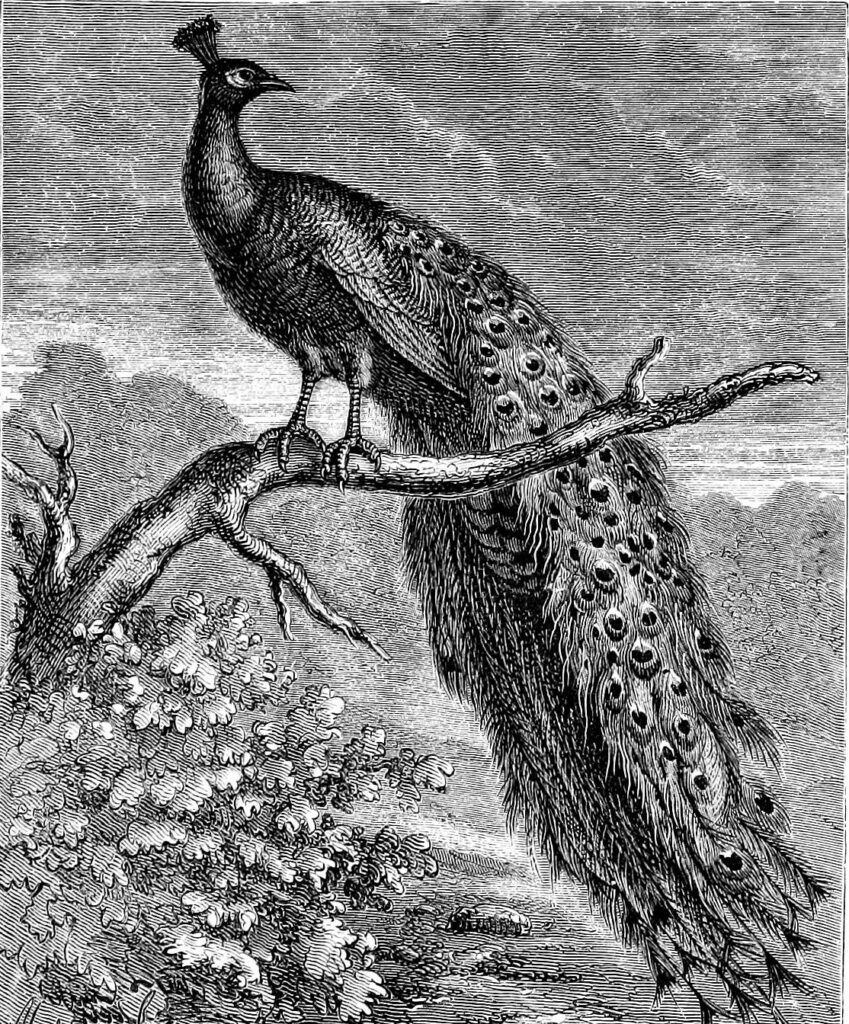
The local Muslims were now no longer able to protect the family that had lived in their village for generations. Finally, in late September, my grandparents decided to leave the village for Indian Punjab. The day they were to depart, a young Muslim man whose grandparents had worked for the family stepped up and demanded that they should not take anything with them except the clothes on their backs. It was at that moment that my grandparents, Narinder Kaur and Capt. Ajit Singh (retired), realized that they were never to return to their ancestral home. My grandfather wore a round turban similar to a Muslim man; my grandmother, a burqa. Holding their three-month-old son Sarabjit Singh in her arms, she put two-year-old Narinderjit Singh on a donkey. The Butalia family stepped out of their ancestral haveli, which had a black peacock painted at the front entrance. They left the ancestral village on foot, for good — never to return again.
This story was repeated to me so many times by my aging grandma as I listened to every detail that sometimes I wondered if I was there with them.
Eventually I settled in Columbus, Ohio, and began looking for my roots. With the help of Facebook I slowly became friends with many of the residents of our old village of Butala in Pakistan. One of them shared with me that the ancestral home was now an Islamic school for girls. I hoped to return to the ancestral haveli someday and walk back through the door that my grandparents had walked out of in 1947. I wanted to complete the circle of life that left my grandma with such hope and gratitude, despite pain and suffering.
The opportunity of a lifetime came when I visited Pakistan in December 2019 for the first time, for a conference. I decided to visit our ancestral village.
As we drove towards the village from Gujranwala, my heart raced. I felt as if I knew the place, though I had never been there before. When I reached our village with a mix of emotions of joy and sadness at the same time, I was perplexed. There were three havelis of the family. I was keen to visit the one in which my grandparents had lived. And then I saw on the front wall of one of the havelis a fading peacock made of black burned bricks! My heart melted. How it reminded me of my grandmother’s stories and her warm touch! My grandparents had left through these very doors some 75 years ago.
I could complete the circle of life. So with tears in my eyes, prayers on my lips, I kissed the threshold and entered. The haveli is very well maintained and is now an Islamic school for girls, a place where normally men are not allowed. The mullah of the village accompanied me in an interfaith spirit inside the building and gave me a guided tour. While there, I pledged to not let the hate of the partition eclipse the love of humanity. Hate is like taking a poison pill that kills you but does nothing to the object of your hate. I learned this lesson late in life — but better late than never.
We all believe in stories, some good and some bad. We become the stories we believe in. If you believe in stories of hatred and revenge, that is who you will become. If you choose to believe in stories of love, forgiveness, compassion and humility, that is who you will develop into. So let us be careful what stories we believe in!