In February of 2022, I had the privilege of packing up my Subaru Outback and traveling across the country. Starting in Toledo, Ohio, I went to New Orleans, Louisiana, then to Laredo, Texas, New Mexico and Arizona visiting with family and friends across each state.
During these weeks that I took off reading, writing, and living out of my car, I also went to White Sands, New Mexico, where I saw a U.S. Missile Range for the first time. I went to Roswell, New Mexico, with the hopes of getting a glimpse of a UFO. Of course, that didn’t happen, but my radio did start acting up with some funky static intermingled in with the music. And I got a photo of what appears to be an object overlooking another object that seemed to be bent over – or at least that is what I see in the photo.
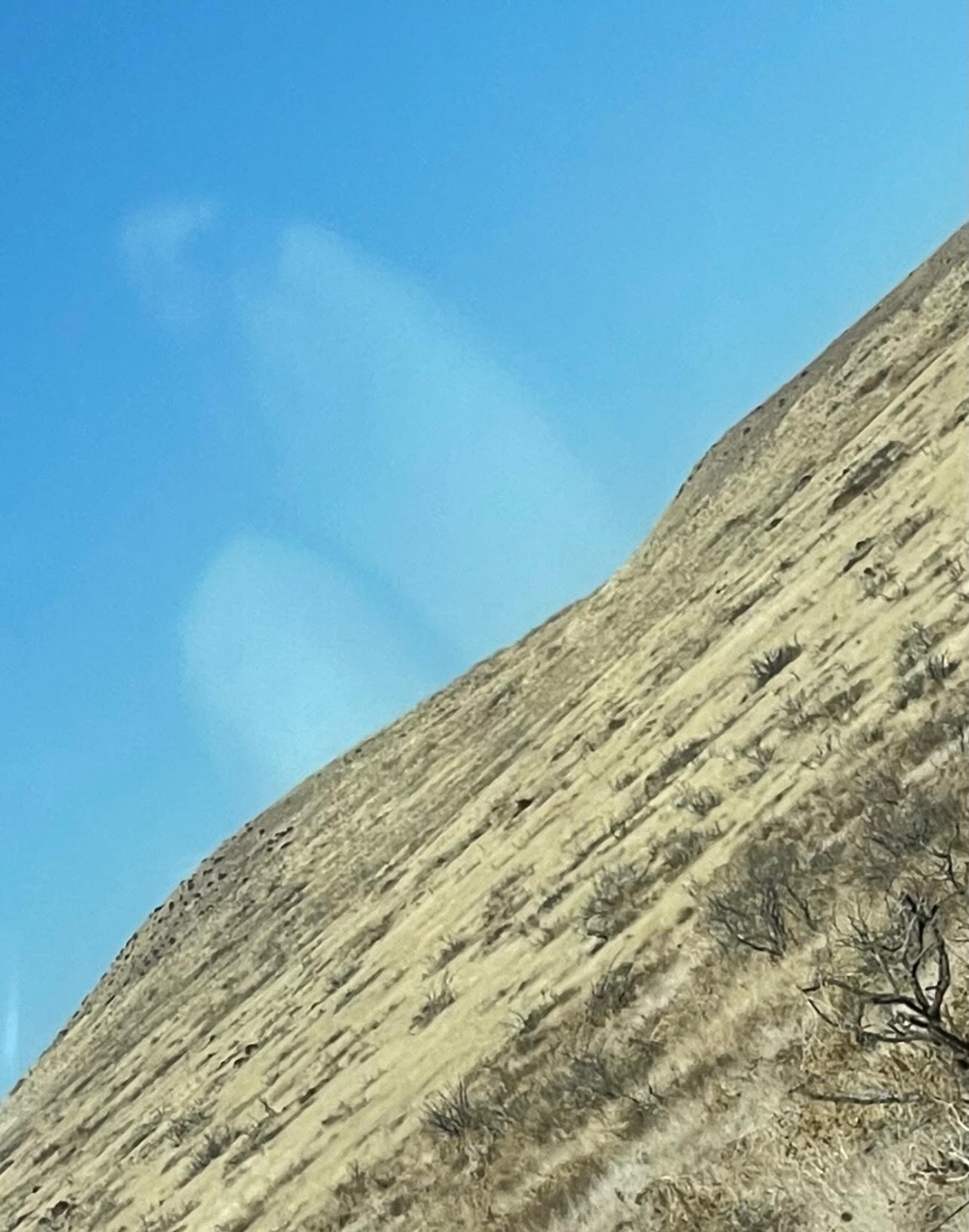
What I didn’t see that day (or did?) was a reminder that we all see, view, interpret, experience, and believe things through our own lenses and spaces, and in our own time.
Furthermore, when I drove my car from New Mexico to Arizona, I drove along the U.S. southern border, intentionally, flaunting my privilege of being a LatinX women of color with U.S. citizenship. I buzzed through the numerous immigration checkpoints, saying “American citizen.” I even drove through my first ever haboob (desert storm) because I was on a mission to have lunch with one of my favorite human rights activists in Tucson.
John Fife is a white, retired Presbyterian minister. Born in 1940, Fife is a pacifist peacemaker who co-founded the solidarity-focused U.S. sanctuary movement in the 1980s and the immigrant rights group No More Deaths two decades later. In the ‘80s, Fife and seven others were arrested and convicted of violating federal immigration laws for providing support to refugees fleeing U.S.-supported death squads in their home countries of El Salvador and Guatemala. To this day, the sanctuary movement has engaged hundreds of churches and organizations with a focus on assisting border-crossing refugees to find sanctuary in the United States.
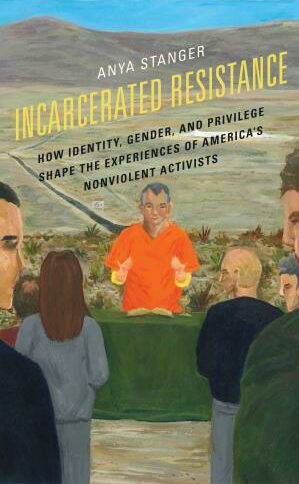
When I read Anya Stanger’s 2022 book, “Incarcerated Resistance: How Identity, Gender, and Privilege Shape the Experiences of America’s Nonviolent Activists,” I was reminded of my cross-country road trip last year. I had driven thousands of miles to meet Fife because I wanted to know personally why anyone, especially a “pacifist,” would knowingly put themselves in a predicament where their actions could land them in jail… and a place where violence is so prevalent. Like Chandra Talpade Mohanty, a transnational feminist referenced in this book, I too believe that “one may better understand the intimate and the global, the personal and the political, by grounding knowledge in the individual body.”
Stanger’s book is an intimate look at people she calls “Justice Action Prisoners.” These are peace activists who use tactics such as prison witnessing, which is “a nonviolent technique of going to jail for justice” to raise awareness, resistance, and to put “on trial” issues of interest such as war, nuclear weapons and U.S. foreign policy. “Resistance is understood to be an essential exercise of democratic governance, a necessary and ongoing push that is required to keep the whole system robust,” she writes. “Incarcerated Resistance” focuses on what happened to them, how they experienced it and what meanings they made from it now that they are no longer incarcerated.
Over four years, starting in 2010, Stanger interviewed 43 nonviolent activists (23 women and 20 men) who served time between 1980-2009. Located across the U.S., 13 of the interviewees are “Plowshares” activists and 29 are involved with the School of the Americas Watch group.
Although all the activists profiled in this book were white and privileged enough to not have to worry about paying bills or losing everything if locked up, this book offers an activist of color, like myself, the opportunity to see how some white people have chosen to be creative in the peace movement — and to do things that almost certainly lead to their incarceration and then continue to bring attention to their cause even after they are released from prison. Stanger also applies feminist theory to look at their varying intersectionalities as Justice Action Prisoners and Prison Witnesses, including highlighting how much of a difference a male’s experience is, both in and out of jail, versus that of a female.
Previous Coverage
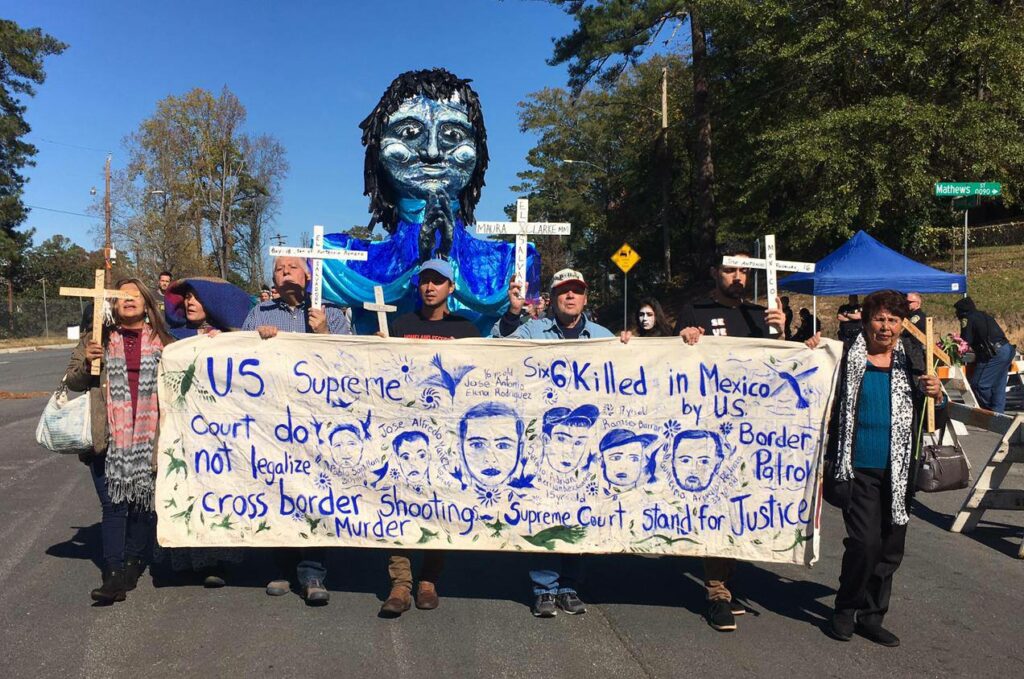 How incarcerated peace activists use their privilege for good
The book’s premise is that our positionalities and intersectionalities significantly impact the ways we each see, interpret, experience, and believe things through our own lenses, spaces and in our own time. As I experienced during my recent cross-country drive, Stanger effectively showcases how the particularity of our social locations and viewpoints about the world impact the actions each of us take for social change.
“Incarcerated Resistance” [see an excerpt] is a great example of what sharing stories can do and how global, political and personal issues can affect a person’s activism. It offers a unique narrative of nonviolent activists who have served jail time, been released and now can reflect upon their experiences from multiple lenses, while also still fulfilling their life’s passion. I applaud Anya Stanger for sharing these important and under-recognized stories, and I thank every nonviolent peace activist for all that they do in all their varying ways.
Here is what Mahatma Gandhi’s grandson said about the peace activists:
Arun Gandhi said: “You can quote me as saying Mahatma Gandhi would disagree with the Plowshares actions because they employ tactics of secrecy and destruction of property. I also think locking up the most courageous and devoted peace leaders for long prison terms is a way of weakening the peace movement. Those leaders could do much more for peace outside of jail than in it.” ( The Jesus Journal – Summer 1995 – No. 77 – page 44 )
“Common people who are not directly involved in social debates and political conflicts have their lives to live, they become angry at those who are disturbing their lives or damaging property that has to be repaired using public funds. Thus the average person, whose support is often necessary for lasting success, is alienated. Rather than leading to a resolution, they escalate the conflict and create more deeply entrenched opponents.” (Legacy of Love by Arun Gandhi – page 132)