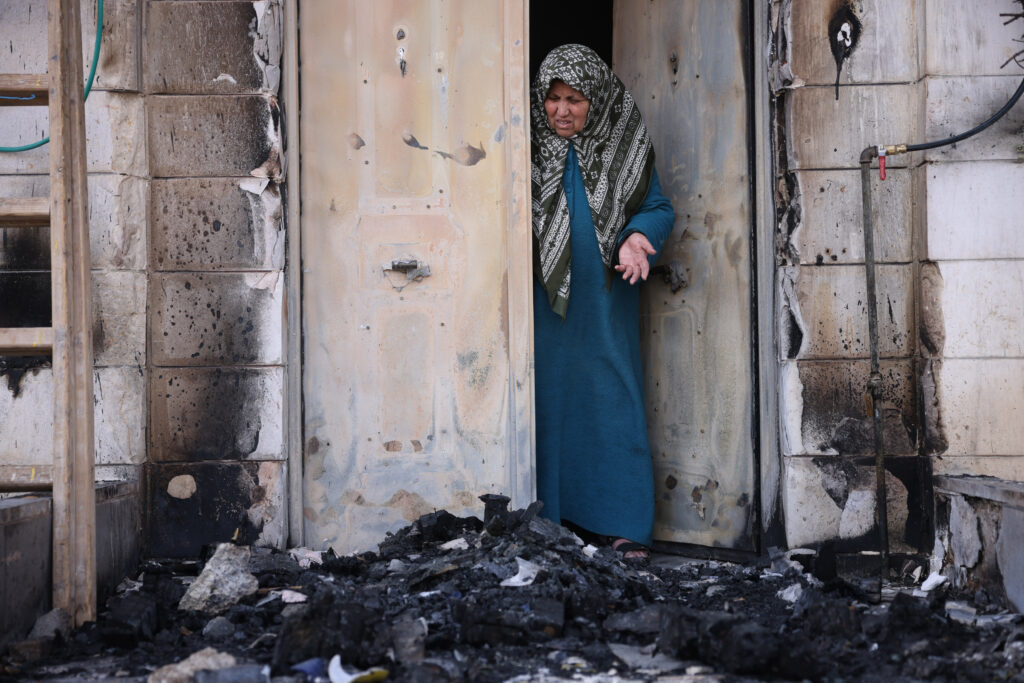
On June 27, Palestinians in Turmos Ayya, a village in the West Bank, faced severe settler violence.
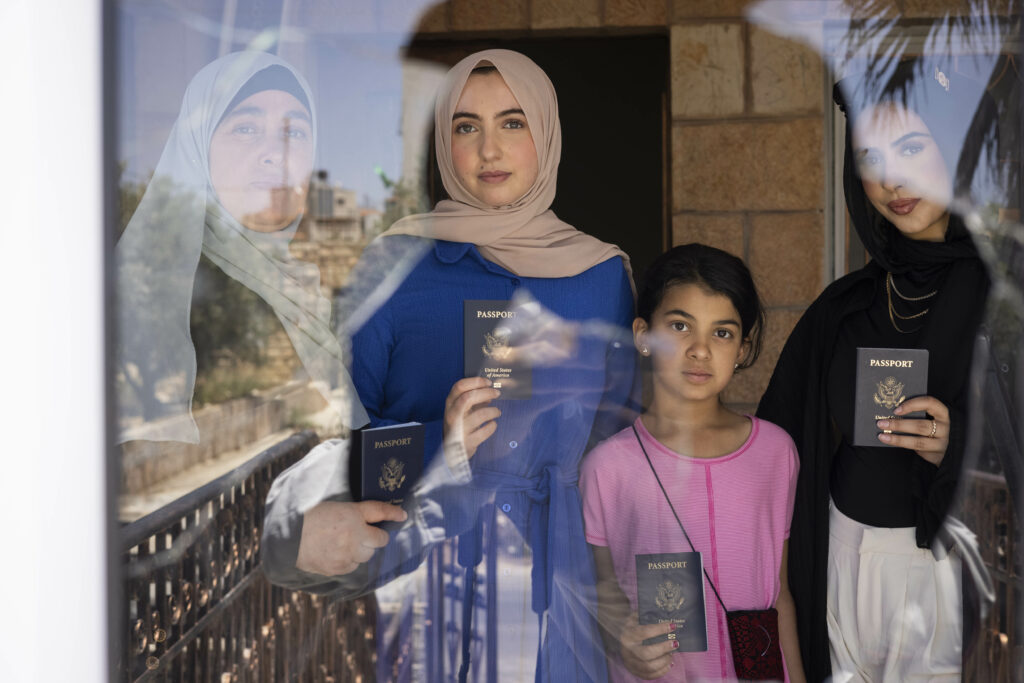
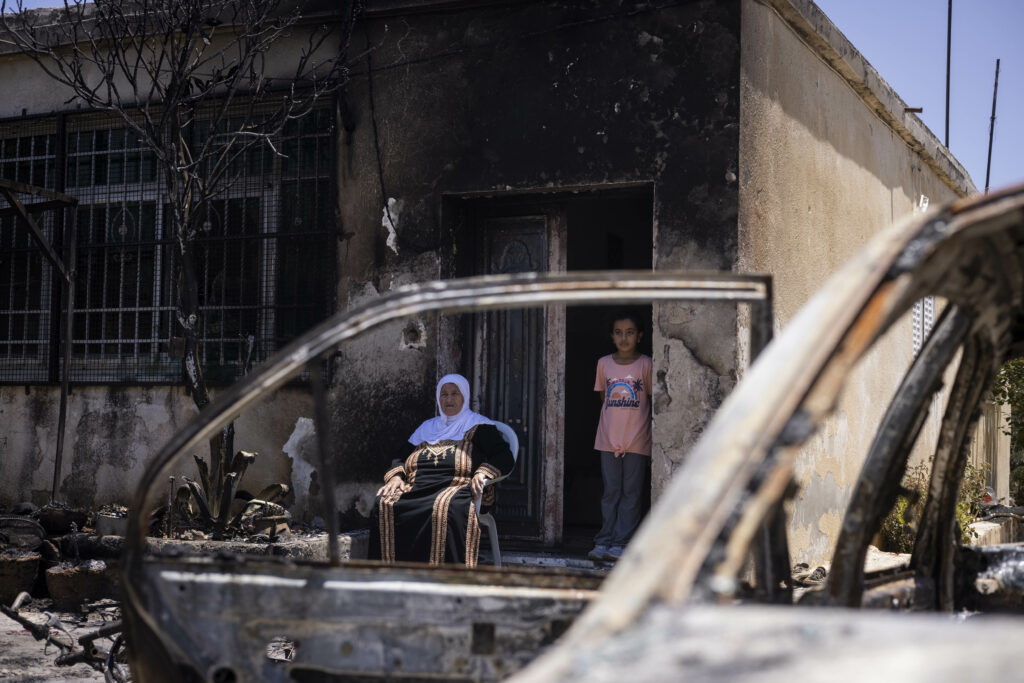
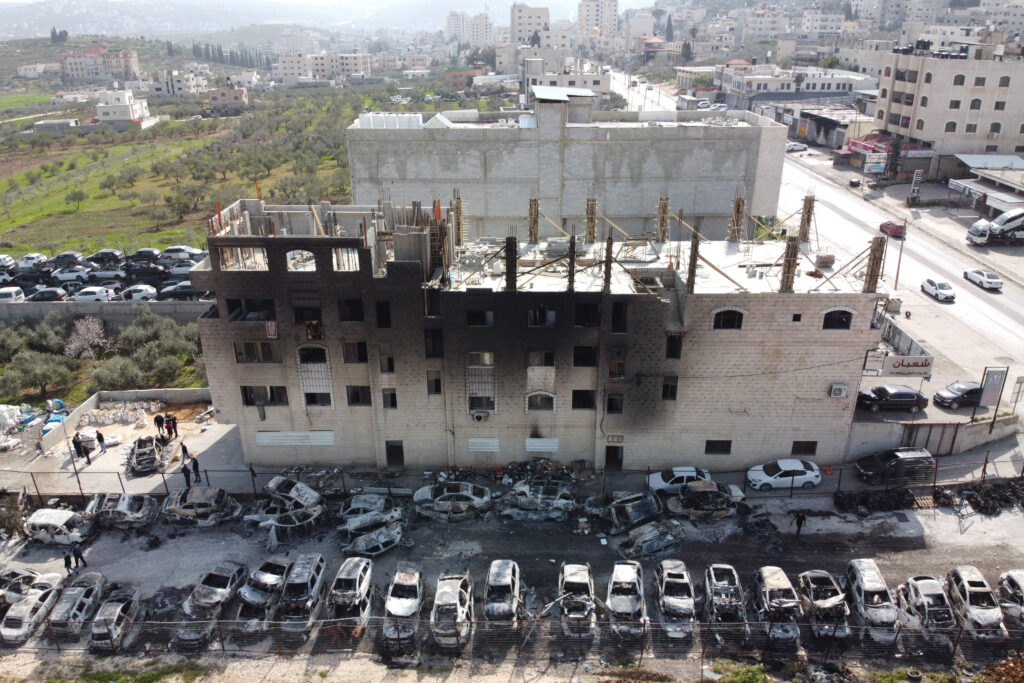
“I arrived from the United States just two weeks before the settlers attacked my home in my village,” said Hijazi, a Palestinian American, who witnessed the events. “Around 300 settlers, some of them armed, attacked Turmos Ayya from the east side. The settlers came from an illegal Israeli outpost named Adei Ad, established a few years ago on the land of the village. The settlers burned 30 houses and 60 cars. When the people tried to put the fire out, they started shooting at them, killing Omar Qottain, 27 years old.”
As an American Palestinian, Hijazi decided to call the U.S. embassy to ask for protection, but they refused.
This is not the first settler attack against the Palestinians in the village of Turmos Ayya. Last year, the settlers attacked the farmers during the olive harvest in October 2022. They stole the harvest, injured one farmer and burned the car of a Palestinian.
Turmos Ayya isn’t alone – many other villages have been attacked. May and June 2023 witnessed the most frequent settler-attacks ever against Palestinian villages and communities.
Since the Israeli military occupation of the West Bank, including East Jerusalem, in 1967, Israel started building settlements in the occupied territories. This increased after the 1993 Oslo accords, with the number of settlers growing from 100,000 to 695,400. Despite their settlements being illegal under international law, they are permitted and encouraged by the Israeli government, which offers financial support.
In the 1980s, settlers started building so-called agricultural settlements, or grazing settlements, in areas beyond the West Bank’s hill tops. Up to 2017, the process of building these farms or grazing outposts was very slow, after which it escalated with the election of Donald Trump as U.S. president, who released his plan to “solve” the conflict by recognizing most of the Oslo Accord’s Area C (which encompasses 60 percent of the West Bank) as part of the Israeli state..
The plan states that there will be no displacement of any Israeli settler from the West Bank. This whetted the extreme settlers’ appetite to confiscate more West Bank land. We have witnessed the proliferation of these outposts. Presently, settlers have built over 89 outposts, controlling more than 8 percent of Area C in the West Bank, wherein Israel acknowledges that most of the land is private Palestinian land. Settler shepherds have become the most significant strategy to restrict Palestinians presence on their own land, with the aim of confiscating the Palestinian land in Area C.
Considering settler violence against Palestinians in Area C further — particularly the outposts established since 2017 — settler attacks are seemingly a tool to confiscate the Palestinians’ land and
push them to live in Areas A and B of the West Bank, which are mostly controlled by the Palestinian Authority. This has been carried out under the Israeli system of rule, with all its components from the army, police and judicial system, to government support.
Some of the Israeli settlements that are called “outposts” are even illegal according to Israeli law. The outposts are small settlements established without settlers obtaining planning authorization to do so. Yet the settlers in these outposts receive financial support from Israeli public entities and organizations, as well as local and regional councils.
According to Mamdouh, a Palestinian shepherd from the South Hebron Hills who faces constant settler attack:
“We used to herd our sheep on these hills from the west to the east, from the north to the south, with no bother. Then Israel occupied the land in 1967, and step by step they started to restrict our movement. However, this did not stop us from continuing to herd our flocks. When the Israelis announced that many areas in Masafer Yatta were to be a closed military zone, they expelled us from our hamlets and villages, but we returned. The Israeli occupation authorities with all its policies such as housing demolition, denial of essential infrastructure projects, harassment and direct violence, did not manage to expel us. Yet, for a few years they brought settlers shepherds who attacked us and our flocks, prevented us from herding our sheep on our land and they let their sheep feed on our crops. These settlers, protected by the army and the police have made our life harder and I’m worried about our future.”
Another shepherd, Shehada, from Magier Alabeed community in south Hebron hills shared his experience of settler violence:
“My story started with them when they built their tent on the top of the hill to the west of my cave where I have lived my entire life. They brought their sheep, around 100 sheep, and they started herding them on our land. In May 2023, the settlers let their sheep loose on my olive trees, and they watered them from the family’s water well. When my son tried to stop them more than seven settlers appeared, and they tried to take sheep from my son. My son did his best to prevent this from happening, but they managed to take one sheep. When my son tried to take that sheep back, one of the settlers stabbed him with a long knife. Thank God the knife only touched his fingers otherwise they would have killed him. They killed the sheep and put it in a cave. When we went to the police station to open a case against settler violence, they refused to open a case and we found ourselves accused of beating settlers. In such circumstances, instead of opening a case against the settler we end up mounting a defense of ourselves. We called the lawyer to stop the process. However, in most cases, they force us to pay bail to be released or the police prevent us from entering the area for a period of a month or so.”
How the Israeli occupation forces coordinate with the settlers
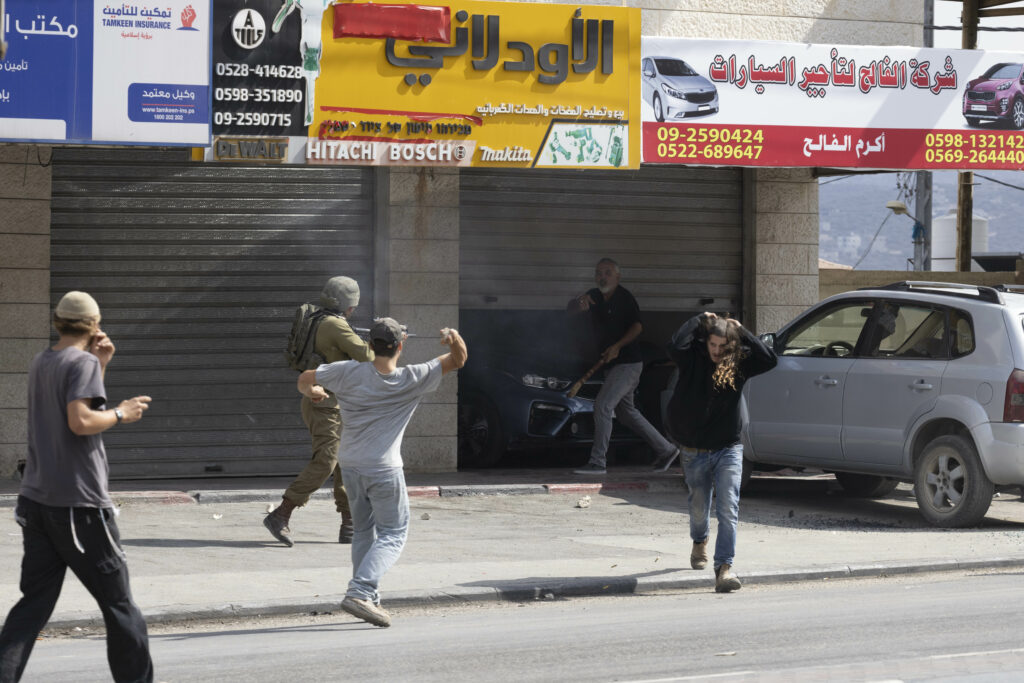
In the past few years, most of the settler attacks have occurred in full view of the Israeli occupation army. It is not difficult to discover the coordination when you observe the soldiers’ behavior during settler attacks against Palestinians.
I was in one demonstration when we marched toward the Palestinian hamlets in the South Hebron Hills, and decided to open a road closed with rocks by the settlers of Khavat Ma’on outpost. The soldiers knew that settlers do not have the right to block the road, yet they do nothing to open it. However, when Palestinians open the road, the settlers attack them under the protection of the army.
When the settlers arrived, they hid behind the soldiers and some of them were masked. The eyes of the soldiers are always on the Palestinians and their backs are to the settlers, effectively preventing any Palestinian from defending themselves when settlers attack them.
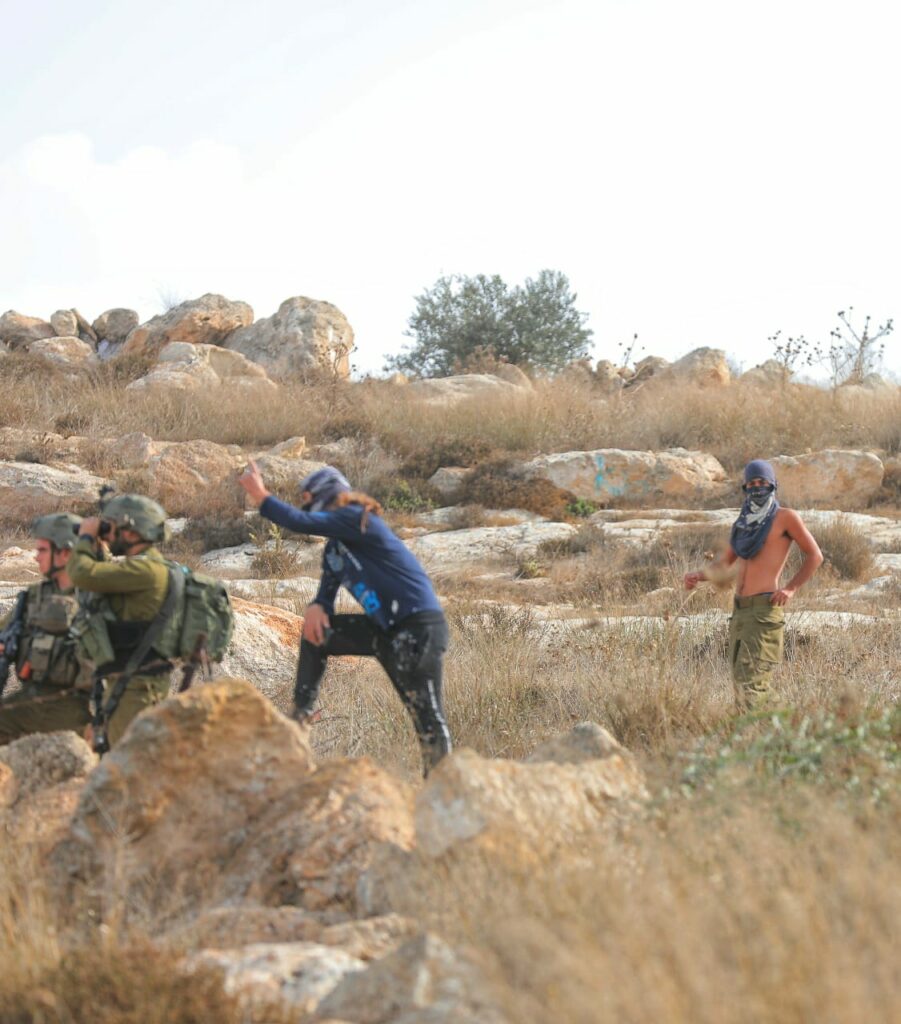
This is exactly what happened in the demonstration Palestinian activists organised on May 13, 2022, against the last Israeli Supreme Court decision to forcibly evict eight Palestinian hamlets and villages in the South Hebron Hills. One of the masked settlers carried a large stone and threw it towards a Palestinian cameraman who was working with the Israeli human right organization B’Tselem. There were many people shouting warnings to the cameraman, as well as shouting at the soldiers whose backs were toward the settlers, but who kept their eyes on the Palestinians. Eventually, the army approached the settlers and asked them kindly to move, as if they were congratulating them for what they had just done.
When tensions increased, the army announced the area to be a closed military area, and they started brutally pushing Palestinians, although not the settlers who kept on attacking Palestinians. The settlers broke the nose of a Palestinian and smashed the cars of two journalists. One of the demonstrators in his 50s told me, “The worst feeling you have in your life is when you cannot defend yourself and your people, even if you could, you cannot do it”.
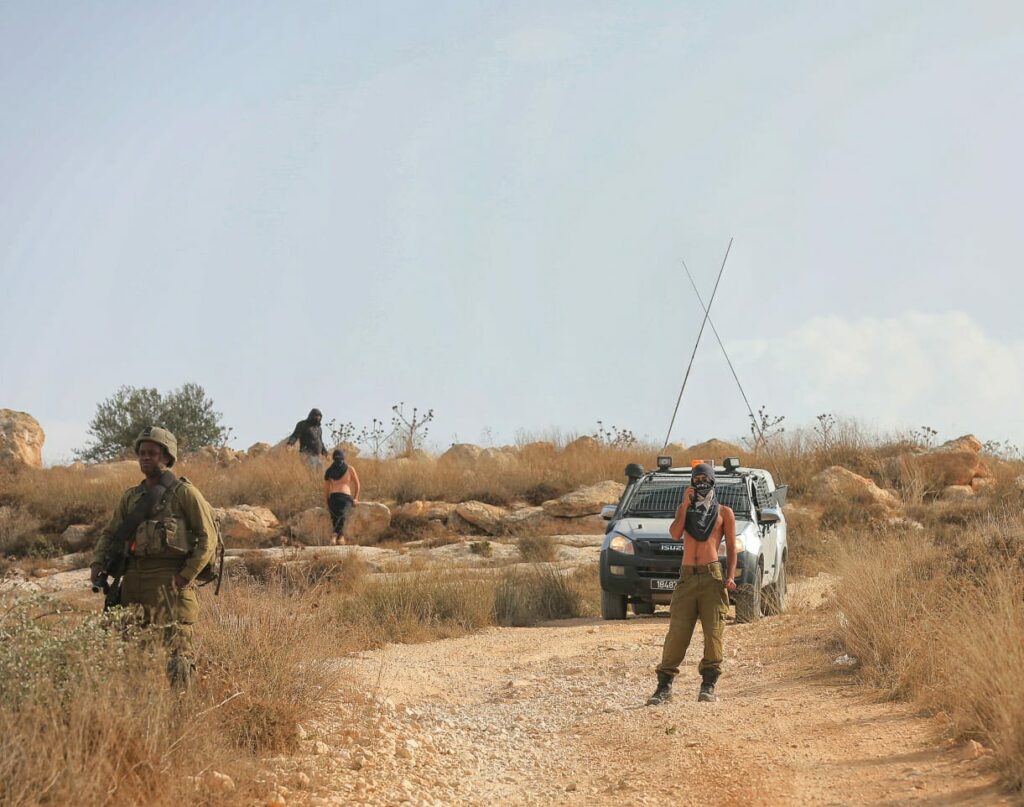
Those settlers continued to follow us and pushed us under the cover and protection of the army. This is not happening by chance, it is organized in advance; the army and the settlers divide the roles between them. The way the settlers communicate with the army makes the plan evident; they have a clear mutual understanding of the aim being to hurt Palestinians and to take their land. This was apparent to me from the communication between masked settlers and masked soldiers, and how they were implementing their plans against the Palestinians.
After attacking over 10 Palestinians and causing them injuries, the Palestinians asked the army to arrest the settlers who had just committed a crime in front of their eyes. The soldiers’ answer was: “Go to the police station and open a case against the settlers.” Palestinians have a long experience with this legal process. It ends with no result. How could it? How can Palestinians recognize a masked settler? The soldiers would have been perfectly able to arrest the settlers on the spot when they blatantly commit their crimes, however, they chose not to. This is another way to protect settlers from any legal sanctions.
“All these tactics aim at pushing Palestinians off their land, expelling them to Areas A and B.”
Settlers remained on the Palestinians’ land, with the troops laying the ground for the settlers to continue their crimes aimed at annexing more land. This implements the Israeli government’s longstanding plan since occupying the West Bank in 1967.
For the last two months, the settlers’ conduct differs: They are now carrying out their attacks without the army’s protection, yet coming in large numbers to attack Palestinian villages, as happened in Huwara village south of Nablus city. Settler violence is now occurring daily, with almost three attacks per day.
Such violence has a purpose; it is a tool to confiscate the Palestinians’ land. During the early stages of establishing a new outpost, only once it was complete did the settlers use violence. Subsequently, they changed their strategy and started preventing Palestinians from reaching their land by using violence against them. They are trained how to throw stones, how to move in groups and to avoid any legal sanctions. They are always masked. In most cases they adopt the tactic of bringing teenagers to conduct the crimes against the Palestinians, as being underage they can avoid any court case against them.
They use the Israeli army tactics of intimidating Palestinian farmers and shepherds. They start screaming at them; if this tactic does not work, they use physical violence. In some cases, when Palestinians react to their attacks, they shoot at them, injuring or sometimes killing them. All these tactics aim at pushing Palestinians off their land, expelling them to Areas A and B.
A friend of mine attacked by settlers related his personal story:
“I was with my son and another international activist cultivating the land located next to Ma’on settlement, in the south Hebron Hills. I saw five settlers, two of them masked and carrying long metal sticks. Among the five settlers was one armed guy with a white T-shirt and in army uniform trousers. There was a shepherd on top of the hill nearby and they followed him. The shepherd escaped with his sheep. They cheered when they saw the shepherd escaping. I thought the story ended there. But suddenly the two masked settlers with the metal rods approached me. One was armed — he pointed his gun at me. They expected that I will run away as the shepherd did, but I stayed on the land because it is my private land and I have the right to be there. They started screaming at me, and I did not move. Then they started beating me with the metal rods. I tried to defend myself by pushing them away. One of the setters fell on the ground and his head hit a stone and started bleeding. They broke my two arms, and when the army came, they did not let the ambulance take me to the hospital. Instead, the settlers damaged the tires of the ambulance car. The army arrested me instead of arresting the settlers who broke my arms. I stayed two weeks in jail and paid $3,000 as bail, while they did not even investigate the settlers.”
My friend’s experience, like many others, reflects how the settlers use violence to create fear and horror among Palestinians so that they will not come back to their land.
Settler attacks in 2023 revealed their plans for Area C: to be a vanguard in the ethnic cleansing of Palestinians. This could not happen without settlers’ crimes being protected by the Israeli army and authorities. The Israeli authorities and the settlers do not recognize the existence of Palestinians on their own land, which explains why Israeli authorities’ response to the settlers’ attacks is to arrest beaten Palestinians, instead of investigating settlers who committed the crimes against Palestinians.
In the absence of neither any kind of protection for Palestinian farmers in Area C from third-party states, nor holding Israelis accountable for their crimes, the settlers will continue to act with impunity with their brutal attacks against Palestinian farmers. Palestinians find themselves alone in defending themselves. They rely on their families and neighbors to protect their people and land. Yet farmers appreciate the intervention of internationals and Israeli activists who join them when they go to their land and/or when they go to graze their sheep. Their hope is that there will be states ready to intervene to limit or prevent settlers’ attacks.
A farmer raised some questions: “What has changed since Nakba? Has the Nakba stopped? No, it continues! Has the world changed its position? No, they have not!”
Since I was a child, I heard that the Western countries are worried about the situation, and they say that Israel has the right to self-defense. The Arab and Islamic states in the best scenario condemn what happens. But the Nakba has been ongoing since 1948, with no action taken to stop it.
Of course, the settlers will continue their crimes because there is no deterrent or punishment, and they are guaranteed that they will escape accountability for their crimes. This is our destiny, and we will face it. We will remain on the land.