Westerners have long misunderstood Islam and the Prophet Muhammad (peace be upon him) in a manner that has veered towards full-blown Islamophobia. The trope of the terrorist didn’t emerge with Donald Trump, the 9/11 terror attacks, or “The Clash of Civilizations” (1996), Samuel P. Huntington’s widely disseminated treatise arguing the subversion of Islamdom as requisite to world peace.
Rather, modern Islamophobia emerged in the post-Cold War era as a lay ideology by which the U.S. empire garnered support for the creation and defense of the state of Israel and wars for geopolitical control of oil-producing countries, thus bolstering its GDP through the growth of the military-industrial complex. Conflating terrorism with Islam, the American public acquiesced to wars against Muslims at home and abroad while believing that democracy, women’s rights and Judeo-Christian values were at stake.
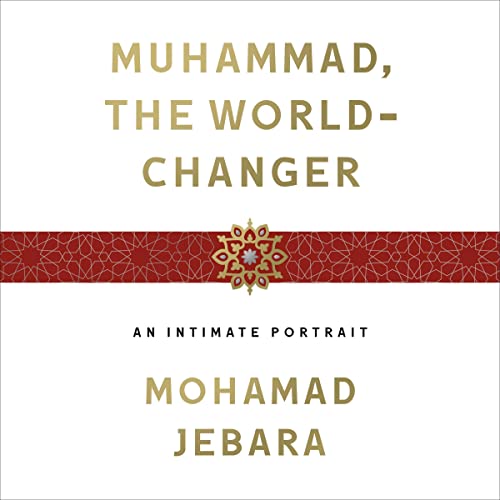
What makes Imam Mohamad Jebara’s “Muhammad, the World Changer” so important is that it refutes the West’s reification and denigration of Islam by presenting a fresh and critical look at the Prophet Muhammad himself. It tells the intimate and personal story of his life: his relationships with female role models in particular, his progressive receipt of divine revelations over the course of 23 years, and the message they bore for humanity. It tells the story of the “roots, formation and application” of his mindset in a seventh century Arabian tribal context in which he established a revolutionary world religion that enshrined and protected, among other things, democracy, women’s rights and racial equality.
What is particularly noteworthy about this book is that it portrays Prophet Muhammad and Islam in a manner that, while anathema to Western renderings, is also at odds with the prevailing Islamic patriarchy and renditions of Islam emanating from countries such as Saudi Arabia, Iran and Afghanistan. In his decades of extensive scholarship, research and travel to countries where the Prophet Muhammad lived and worked, such as Arabia and Syria, Mohamad Jebara unearthed significant authentic primary, secondary and supplementary source materials including reports from the Prophet Muhammad himself and those who knew him firsthand.
These lost, forgotten, or intentionally neglected findings shed new light on and often refute the ultra-conservative misogynist and political ideologies and tribal norms put forth by today’s Kingdom of Saudi Arabia, so-called Islamic Republic of Iran, and so-called Islamic Republic of Afghanistan, which are intent upon maintaining intergenerational power and control through the cooptation, cooperation, and collaboration of the Islamic clerical elite or ‘ulama.
As a glaring example of the modern-day corruption of the teachings of the Prophet Muhammad, this writer (who converted to Islam in 1986 and has traveled to Saudi Arabia three times to make the obligatory and then the voluntary Pilgrimage) became grossly disenchanted with Sheikh Abdul-Rahman Al-Sudais, Imam of the Grand Mosque of Mecca, in 2017, when a video went viral of him praising former President Donald Trump. In that video, he said that the United States and Saudi Arabia are “steering the world to peace.”
Although Sheikh Sudais’s Qur’anic recitation was my favorite, I have not listened to it since, as to hear his voice now conjures images of Saudi Arabia’s relentless, horrific war on Yemen, and Trump’s coming into power on a campaign platform uttering remarks such as, “Islam hates us.” How Kafkaesque it is that the most Islamophobic president in U.S. history and the custodian of Islam’s two holiest mosques can be bedfellows! (Not to mention that 15 of the 18 hijackers who perpetrated the Sept. 11 terror attacks came from Saudi Arabia, which is now the U.S. arms industry’s number one customer — but that’s another story.)
To say the least, the teachings of Islam are not in good hands. However, Mohamad Jebara has been heroic, visionary and inspirational in reclaiming the legacy of the Prophet Muhammad through this wonderfully written and immaculately researched book. “Muhammad, the World Changer” is head and shoulders above dozens of modern biographies on the life of the Prophet, which toe ideological lines by their deemphasis of women’s rights and racial equality, among other issues.
In the epilogue titled “The Elusive Legacy of Muhammad’s Mindset,” Jebara references the Prophet’s mother on her deathbed: “Indeed, Aminah’s inspiring last words reverberate beyond six-year-old Muhammad to reach people of all backgrounds across the generations: to be a world-changer in your own unique way.” Ironically and hopefully, in Western society removed from tribalism and correcting itself to confront patriarchy, we have the potential to practice Islam as it was meant to be.