Bob Aldridge
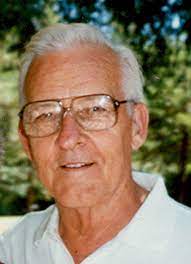
In the beginning, the Poseidon missile was conceived as a defensive system to prevent war with the Soviet Union. Lockheed Martin, the company that designed the rocket, described it as “a profound strategic counterbalance that helped keep the Cold War from heating up.” The company positioned this production of a multi- warhead delivery system — “a stealthy fleet of submarines roving silently undersea” — as a deterrent to nuclear war.
This was the project Bob Aldridge was working on in 1972 when he concluded that it was not a defensive system at all, but a first-strike weapon that could deliver nuclear bombs anywhere in the world. With that realization, he became increasingly uncomfortable with the contradictions in his own life — working for a weapons supplier while pursuing humanitarian projects to prevent war. In August of that year, he and his wife Janet flew to Hawaii as peace representatives of the National Catholic Lay Foundation. They appeared in support of Jim and Shelley Douglass, who were on trial for pouring blood on top-secret electronic warfare files at Hickham Air Force Base. After the trial, which included the live testimony of two advocates from the Nuremberg War Crimes Tribunal, Bob concluded it was untenable to continue working for a military contractor. He decided to forfeit secure employment at Lockheed Martin — and the prospect of steady advancement within that company — to become an advocate of peaceful coexistence, a pursuit he would sustain for the rest of his life.
In an article in Fellowship published three years later, Bob described what it was like to take that decisive, life-changing action. Just before submitting his resignation, he and his family gathered in a mountain cabin “to unify and crystallize our intentions as a family of resistance.” On January 3, 1973, when he resigned from Lockheed Martin, he knew there would be no turning back. Talking to fellow employees, he learned that there were many who felt as he did, but the needs for security were too strong, and fear prevailed.
Years later, still dealing with the consequences of his decision, Bob observed that “fear is the main obstacle to moral action. Theologians have developed theologies of liberation and theologies of civil disobedience, but we still need a theology of courage. It must tangibly relate to the working person with a family and be something more than general rules and abstract teaching; it must be brought alive in shops and offices.”
Bob went far beyond “abstract teaching” in his efforts to promote peace in the world. In addition to his work for FOR, he was active in organizations including Ground Zero Center for Nonviolent Action, Nuclear Age Peace Foundation, British-American Security Information Council, Institute for Law and Peace, and the Pacific Life Community, and many other organizations. He was the recipient of the Fellowship of Reconciliation’s Martin Luther King, Jr. Award in 1981. His book “The Goodness Field: A Guidebook for Proactive Nonviolence” was published in 2020.
Bob died on April 29, 2022 at his home in Santa Clara, California.
Virginia Baron
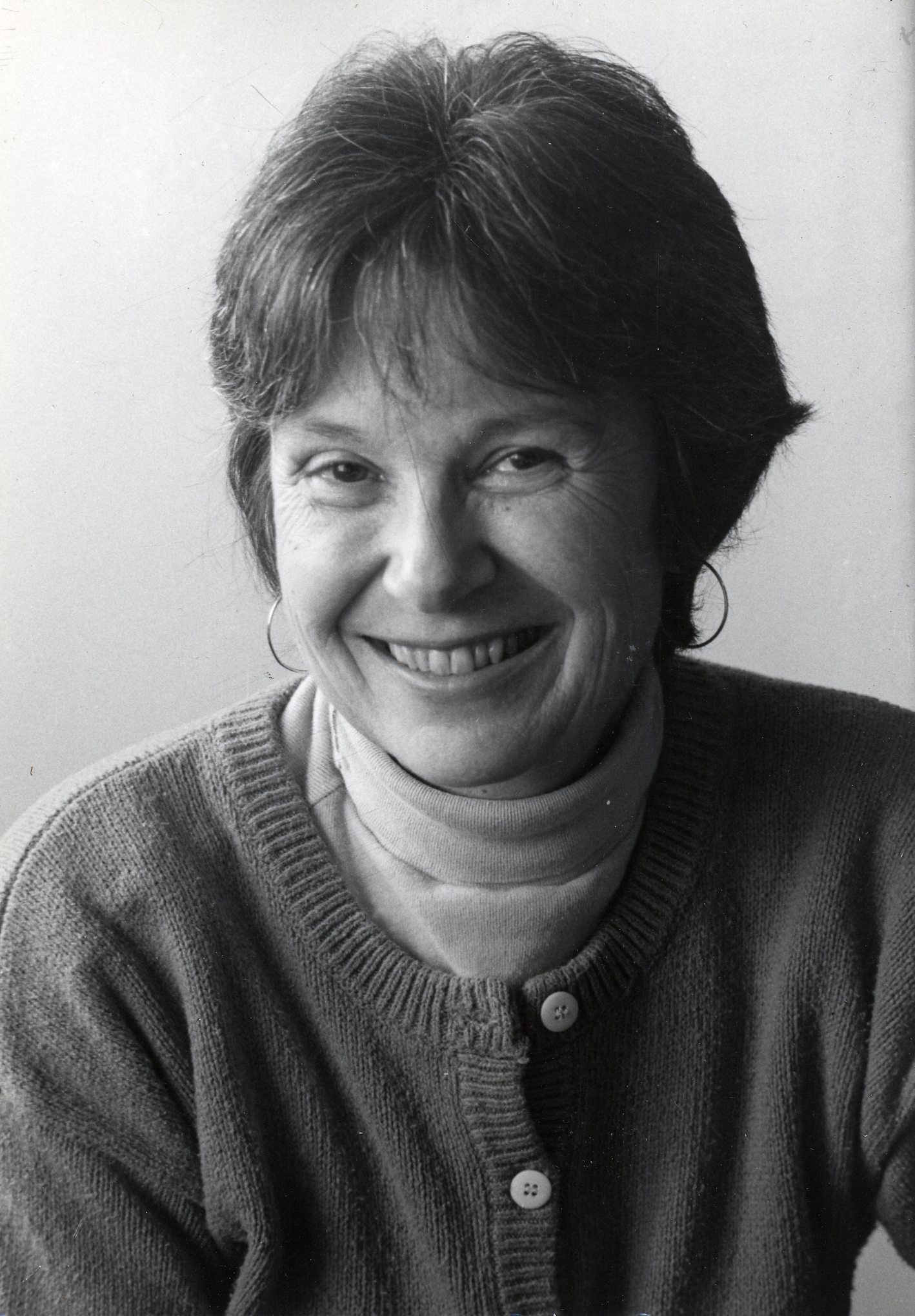
Virginia Olsen Baron, 91, died after a brief illness on August 18, 2022. She was a lifelong peace activist and consummate communications professional, devoted to strengthening worldwide human rights movements. Virginia was renowned for applying her trademark mixture of wisdom, wit, and movement history to the work of ending war, militarism, and social injustice through the Fellowship of Reconciliation, War Resisters League, and other allied movements.
She served with distinction as FOR-USA’s communications director and editor of Fellowship magazine (1983-1991) as well as president of the International Fellowship of Reconciliation from 2000-2002. An avid traveler, Virginia co-led fact-finding and peacebuilding delegations to various countries, particularly the then-Soviet Union during the 1980s, and she was a member of the first FOR civilian diplomacy delegation to Iran in 2005. She focused on profiling creative nonviolent strategies and tactics amidst conflicts throughout the globe, from Central America and the Philippines to Eastern Europe and the Middle East, especially Israel-Palestine.
At home, she practiced and promoted nonviolent resistance in communities protesting the Vietnam war, racial injustice, and economic inequality. In August 1963 – while pregnant with her fourth child – Virginia had participated in the March on Washington for Jobs and Freedom. Two years later, in 1965, she took part in the historic march from Selma to Montgomery to challenge racist voter registration laws. In the decades that followed, she would interview, correspond, and strategize with national civil rights leaders.
Her daughter Lee Riffaterre recounted a memory of a time that Virginia was arrested in New York City for an act of civil disobedience, and called Lee’s office at The New York Times seeking urgent assistance. Riffaterre, a lawyer, said, “Don’t worry mom, we’ll get you out of jail as soon as possible.” Virginia was aghast. “Lee, I don’t want a lawyer; I want a reporter!” Her mom, Lee said, got her story.
Virginia’s career spanned many publications and media outlets. She edited and authored several books, including “The Seasons of Time, Tanka Poetry of Ancient Japan; Here I Am!”; “An Anthology of Poems Written By Young People in Some of America’s Minority Groups”; “A Woman’s Journey”; and “Sunset in a Spider Web.” She was a regular contributor to the War Resisters League’s editorial collective, including its publications WIN Magazine and The Nonviolent Activist. While working as an editor at Church Women United in the 1970s, she authored “Women in the Wake of War” to honor the stories and sacrifices of military wives during the Vietnam war. She worked at Save the Children, as a co-editor of Parabola Magazine, and as a radio producer.
Virginia was also a beloved mother, grandmother, and great-grandmother, and she is survived by her partner of more than 40 years, artist Clifford Enright, and a wide community of loved ones and fellow peace travelers. She was active in numerous church communities, including the First Congregational Church of Guilford (Connecticut), The New Slant, the First Congregational Church of Chappaqua (New York), and the First Presbyterian Church of New York City.
Rev. Ernest Julius Davis
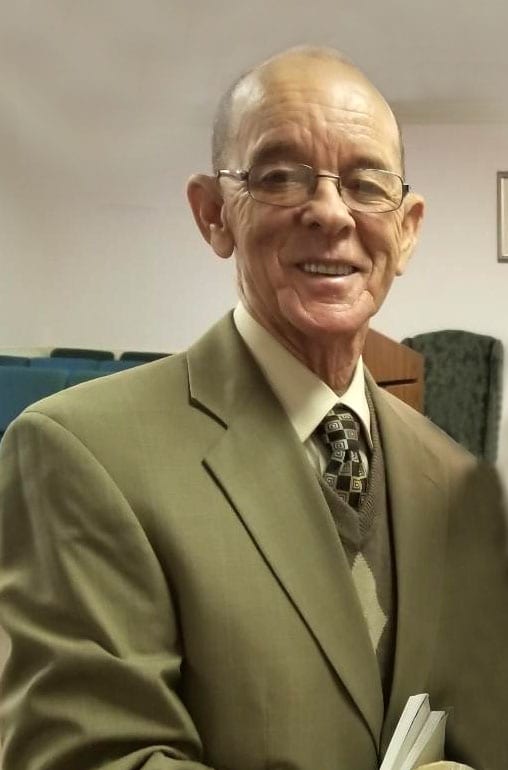
Born December 7, 1921, the Reverend Ernest Julius Davis joined FOR in 1947 and was an active FOR member and dedicated major donor for decades. Julius began his ministry in the New York East conference of the United Methodist Church, transferring to the California Nevada conference in June of 1961. He coordinated an FOR chapter in the Sacramento area for many years.
In California he was associate pastor of the First UMC in Fresno and later served churches in Caruthers, Parlier, Orangevale, Marina and Seaside, Rio Linda, Highlands UMC in Clearlake, Greenfield, El Camino, and Corning.
After he retired in 1988 he moved to New Zealand. His wife of over forty years, Catherine, died in 1992. Rev. Davis later remarried and is survived by his second wife, Carolyn Davis, who lives in Picton, New Zealand.
He died on March 2, 2021, at Wairau Hospital, in his 100th year.
Rev. Bill Exner
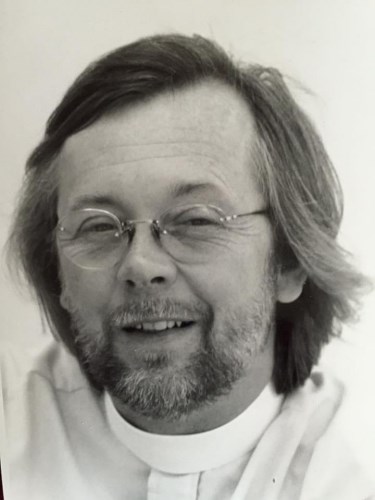
At the funeral for Reverend William Exner, who died on April 24, 2022, a fellow priest described how Bill regarded peace-making and justice “not as points to be earned or votes to be cast, but as people coming together to speak up for the values and visions that God has given them — to speak about the way the world could be.”
Through his vocation Bill found many avenues to express the way he thought “the world could be.” From 1985, when he became rector of St. Matthew’s Church in Goffstown, New Hampshire, until his retirement in 2016, his spiritual leadership embraced not only parishioners but also his community and nation.
In Goffstown he worked to establish the Community Clothing Center and expand the outreach of the Network Food Pantry. He convened the Youth Forum, served on the board of Crispin’s House, and was a library trustee.
He was a great supporter of the Poor People’s Campaign, an ongoing movement begun in 1968 by Martin Luther King, Jr., that demands justice for millions of poor and low-income people to ensure they “are no longer ignored, dismissed, or pushed to the margins of our political and social agenda.” He served on the Diocesan Outreach Commission for the Episcopal Church, was Vice Chair of the National Executive Committee of the Episcopal Peace Fellowship, and a Senior Deputy for the Diocese of New Hampshire to the General Convention.
Born April 8, 1954 in upstate New York, Bill attended Fairport High School, where he was on the varsity hockey and soccer teams. He met and married Jane Bluhm, who would be his partner in marriage for the next 48 years. Bill went to college at the Rochester Institute of Technology before transferring to Ithaca College to earn his
B.A. in Sociology. In 1982, he received his Master of Divinity degree from the Episcopal Divinity School in Cambridge, Massachusetts. His first position in parish ministry was shared between Christ Church, Sackets Harbor, New York, and Trinity Church, Watertown, New York, where he began as a deacon and was ordained to the priesthood in 1983. In 1985, he accepted the call from St. Matthew’s Church in Goffstown, New Hampshire.
A tribute to Bill in the New Hampshire Union Leader described his many interests:
In addition to his zeal for peace and fellowship within the community, his personal passions were many and varied: he had a life-long love for music, with a particular taste for classic rock and roll, country western, blues guitar, and folk. He had a deep appreciation for classic cars…Though he grew up in upstate New York, he was a diehard Boston sports fan, counting the Red Sox World Series Title of 2004 and the Bruins Stanley Cup Championship of 2011 among the happiest moments of his life. Bill was also a cherished husband, father, and friend to many.
All who had the pleasure of knowing him are better for his presence in their lives. He leaves behind a legacy of showing us all how to live with intention and to treat one another with kindness, respect, and love.
He died peacefully in his sleep on April 24, 2022.
Rev. Dr. Norman Gottwald
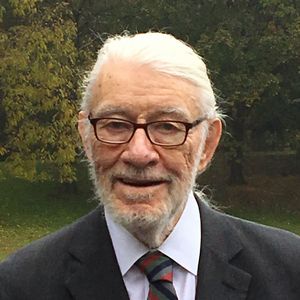
Reverend Dr. Norman Karol Gottwald, renowned scholar-activist, passed away peacefully at his home surrounded by his family on March 11, 2022. He was
95. His most significant work, “The Tribes of Yahweh: A Sociology of the Religion of Liberated Israel, 1250-1050 B.C.E.” (1979), explores the class dynamics at the root of ancient Israel’s emergence.
As a Hebrew scholar, Gottwald “almost single-handedly established social-scientific research on the Bible as a viable and promising enterprise,” Roland Boer wrote in 2011, and (re)discovered ways that “prophetic and Marxist critiques overlapped with one another.” “The various phases of his scholarship are inseparable from his experiences of activism of more than half a century,” he added; “his political commitments and activism informed his scholarship and vice versa.”
An epoch-changing thinker, Norman was also a democratic scholar and populist who made his material, both published and unpublished, available to students and non-academics. A movement-builder and a mentor, he sought out conversation with colleagues around the world, collaborated on numerous projects, lent support to aspiring scholars, and generously helped many younger writers get published. He was a frequent guest preacher in many pulpits, including his beloved home congregation, the First Baptist Church of Berkeley.
Dr. Gottwald was born in 1926 to Norman and Carol Gottwald in Chicago, Illinois. He attended Eastern Baptist Seminary in Philadelphia where he met and married a fellow student, Barbara Wright. He went on to receive an A.B. from Eastern Baptist Theological Seminary in 1949, an M.Div. from Union Theological Seminary in 1951, and a Ph.D. in biblical literature from Columbia University in 1953.
After serving in ministry at the First Baptist Church in Englewood, New Jersey, from 1952–53, he began his teaching career at Columbia University. In 1955 he moved to Newton Center, Massachusetts, where he taught at Andover Newton Theological School for a decade and became the father of two daughters. In 1966 he and Barbara moved to Berkeley, California, for a joint appointment with Berkeley Baptist Divinity School (now Berkeley School of Theology) and Graduate Theological Union, where he taught until 1973 and 1982, respectively. He then returned to New York City to teach at New York Theological Seminary from 1980 to 1994, where he met and married his second wife, Laura Lagerquist.
Dr. Gottwald received many honors and lectured extensively, nationally and internationally, on the relevance of biblical society, economics, and ethics for contemporary life. In 2008, Gottwald became one of the co-founders of the Center and Library for the Bible and Social Justice in Stony Point, New York, which connects biblical scholars and social justice activists through a research library and educational programs. He and Laura resided at Stony Point Center for several years as members of the Community of Living Traditions, often mentioned in Fellowship. Dr. Gottwald was also, in his later years, a member of the Democratic Socialists of America.
Dr. Gottwald considered his greatest accomplishments to be raising his daughters and contributing to the understanding and study of the Bible as a tool for social justice He is survived by his wife of 33 years, Laura, his daughters Lise Teilmann (Gary), Sharon Pillsbury (Roger), seven grandchildren, and six great-grandchildren.
Sharon Pillsbury, Laura Gottwald, Amy Dalton, Ched Myers, and Nicholas Johnson contributed to this memorial. A longer version was originally published by the Center and Library for the Bible and Social Justice.
Connie Hogarth

For Connie Hogarth, activism was a way of life — and throughout her life, her actions spoke as loud as her words.
When she was a child growing up in Brooklyn, she recalled, she would sit at the kitchen table alongside her father, a movie projectionist and union organizer, discussing how to make life better for working people. At the age of eight, by her own thoughtful choice, she joined him on the picket lines for the projectionists’ union.
In 1977, during construction of the Seabrook Nuclear Power plant, she crashed the gates and led more than a thousand protestors across the marshland that was destined to be the depository of tons of nuclear waste, carrying signs saying “Go Fishing, Not Fission.” Through the decades — long before the devastation at Chernobyl and Fukushima — she continued her protests against nuclear fission.
At the height of the Vietnam war, when thousands of American soldiers stalked the jungles of Vietnam, she lay down at the entrance to the White House to protest the daily killing of Vietnamese people.
Following the U.S. incursion into Iraq, she stood alongside Pete Seeger and other protesters on Route 9 near Poughkeepsie in weekly vigils protesting the involvement of American troops in yet another U.S. war.
Throughout Connie’s long career as an activist, she often drew media attention for living in Westchester, as if people wondered how such a dedicated activist could arise out of affluent, leafy suburbs. When she moved there in 1956, she was married to Burne Hogarth (the cartoonist who created “Tarzan”) and had two sons who attended public schools. Though she and Hogarth were later divorced, she remained in Westchester, where she rallied participants in local and national campaigns. While working for the Women’s International League for Peace and Freedom, she also helped start Northern Westchester People for Peace which evolved (in 1973) into an organization called Wespac.
Supporting global efforts to promote human rights, Wespac took on numerous initiatives, including opposition to U.S. investments in apartheid South Africa, promotion of self- determination in Nicaragua and El Salvador, and support for the people of Haiti.
Since many of her actions involved civil disobedience, she was arrested more than twenty times during her lifetime. Yet she held to the belief that some of the greatest advances were achieved by putting pressure on public officials. As she told a reporter for The New York Times, “You just don’t go out and lie down on the street at any time. It has to be the activist’s role of last resort. It’s when all else fails. When you have leafletted your life out, when you’ve lobbied your life out, when you’ve protested with marches and rallies and you have not had movement forward. At that point, you make an attempt to have an impact on people who can understand that the commitment is so powerful and the need is so great. As Martin Luther King established very clearly, this can be a very effective tool for social change.”
Connie Hogarth died on February 11, 2022, at the age of 95.
Leonard Kurz
Since Leonard’s death on November 5, 2021 at the age of 67, numerous individuals and organizations have come forward to cite the importance of his many legacies. The films he wrote, directed, and produced for his Forest Creatures Foundation (founded in 1993) focused on a clear mission – “to build an enduring legacy of peace, coexistence, and community through the use of film, television, new media, the dramatic arts, and other related disciplines of the arts.” In service to that mission, productions at Forest Creatures Entertainment included “Early Misgivings,” a film about child abuse; the television documentary “Accused of Being Communist,” a documentary on New York’s anti-communist Rapp-Coudert Committee; co-production (with Jonathan Demme) of the Tanzanian film “Maaangamizi: the Ancient One” that was featured at more than 50 film festivals; the PBS broadcast “Kitka & Davka in Concert: Old and New World Jewish Music”; and the feature-length documentary “Free the Children” that was in production at the time of his death.
Through the Kurz Family Foundation, established by his father, Leonard directed generous support to numerous causes in the greater New York area, as well as national and international organizations. Honoring his father’s legacy, he endowed two professorships at Brooklyn College — the Herbert Kurz Chair in Constitutional Rights and Civil Liberties and the Herbert Kurz Chair of Finance and Risk Management. Leonard created a program providing mentorship to African-American and Latinx students at the college, and he was the first director of the U.S. board of Free the Children, an organization founded by a 12-year-old boy to create a global network advocating children’s education.
A generous donor to the work of FOR, Leonard joined IFOR’s campaign for adoption of the U.N.’s “International Decade for a Culture of Peace and Non-Violence for the Children of the World, 2001–2010.” In the New York area he was a prominent supporter of numerous charitable causes including the Nyack branch of Montefiore Hospital, the Martin Luther King Jr. Multipurpose Center in Spring Valley, and the Hudson Valley Leadership Academy of Creative Response to Conflict, a global organization headquartered in Suffern, New York. For his “tireless work for equality and social justice, and his deep commitment to education and helping young people flourish,” he received the Martin Luther King Jr. Award and was recognized as Rockland County Development Council’s Outstanding Philanthropist.
“It has been said that we must understand history so as not to repeat the mistakes from the past,” Leonard wrote on his website for the Forest Creatures Foundation, “If we are in any way going to attempt reconciliation, this is a must.”
Friends and colleagues remember Leonard as a person with “a gentle spirit and a fire in him,” who “believed the biggest benefit of being a philanthropist is that it fulfills some of our deepest human needs.” In the words of a fellow filmmaker, “I have rarely been so impressed by a person’s soul. No doubt he left the world a better place — just by being in it.”
Hyun Lee
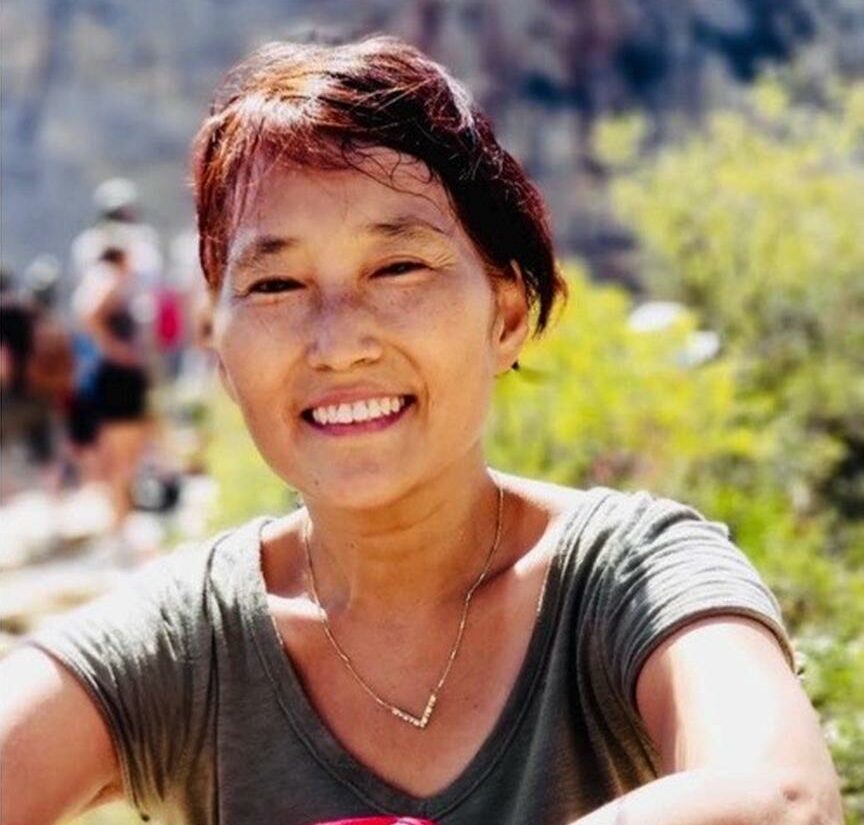
The armed conflict in a divided Korea came to an end with the signing of the Korean Armistice Agreement in 1953, but it was only the beginning of increased militarization of what had become North and South Korea. Divided by a Demilitarized Zone (DMZ), the two countries have maintained a wartime stance for nearly seventy years. Throughout those decades the United States has supported the military readiness of South Korea. Tactical nuclear weapons were introduced to the country in 1958, seeding an arsenal that has increased to an estimated 950 weapons.
Hyun Lee dared to imagine a different solution to this long-simmering conflict – a peace treaty that would move the United States and South Korea from a military alliance “to a different kind of partnership that is about promoting peace on the peninsula and broader region.
For four years, from 2018 until her death on March 7, 2022, Hyun Lee was a leader in the peace campaign who served as U.S. National Organizer and Campaign Strategist for Women Cross DMZ (WCDMZ). A nonprofit organization founded in 2014, WCDMZ calls for the withdrawal of nuclear weapons and the demilitarization of Korea. Such a treaty would create a permanent peace by “allowing all parties to move toward denuclearization, improve human rights, and shift economic resources back to improving the status of people in the U.S., South Korea, and North Korea, and away from constant preparation for war.”
In a tribute to Hyun Lee’s work, WCDMZ described her as “a tireless advocate for peace on the Korean Peninsula. Hyun served as a bridge between people, organizations, communities, and movements. Completely bilingual in Korean and English, Lee used her diplomacy and language skills to help strengthen relationships between social movements and policymakers in Korea and the U.S.” Her work with that organization and with Korea Peace Now! Grassroots Network led to passage of a resolution by Congress to end the Korean war with a peace agreement.
Before taking the leadership position at WCDMZ, Hyun Lee worked for decades with the Committee Against Anti-Asian Violence, an organization that brings together Asian women to resist hate violence and systemic racism directed against the Asian immigrant community.
She became an associate of the Korea Policy Institute, wrote articles for foreign policy journals, and produced films for Third World Newsreel, a collective of filmmakers, advocates, and educators supporting innovative films and videos about people of color and social justice issues.
Hugh Muldoon
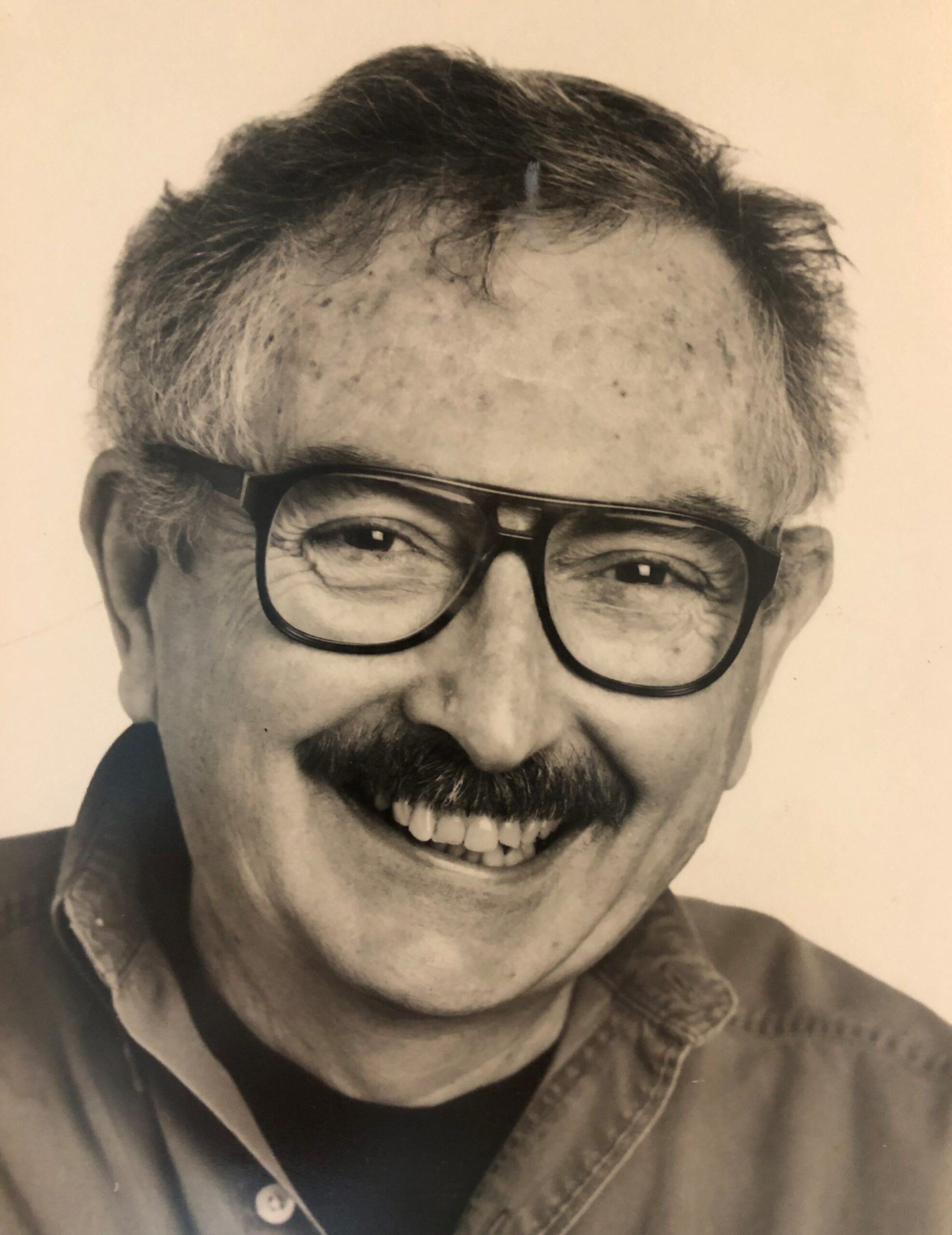
In autumn of 2021, during the final days in the life of 82-year-old Hugh Muldoon, he was visited in the hospital by a friend and colleague who inquired, “Well, Hugh, what are you talking to God about these days?”
She then listened in wonder as this dear friend and inspirational leader responded: “I’m asking God to let every human being be able to see the spark of the divine, the holy God in each of us, and for the spark in you to connect with the spark that is in me.”
From the testimony, legacy, and memories of the people he influenced, it is clear that the direction of Hugh Muldoon’s actions was to connect everyone he met to the spark of the divine and the spark connecting each other.
Those goals inspired Hugh to study for the priesthood…to become a professor of philosophy…to work tirelessly in the antiwar movement, gathering hundreds of students for rallies…to become an administrator and coordinator of a community development center…to help found the Carbondale Peace Center and the Peace Coalition of Southern Illinois. And, above all, he was inspired to open his home, hearth, and heart to a multitude of students, colleagues, and peace workers who were drawn into his circle of friendship, caring, and commitment.
Born in 1939 in the Irish Catholic neighborhood of South Buffalo, Hugh Joseph Muldoon was shadowed by the death of his mother that occurred when he was 11 years old. Hospitalized for a case of appendicitis, he was told that an ambulance had just brought in his mother to the same hospital. By the time a priest led Hugh to her room, the bed was empty.
After his mother’s death, Hugh attended Bishop Timon High School, then entered the seminary and became a student at St. Bonaventura University. He was ordained in 1966. Two years later, enrolled in the doctoral program at Southern Illinois University (SIU) in Carbondale, he became involved in civil rights activism and anti- draft counseling at the Student Christian Foundation, which subsequently evolved to become Gaia House Interfaith Center, the campus’s magnetic hub of shared living and learning for all races and religions. He left the priesthood behind when he fell in love with an undergraduate at the Newman Center, Linda Jane Corder. They were married in 1972 and had three children.
Hugh Muldoon’s ways of teaching, leading, and creating a sense of community were as varied as the all-embracing aspects of his religious beliefs. Following his death on October 12, 2021, there was an outpouring of warm memories at his memorial service. Friends, colleagues, and former students recalled peace marches and parties, music and dancing, moments of intellectual inspiration, leaps of spiritual growth, and many gatherings promoting peace and harmony.
In the words of one of his friends, Valeri DeCastris, “There will never be another Hugh. Period. End of Story. Servant of Servants. Mr. Rogers in the left lane, hurtling toward justice at 200 mph. Host Extraordinaire. Moral Compass. Hero.”
Sr. Megan Rice

Born January 31, 1930, Megan Rice was just a teenager when her uncle, Walter Hook, gave her a firsthand account of the devastation wreaked on Nagasaki by the atomic bomb. At the end of WWII, Walter, an Army enlistee stationed in Japan, became friends with the bishop of Nagasaki, a survivor who happened to be away when the city was destroyed. About a month after the bombing, the bishop returned with Walter at his side to view the blasted remains of the city. Together, they crawled through the wreckage of the cathedral to salvage a cross from the remains. Uncle Walter’s account of that experience had a profound influence on Megan Rice. Ultimately, she would devote her life to ending the scourge of nuclear destruction.
Megan (pronounced MEE-gan) grew up in Morningside Heights, New York, and was ordained as a nun at age 25. She studied biology at Villanova University and went to Boston College to earn a Master’s degree in cellular biology.
As she was growing up, her parents — both educators — made her deeply aware of racial segregation and poverty in her own community. Even as a student, she was intent on going to Africa. After taking her vows, she taught in primary and secondary schools in Nigeria and Ghana for the next 40 years. She began making frequent trips to the
U.S. in the 1980s to participate in antiwar actions. During the 1990s, she joined protests against torture at the U.S. Army base in Fort Benning, Georgia, was arrested, and served two six-month prison sentences.
All the while, the United States was developing its military capacity, creating a nuclear arsenal with an overkill capacity that dwarfed the destructive powers of the first atomic bombs. Horrified by the ongoing development of these weapons at sites around the U.S., Sr. Megan Rice finally departed Africa in 2003 to embark on a decades-long crusade defying the escalation of the military industry.
She moved to Nevada to join the Nevada Desert Experience, a nonviolent direct- action campaign to end automated warfare and nuclear weaponeering. In the years that followed, she would be arrested more than forty times for open demonstrations at military sites. The first occurred in 2009 protesting a missile test at Vandenberg Air Force Base in California. This was followed two years later by imprisonment on a charge of trespass at an Air Force base in Nevada that was developing the first drone warfare program.
In 2012, at the age of 82, Sr. Megan took part in one of the most publicized actions of the Plowshares movement. Early on the morning of July 28, she and two other protestors used bolt cutters to break through a chain-link fence at the Y-12 nuclear weapons production complex in Tennessee. Sister Megan and her companions lit candles, prayed, and sang. By the time a security guard appeared, the “trespassers” had spray-painted walls with anti-nuclear slogans. They offered the guard a loaf of home-baked bread, which he declined.
The demonstration led to imprisonment on a charge of sabotage. Sr. Megan spent two years with more than one hundred women in Brooklyn’s Metropolitan Detention Center (where she launched a book group and prayer circle) before a judge dismissed the charge that the women sharing bread with a security guard had “harmed national defense.”
Sr. Megan died on October 10, 2021 at the site of her order, Society of the Holy Child Jesus, in Rosemont, Pennsylvania. In a statement after her death, Johnny Zokovitch, the executive director of Pax Christi USA, noted “It is incredible to consider how the bravery of this small, smiling, unassuming woman in standing up to the entirety of the U.S. military-industrial complex could bring so much awareness to the devastation our nation’s idolatry of nuclear weapons inflicts on people here in the U.S. and around the world.”
Hans Spiegel
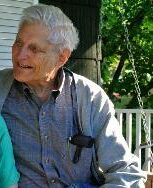
Hans Spiegel was born in Kreuzlingen, Switzerland on June 22, 1926. His family moved to the United States in 1941, where 15-year-old Hans attended Forest Hills High School in New York. After graduation, he attended Antioch College in Yellow Springs, Ohio, where he majored in economics with a minor in education. While at Antioch, his focus turned to intergroup relations. During an internship at an adult education center in Atlanta, Georgia, he met Northwestern student Eleanor Durham, who was traveling the southeast for the World Student Service Fund. As Hans would later recall, “We immediately connected over our shared interests: race relations in communities and social justice.” They were married one year later, after Eleanor (Ellie) had spent a year in Europe working for the World Council of Churches.
The young couple moved to Queens, New York, while Hans was doing graduate work at Columbia. After graduation he became director of the International Association of Greater Boston, where he and Ellie worked as a team with the purpose of helping foreign students adjust to life in the United States. Hans went on to teach Urban Planning at the University of Pennsylvania and Springfield College — where he was director of the college’s “Community Tensions Center” — before he and Ellie moved to Washington, DC, where he served on the Presidential Task Force on the War against Poverty and became Deputy Assistant Commissioner of the U.S. Urban Renewal Administration under President Kennedy.
Hans and Ellie settled in Leonia, New Jersey, in 1966 when Hans assumed the position of Professor of Urban Affairs and Planning at Hunter College, City University of New York, and Ellie became Director of Programs at New York City’s International House, a living and educational center for graduate students from more than one hundred countries. In 2017 the board of the Community of Friends Action in Leonia established the Spiegel Fund in honor of founding members Hans and Ellie.
Hans Spiegel died in August, 2021, at the age of 94.
Jeanne Theis Whitaker
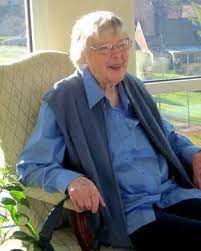
Jeanne Theis Whitaker passed away peacefully in the early morning hours of October 25, 2021, at the age of 95. As her son Mark recalled, in her final hours Jeanne was “still radiating the spirit captured in the words of one of her favorite Quaker hymns, the George Fox song ‘Walk in the Light, Wherever You May Be!’”
Throughout her life, Jeanne Theis Whitaker “walked in the light” through her deep involvement in the antiwar and social justice work of the American Friends Service Committee.
Born in the town of Le Chambon-sur-Lignon, France, Jeanne and her five sisters left that country at age 14 under the auspices of a child rescue mission at the outset of the German invasion. She spent the war years in Swarthmore, Pennsylvania, where she finished high school and attended college. (It was only after the war that she learned of her parents’ role in hiding thousands of Jews from the Nazis in Le Chambon.)
After graduating from Swarthmore in 1946, she attended Bryn Mawr College where she taught French and earned her Ph.D. in Linguistics and Literature. Returning to Swarthmore as a teacher of French poetry, in 1950 she met Cleophaus Sylvester “Syl” Whitaker Jr., an African American member of the Religious Society of Friends who was acting in a French-language version of a Jean Giraudoux play that Jeanne was directing. In defiance of that era’s strict color barrier, the two were married and had two boys, Mark and Paul Whitaker. As her son Mark later wrote, “She respected [Syl’s] bravery in coming to a virtually all-white school like Swarthmore and good-naturedly confronting the racism he encountered in his life. And she was moved that he took his faith so seriously….They shared the same commitment to battling the world’s evils by turning the other cheek rather than demanding an eye for an eye.”
The couple moved to Princeton, where Syl took a position as teaching assistant, and later to UCLA, where he was made full professor. The marriage was not to last, however, and after their divorce, Jeanne struggled to support the two boys that were left in her custody. Finally, in 1964 she attained a permanent teaching position at Wheaton College in Norton, Massachusetts, helped create an American Friends Service Office in Providence, and in 1985, proudly served as a delegate to the 1985 Third World Conference on Women in Nairobi, Kenya. She retired from Wheaton in 1999, moving to Kendal at Longwood, where she lived among friends and was visited by children, grandchildren, and in her final years, a cherished great-granddaughter.
Muriyd “Two Clouds” Williams
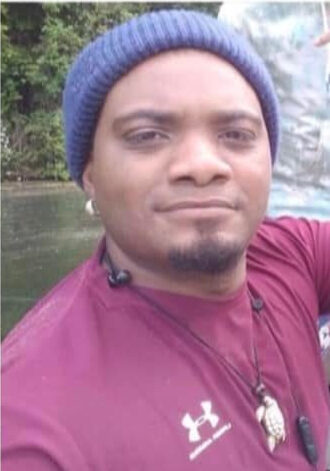
Muriyd “Niishwak Akumahkwak” (Two Clouds) Abdullah Muhammad VanDunk- Williams of the Ramapo Lunaape Nation Turtle Clan transitioned from the earth on July 6, 2022, at the age of 30, when he was found dead along the shore of the Ramapo River in Mahwah, New Jersey. An Afro-Native Muslim, he was well- known and respected as a spokesman, activist, and teacher for his people, whose traditional and unceded lands span parts of New Jersey, New York, Connecticut, Pennsylvania, and Delaware.
In 2016, Two Clouds began fighting for the land, water, and civil rights of the Ramapo Lunaape, whose sacred ceremonial land, the Split Rock Sweet Water Prayer Camp in Mahwah, was under attack by the Ramapo Hunt & Polo Club homeowners’ association under allegations that its teepees were an eyesore. For years, Two Clouds was the head fire-keeper and protector of the ancestral prayer ground, refusing to let die the embers of the sacred site’s fires. Many times he faced confrontations with local and state police, until eventually the tribe won its battle for the Constitutional right to assembly. (Since 2006, the Ramapo Lunaape Nation also has been embroiled in ongoing lawsuits against the Ford Motor Company, which continues to dump toxic sludge and hazardous materials into the tribe’s land and water.)
Two Clouds was blessed to be endowed with the spirituality and wisdom of his indigenous tradition and also the teachings of Islam. He was a third-generation Muslim who, as a young teenager from Elizabeth, New Jersey, traveled abroad to Egypt to study the Arabic language and Qur’anic recitation.
Two Clouds traveled frequently, including to New York University, Rutgers University, and the United Nations, to educate about the history and genocide of the Ramapo people of Turtle Island (North America), and the need to stop the continued appropriation of their land and assimilation of their remaining people. An ardent lover of nature and the outdoors, he was a student of Ramapo College’s Department of Environmental Science. He was a loving and loyal father, son, brother, and friend to many.
Two weeks after Two Clouds’ soul departed his body, the National Council of the Fellowship of Reconciliation gathered for a welcome breakfast in Stony Point, New York. The breakfast included a land recognition ceremony honoring the Ramapo Lunaape Nation, upon whose traditional territory the FOR office stands, and a memorial for Two Clouds. Immediately after paying tribute to him and invoking “Two Clouds, iPresente!,” great rumbles of thunder came out of nowhere in the sunny sky.
As is said at all passings of Muslims, it was said for Two Clouds: “Indeed, to the Almighty we belong and to the Almighty we return.” (Qur’an 2:156)